



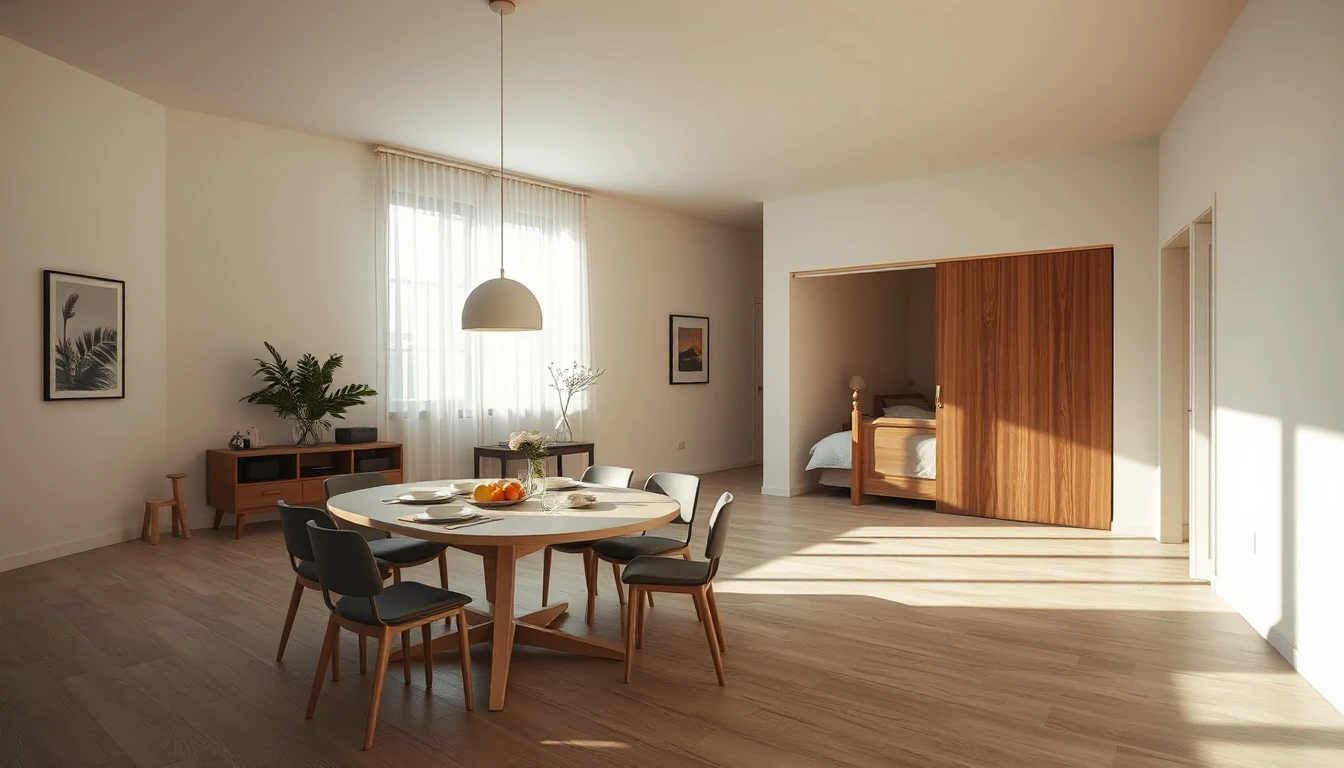
The large open living area appears generous during a viewing. At home, however, several things happen at once: one person works, another cooks, someone else wants peace or to receive visitors. Before you equate the open space with an automatically suitable shared use, it is worth testing it with your actual daily routine.
Don’t read the room only by the furniture
Start with the activities. Which of these often take place simultaneously, which need a clearly defined area and which can reliably occur one after the other? A floor plan with sofa and dining table does not yet show these temporal relationships.
First note down a few typical scenarios. Do not choose an ideal free Sunday if your everyday life mostly consists of early commutes and working from home in the evenings. Add a differing situation, for example visitors, a day off or a longer stay at home. This test is a personal organisational aid, not a technical assessment of the layout.
Consider visual connection, thoroughfare and retreat separately
During the viewing, walk the intended routes. Which activity would take place in which spot, and which other person would have to use the same area at the same time? Keep observed features and your own assumptions separate.
An apparently open room divider or a furniture suggestion should not be accepted uncritically as an effective technical solution. If, for example, acoustic, structural or safety-related properties are decisive, an appropriate professional assessment is required. This article does not state any guaranteed soundproofing characteristics of particular installations.
A realistic shared evening
In the fictional example a couple view an apartment with an open living and kitchen area. One person wants to regularly have a work-related conversation there in the evenings. The other arrives home at the same time and needs the kitchen.
Both check not only whether the table and sofa fit. They ask whether there is actually another available room for the focused activity or whether the work routine can reliably be organised differently. A single exception would not resolve the regular overlap. The pleasant sense of space remains an advantage, but it does not replace the everyday question of openness.
Distinguish reliable possibilities from hopes
Write down which solution is already available and which would first need to be created or agreed with others. A still unresolved wish for renovation does not count as an already available retreat option in the decision. Likewise, a possibly different future working time is not a confirmed basis for today’s living plan.
Discuss important differences with the people concerned before making a commitment. The plan does not have to foresee every future evening. But it should answer the regularly recurring situations that you already know about.
Be able to adapt purposefully after moving in
If you decide on the apartment, start with a comprehensible, changeable organisation for open furnishing questions. After the first actual weeks, check which routes and arrangements work. A new arrangement should solve the original task, not just look different for decorative reasons.
This article does not decide whether an open or closed layout is generally better. Its conclusion is personal: you can describe how your household would use the available space at the times it actually needs it and which essential question still needs to be clarified beforehand.