



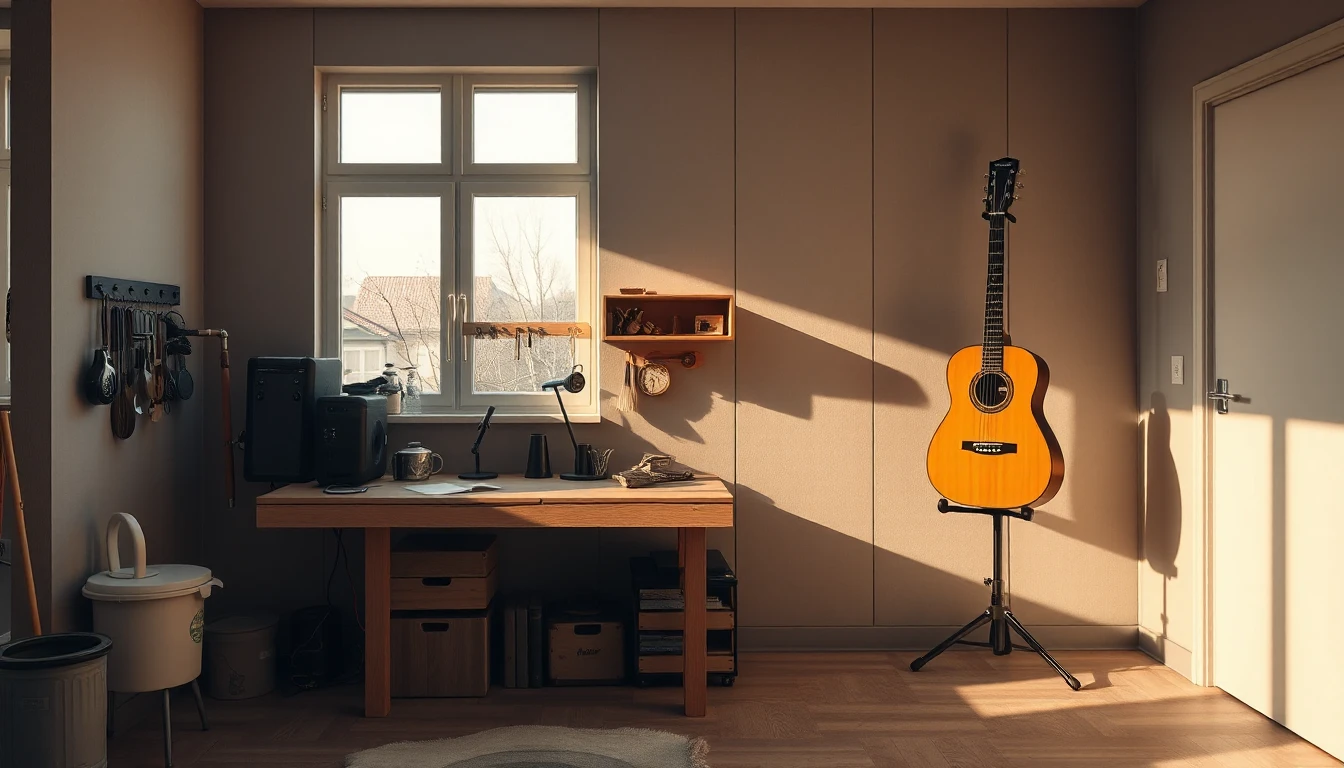
An instrument, a workbench or a large creative project is to find space in the home. The question is not only whether the object fits through the door. Crucial is how the activity can be fitted into the actual daily life of everyone involved. The following recommendations plan use and coordination; they do not state permissible noise times or blanket structural permissions.
Describe the activity in full
Work through a typical sequence: prepare, work or practise, put down materials and tidy up again. Which surfaces and items are actually needed for this? A hobby with a short active phase can nonetheless require a workstation that is occupied for a longer time.
Note which requirements you can assess yourself and which remain open. The location of an instrument is a different question to a professional assessment of its impact on the building and the surroundings. Unknown technical properties are not to be inferred from a generic product photo.
Fit it into the other everyday rhythms
Talk about when other people work, sleep, study or need the same room. Describe concrete situations instead of blanket attributes such as “you are always sensitive” or “you can never do anything here”. The joint plan should coordinate activities with one another, not evaluate a person.
Separate a personal agreement within the household from possible rules and rights outside that circle. An internal agreement is not automatic consent of other affected parties and not a legal usage assessment. In case of conflicts or unclear prerequisites, a suitable factual clarification is required.
Before a big purchase, try a small usage test
First test the planned organisational process, as far as this is appropriate and permitted. Must the shared table be cleared each time? Do materials remain in the way? Is there an actually available storage place? Such a test does not replace a technical safety or sound assessment.
If an important function does not fit, deliberately change one of the prerequisites: scale, location, organisation or an actually available alternative solution. Do not plan permanently with someone else's room or help that was only promised once without commitment.
Example: The project fits on the table, but not into the evening
In the fictional household one person wants to do model building regularly. The work surface seems sufficient. However, during the trial run it becomes apparent that the same surface is needed later for a shared meal and delicate parts cannot yet be put away.
The participants look for a separate suitable interim storage and check which work steps are actually possible on the shared table. They do not treat the solution as confirmation for any materials or devices. Their appropriate use and any further possible prerequisites remain separate issues.
Do not change materials and space prematurely
Before fixtures are fastened, technical devices connected or rooms altered, clarify the professional and legal prerequisites required for the specific case. This article does not provide instructions for installation or for the assessment of hazardous substances. A logistically suitable appointment does not automatically make an unresolved activity appropriate.
After the first ordinary uses, discuss what works and which spot needs to be adjusted. The result can be a fixed place, a limited temporal coordination or another actual solution. The crucial thing is that the hobby is given a consciously clarified place in the household, rather than merely existing between good intentions and constant tidying up.