



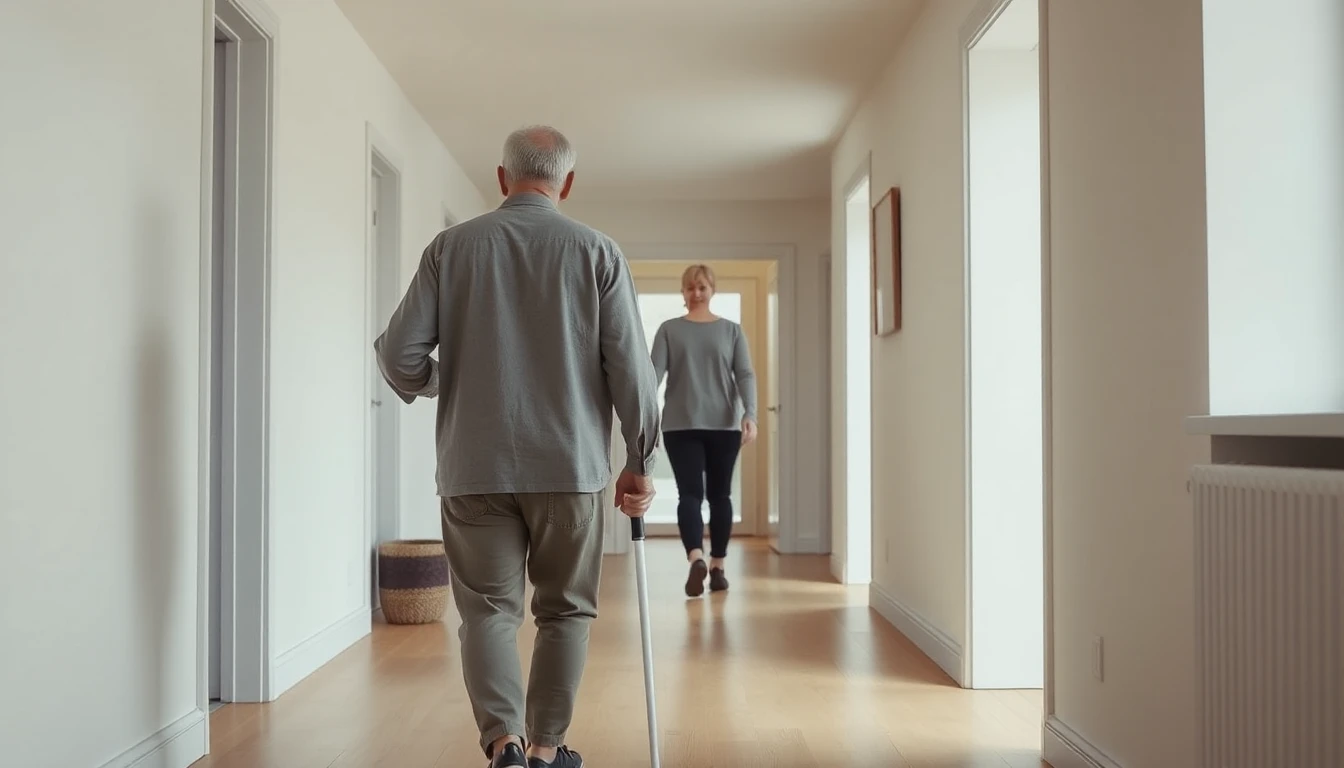
A new flat can look orderly on the plan and still contain many unclear routes in everyday life. When moving with a visual impairment, you therefore need more than furniture chosen by others. The decisive perspective is that of the person who wishes to live there independently.
The following suggestions help with organising a move in Austria or Germany. They do not describe medical treatment or compliance with building standards. Individual training, choice of aids, technical modifications and possible benefits belong in the appropriate professional consultation.
Do not start with helpers’ wish lists
Our editorial recommendation: first describe a few personally important activities. For example, going to the bathroom after getting up, preparing breakfast, sorting post and getting from the flat to a regularly used stop. Which familiar routines should be retained as far as possible? Where would you like to try out a new solution?
The answer is not derived vicariously from a diagnosis. Whether someone seeks orientation through recognisable contrasts, fixed arrangement, tactile information or other aids is individual. The moving plan collects these wishes, rather than designing a supposedly right flat for everyone.
For Austria, the BSVÖ explicitly describes orientation and mobility training as personally tailored development of one’s own goals and concrete routes. It also offers advice on aids through its state organisations. This is an Austrian point of contact, not a guarantee of the same organisational or financial conditions in Germany. [WEGE]
A good move can fail because of well-intentioned help
In the fictional example, Mira arranged her kitchen items in an order that was usable for her. On moving day, friends packed everything according to their own aesthetic impression. The flat looks finished, yet Mira has to search for and reorganise many things. In addition, the remaining stack of boxes stands exactly on the intended route between bedroom and bathroom.
The solution is not a comprehensive ban on touching things. Mira agrees in advance which areas she will decide herself and where helpers may pack according to a jointly discussed plan. For the first night the few immediately needed routes and items are treated as their own task. Incomplete decoration has no higher priority than the agreed usability.
From viewing appointment to a liveable first week
Prepare an additional walk-through based on your own activities, as far as this can be agreed with those involved. Do not only examine where a piece of furniture might stand. Note which orientation is still unclear and which change you would like to discuss with a professional. The walk-through is not a self-conducted safety test and does not replace mobility training.
Divide the move into two tasks: establish required everyday functions and complete the further furnishing. The first task receives priorities agreed with you. A clear labelling of the boxes can help with this; you determine the appropriate marking according to your capabilities. Every new technical solution also needs an actually usable operation, not merely the information that it has been installed.
Orientation does not end at the flat door
Include the building entry, letterbox, waste disposal and personally important outdoor routes in the preparation. Decide with the chosen support which routes should be tackled first. A helper demonstrating them once is not an automatic confirmation of independent usability.
After moving in, an agreed feedback follows: What works in everyday life, what is needed differently? The goal is not a show-flat declared finished by others. It is a comprehensible transition in which you co-determine furnishing, support and the next learning steps.