




An image of a property shows more than a pretty surface. Perhaps it explains the connection between kitchen and living area or the route onto the terrace. A meaningful alternative text should convey this contribution to the message. It is not a hidden place for as many keywords as possible and not a second advertising headline.
Decide the role of the image first
The decision tree of the W3C Web Accessibility Initiative distinguishes, among other things, informative, functional and purely decorative images. For a simple informative subject it recommends a short description that conveys its meaning in the respective context. For functional images the goal or the action is decisive; purely decorative or redundant subjects may require an empty alternative text. [ALT]
These notes refer to image alternatives on the web. They do not prove here that every social platform offers the same input fields or that a finished text alone fulfils all accessibility requirements.
Move from the message to the description
Our editorial recommendation: write a sentence before selecting the image stating which question the subject answers. Then check whether this information can actually be recognised in the image. Only from this does the description arise. Non-visible properties do not belong in as supposed observations.
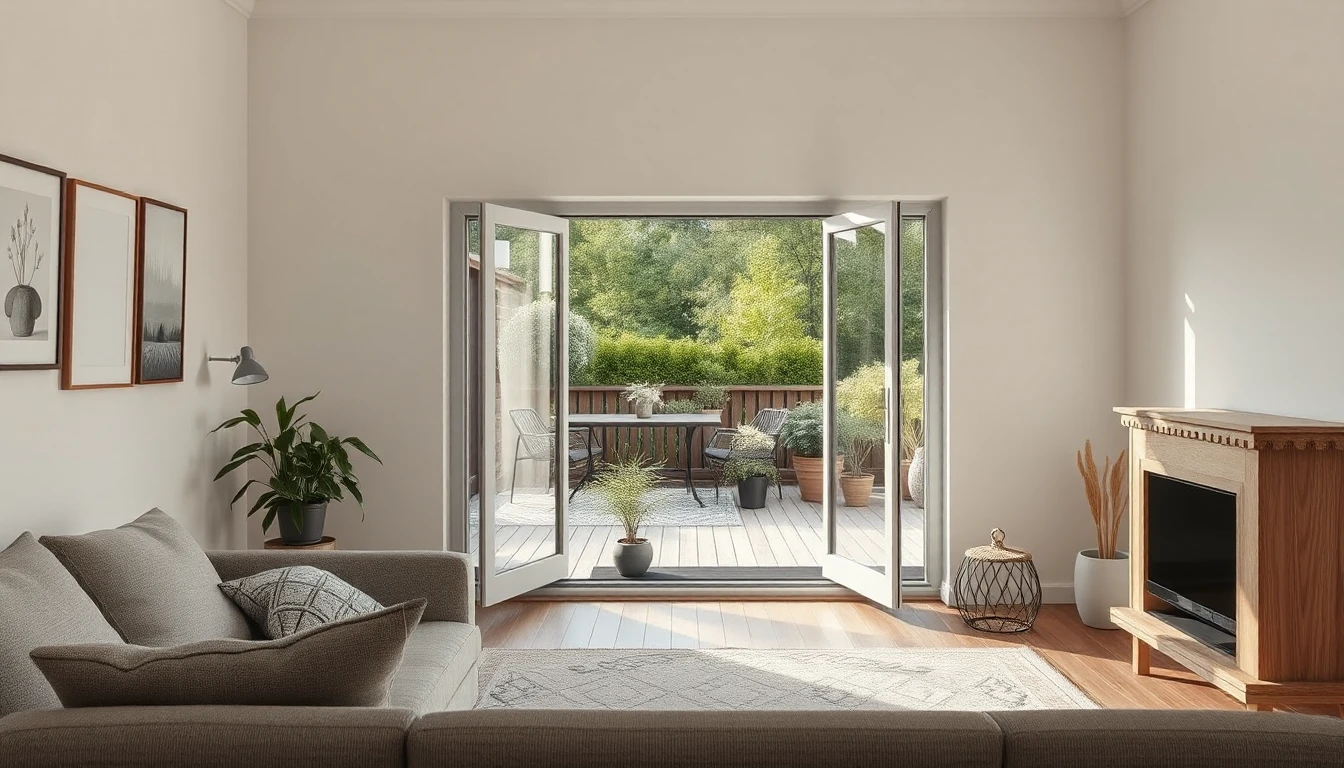
For the fictitious subject of a living area the intended message is: “The terrace is directly accessible from the living room.” A suitable text could briefly name the living room and the open terrace door. “Dream apartment in a prime location with endless possibilities”, by contrast, would explain neither the visible connection nor the information of the image.
Do not needlessly duplicate existing text
Consider image, headline and accompanying text together. If a graphic contains important text that is otherwise not accessible, the information must be taken into account in a suitable text alternative or in the surrounding content. For an extensive graphic an additional detailed explanation can be useful. The W3C decision tree specifically distinguishes such constellations. [ALT]
Our recommendation for checking: have a second person read only the texts and explain the message of the image. If the essential context is missing, revise the description. A deliberate shortening is fine as long as it does not remove the relevant information.
Do not smuggle in additional claims
Designations such as “accessible” (barrierefrei), “approved” (genehmigt) or “unbuildable” (unverbaubar) should not be derived from a photograph. This article does not evaluate such properties. Likewise, visible people are not real customer testimonials just because a marketing motif shows them.
Keep the approved alternative text together with the image file, its intended use and the intended context. If the same subject is used differently later, check the description again. The meaning of the image arises in the context of publication; a once saved text is therefore a helpful starting version, but not a universal description for every use.