



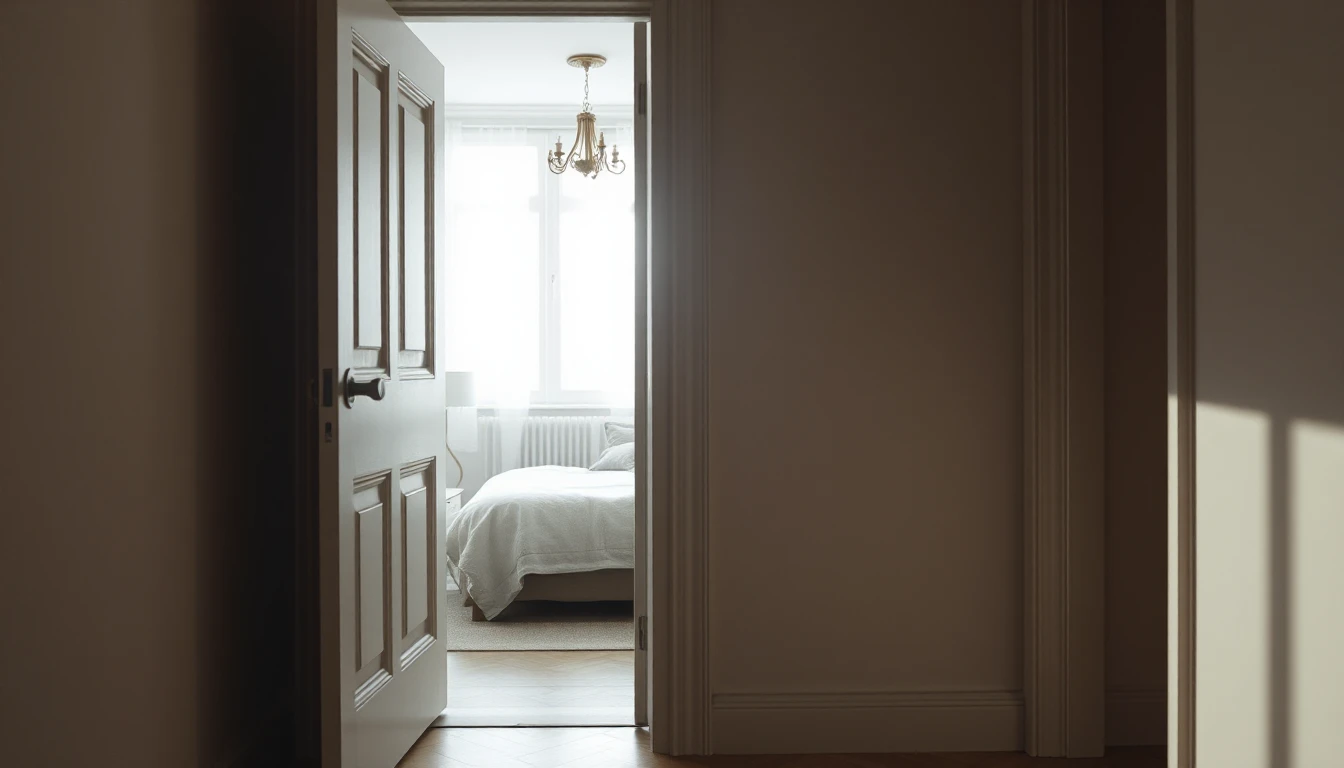
A photo series helps with the pre-selection. However, it only answers the questions that its views actually show. Our editorial recommendation: turn the impression “nice and spacious” before the viewing into a few verifiable observation tasks. It is about your use of the space, not an assessment of the photography.
First arrange the images spatially
Try to assign the views to a room. A window, a door or a conspicuous flooring can help you with this. If it remains unclear whether two photos show the same room, note that exact question. Do not count every shot as an additional room. If a plan is available, it can help with orientation; its measurements and legal binding are a separate check.
Then deliberately look for the missing direction. You can see the living room from the window side, but not the opposite wall? Then you may be missing the view where your sofa or a cupboard is supposed to be. This leads to a concrete follow-up question: “Could you show the opposite wall including the door area?” That is more informative than simply asking for more photos.
Question the picture with your everyday use in mind
Imagine a specific activity: sitting at the table, opening the window, carrying laundry or two people working in the kitchen. Which spots needed for that are visible? Which remain outside the frame? A photo of the tidied room does not automatically answer where your own belongings could be placed.
Conversely, avoid treating missing views as proof of a defect. An unphotographed area is initially unknown. Ask factually and keep the answer alongside the original impression. This way conjecture, additional information and later personal observation are not mixed up.
Example: The dining table looks suitable
A searcher recognises a nice dining area in three pictures. Only when organising them does she notice that all views show the same side of the table. She wants to bring her larger existing table. For the viewing she therefore notes not “dining room big enough”, but “view the space for the table and the route between table, door and kitchen together”. The task is useful even if the photographed table in the end does not belong to the offered furnishings.
A short request for an additional view instead of an image archive
Specifically ask for a supplementary view or clarify the point on site. Do not collect any arbitrary additional files. A concise note with room, missing view and usage scenario is sufficient preparation. Images can also show an earlier state; for features that are essential to you, ask whether they are still present as shown.
After the viewing you replace your open photo questions with the actually observed condition. If something remains inaccessible, it remains open. The goal is not perfect photo interpretation, but a viewing in which you look exactly where the first impression did not yet provide a reliable answer.