



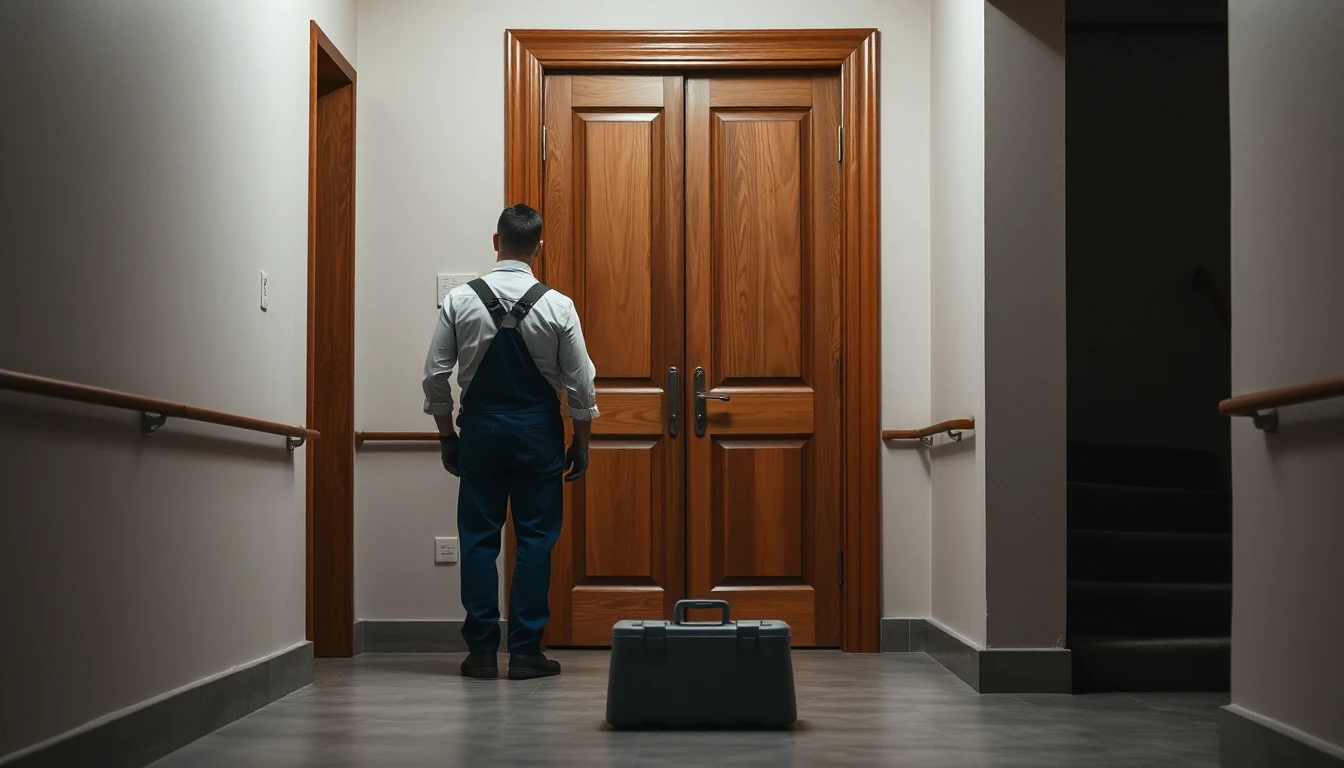
Reader question: How do I check an unknown visitor who claims to be from the property management?
Two unknown people stand at your flat and say they must come in immediately because of a building job. You have not received any prior notice. You do not have to infer the claimed role under time pressure from their demeanour or work clothes. Check the assignment via an independent, known channel.
Keep the contact at the door at first
Police crime prevention recommends looking at unknown visitors before opening the door, remaining cautious and checking identity and purpose. It advises that tradespeople should be ones you ordered yourself or should have been announced in advance by the property management. [POLIZEI-TUER]
Ask calmly for the company, name and specific assignment. An identity card can help with identification, but does not replace further checks. The article does not present work clothing, a company logo or a familiar word from the building as secure proof of authorisation.
Use your own telephone number
For calling back the client, company or authority, the police recommend finding and dialling the number yourself. [POLIZEI-TUER] For example, use your existing contact for the management and not only a number the unknown person gives you.
Our editorial recommendation: Ask the known contact whether there is an assignment for your flat, which company is expected and what is actually to be checked. Do not tell unnecessary private information about presence, other residents or valuables. Such details are not required for clarifying the assignment.
Separate urgency from actual danger
A claimed urgency at the door is not a technical diagnosis you have confirmed. If, however, independently recognisable acute signs of danger are present, use the appropriate emergency channels and do not put yourself at risk for longer documentation. This article is not an instruction for checking gas, electricity or structural damage.
If the ordinary assignment cannot be clarified, a confirmed later appointment with a trusted additional person can be an appropriate solution. The police recommendation also mentions a later visit in the presence of a person of trust in case of doubt. [POLIZEI-TUER]
A fictitious call-back resolves the uncertainty
In Felix’s case a visitor claims to have a water meter job. Felix reaches the management via his saved contact. It becomes apparent there is an assignment, but for a different time and a different unit. The company is identified via the intended channel; Felix does not grant access solely on the basis of general knowledge of the building.
The fictional case does not yet imply fraud. Even a genuine assignment can be misallocated. The independent check helps in both cases.
After a suspicious situation
Safely note when the visit took place and which role was claimed. In the event of coercion or suspicion of a criminal offence, obtain appropriate police assistance. Do not follow the person for additional evidential photos and do not publish an unverified accusation in the building chat.
The guide deals with Germany and does not decide any tenancy-related duty to tolerate a properly announced appointment. Its aim is the secure identification of an unexpected visit before you base an access decision on a mere claim at the flat door.