



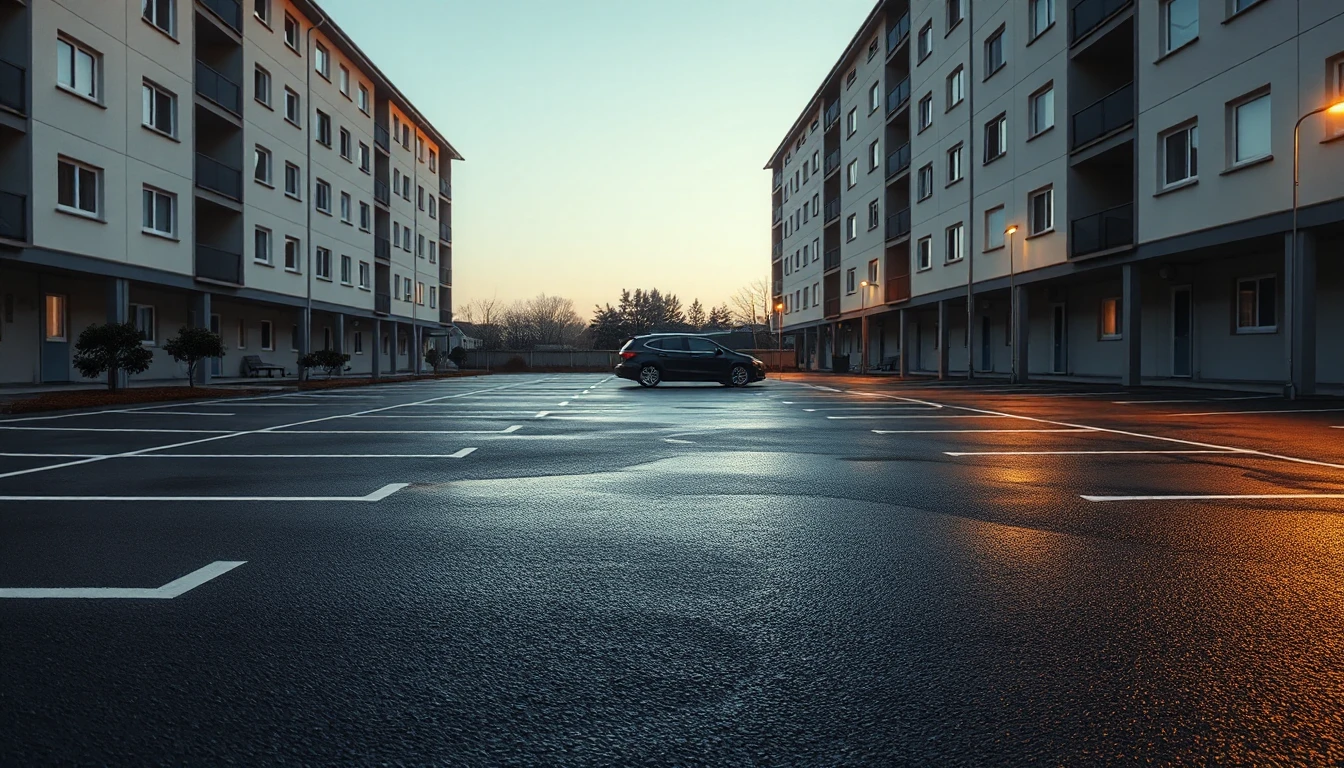
Reader question: How do I proceed when a private parking space assigned to me is occupied without authorisation, without equating towing with an automatic guarantee of no cost to me?
Your privately rented parking space that is clearly assigned to you is occupied by an unfamiliar vehicle. Removal by towing may be legally possible. However, that does not mean that every foreign occupation is unauthorised, nor that a towing contract you sign will certainly be free of charge for you.
This concerns a private parking space in Germany. A vehicle on public road space, an unclear communal parking regulation or an acute danger situation are not dealt with in this private parking-space case.
Clarify your possession position and the lack of authorisation
Base this on the actual parking-space assignment: Does the contract designate exactly this space, was it handed over to you and do you use it accordingly? Are there known occasional releases or a possible confusion of the number? A sign alone does not establish every legal relationship.
§ 854 BGB links acquisition of possession in principle to actual control over the thing. § 858 protects possession against unlawful deprivation or disturbance without the will of the possessor. [BGB854,BGB858] Therefore the decisive factor is the concrete possession position; merely referring to the landowner does not fully answer the question of a tenant party using the space. In the case of conflicting assignment you should clarify this first with the responsible authority, instead of having a possibly authorised vehicle removed.
Our editorial recommendation: Document the actual space, the vehicle with registration number, the time observed and the existing signage as far as is safely possible. Keep the pictures as a record of the incident; a public shaming in the building chat is not a necessary step for that.
What possession protection permits and what it does not automatically decide
§ 859 BGB contains the possessor’s self-help rights. For deprivation of possession of land, paragraph 3 in particular names the temporal characteristic “immediately”. [BGB859] The BGH recognised in V ZR 144/08 unauthorised parking on private land as prohibited self-help and towing by the immediate possessor as a possible removal. There an additional concrete obstruction was not required. At the same time, legal exercise is subject to limits of good faith and proportionality. [BGH14408]
This is not a general towing mandate against every vehicle unknown to you. Time, authority and the factual situation must fit. If the person driving is clearly on site, the practical possibility of immediate removal without towing effort should be included in the decision. The article does not invent a blanket waiting period for that. Personally blocking, manipulating or damaging the foreign vehicle is not a recommended solution here.
Understand your contract with the company before signing
Ask which service you are commissioning and what amount you will owe yourself. Are travel, preparation, cancellation after the driver’s return and storage specified? How is billing handled if an assumed authorisation turns out to be incorrect? Who should pursue any claim for replacement against whom?
An agreed assignment or advertised cost-free service must be understandable in its actual content. In particular, have them explain whether and when the company can nonetheless demand payment from you. Your contractual relationship with the service provider and any reimbursement claim against the obstructing party are different legal questions. The article does not recommend any provider and does not endorse any fee model.
Do not equate all invoice items with recoverable costs
The judgment V ZR 144/08 affirmed in the concrete case a reimbursement of towing costs, but rejected separate collection costs at that time. [BGH14408] That does not translate into a present-day fee level.
In V ZR 192/22 the BGH also dealt with storage costs: recoverable expenses are limited; among other things the locally customary costs are decisive. Storage is not an automatically indefinitely continuing claim. The judgment deals in particular with the demand for return and a possible further review under the rules on default of acceptance. [BGH19222] Neither “storage is never paid” nor “every additional day must be paid” correctly reflects the decision.
Therefore clarify in the commission also who determines the keeper and informs them about the towing and who handles an inquiry or a demand for release. The more recent decision stresses prompt information and addresses attribution where the handling is fully transferred. [BGH19222] A free parking space does not automatically end the follow-up questions of the commissioned procedure.
A case with three separate invoice parts
In the hypothetical case a bill for removal, preparation and daily storage is issued after the towing. The tenant party first checks their own order and assembles existing photos and time information. They promptly forward a later-received message about return to the actually responsible processing unit, instead of leaving it until their own final billing.
For further legal review individual cost items, notification times and the actual return are traced separately. The tenant party does not declare every item to be a certain claim against the vehicle side nor do they treat the entire private commission as automatically moot. The aim is the lawful removal of the concrete disturbance with a traceable procedure and clarified own cost risk.