



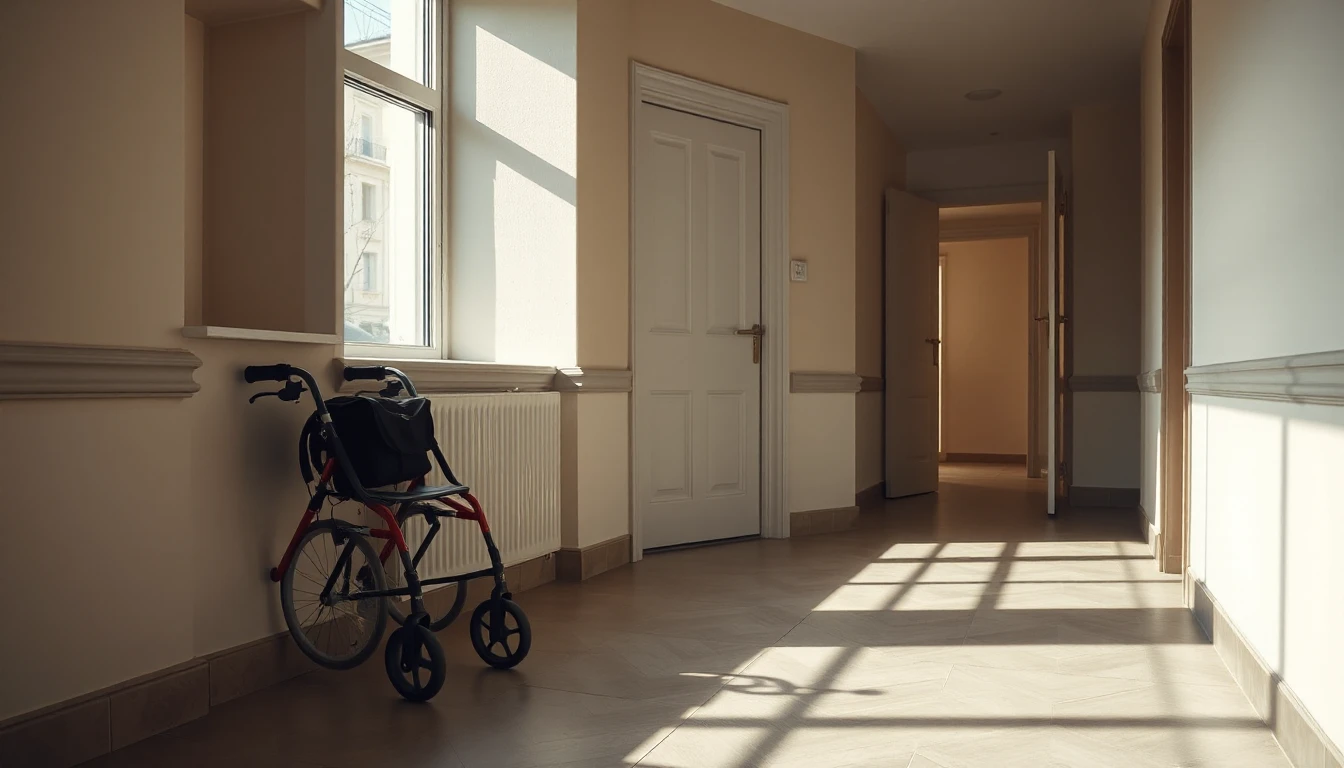
A rollator should be easily accessible in everyday life. In the building a free corner is suggested for this. Whether that corner is actually suitable and permissible must not be judged solely by the available space. First, a description of the daily route is helpful.
Consider use from arrival to departure
Where is the aid needed, how is it reached and what happens when changing to the flat? The person affected can name their specific difficulty without broadly sharing private health information.
The community should not set its own widths, safety requirements or escape route exemptions. Location, permissible use and technical suitability must be checked with the responsible specialist authorities.
Have variants checked against the actual routine
A nearby spot may be poorly accessible. A more distant storage location may miss the required route. Describe the variants based on the same daily situation, rather than just comparing their area.
Organisational questions also include opening a door, key access and accessibility during absence. The legal situation regarding individual claims or communal alterations is not decided here.
Fictitious case: Free space behind a heavy door
The first idea offers sufficient visible space, but lies behind a door that the person affected cannot use independently in everyday life. The community forwards this specific point of use to the technical assessment.
It does not alter door closures or locks on its own authority. The new variant is only communicated as an actually available option after appropriate clarification.
Formulate an appropriate outcome
The proposal states the desired accessibility, confirmed options and outstanding prerequisites. A provisional aid is described as such. Personal needs and communal safety requirements are considered together in the responsible forum.
This creates a comprehensible task for further examination. The mere sentence “There is still space there” is not sufficient for that.