




A new shop premises offers sufficient sales area. At the appointment the prospective operator only sees display goods and is already thinking of an unproblematic access for the first large delivery. In fact, the goods will arrive in a different transport state and will have to be received during opening hours.
The article describes its own preparation method for Austrian commercial premises. It does not grant any transport or safety clearance. All examples are fictional.
Start with the actual delivery
Have the intended supplier describe how the goods will arrive: packaging, load unit, aids and the intended handover point. A single product taken out of the carton does not sufficiently represent this condition. It should also be clear who is intended to be responsible for the further movement of the goods after the handover.
In the example the exhibited piece of furniture fits through a door, but its transport packaging has not yet been reconciled with the internal access. For this reason the business does not order the complete first delivery solely on the basis of the successful sample viewing.
Break the route down into understandable sections
Walk the intended route without attempting risky transport. Where will reception take place? Which door or change of direction follows? Where is an initial allocation made, and how does the goods then reach their actual place? Measured observations are recorded with date and place.
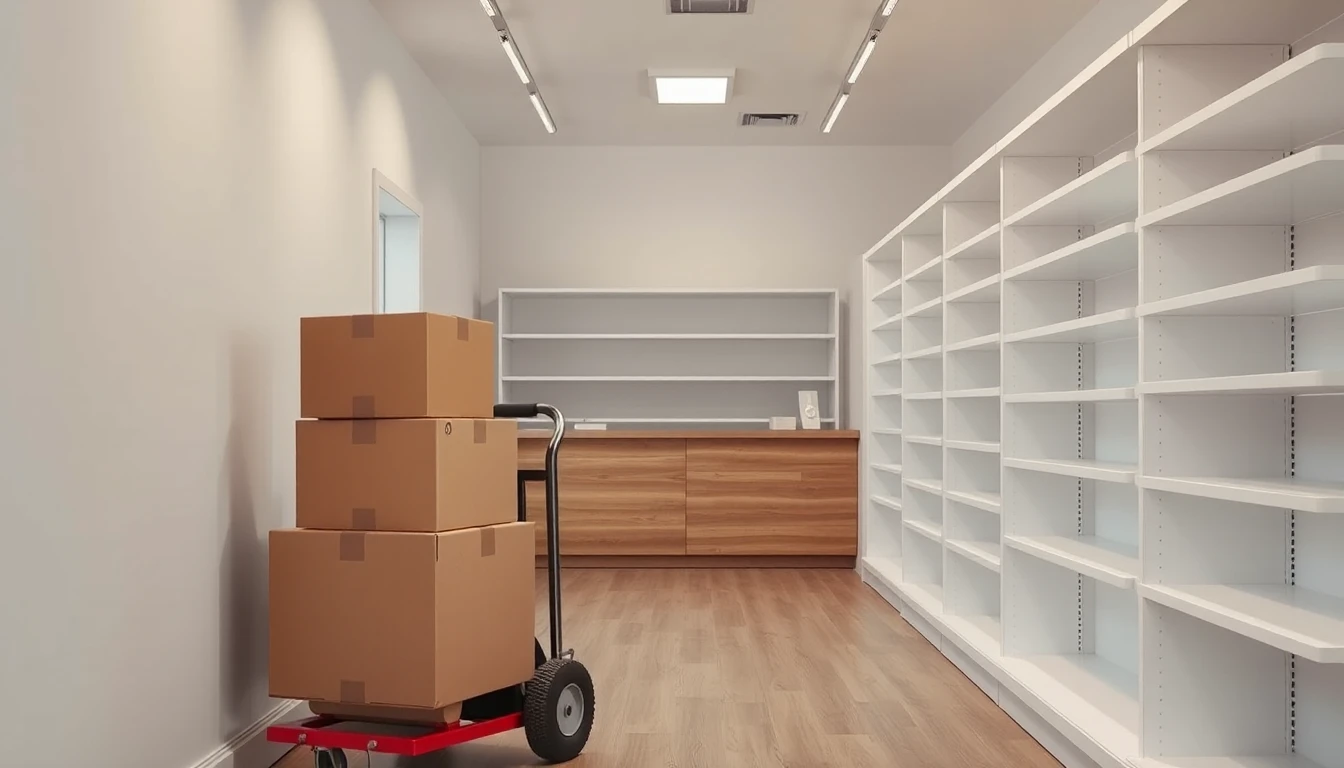
The official Labour Inspectorate (Arbeitsinspektion) treats traffic routes and exits depending on actual pedestrian and vehicle traffic; for vehicles the load also plays a role. [Q1] This article does not adopt any self-calculated minimum dimensions from that. The concrete safe usability will be assessed by specialists.
Tolerate the simultaneous ongoing sales
A route that is clear when the shop is empty can look different during trading. For that reason customers, advising and restocking are considered together. An area already designated by the shop layout as a presentation space is not additionally counted as a permanently free delivery area.
The examination may also result in an organisational solution. In the fictitious case another delivery time window is discussed with the service provider. A still non-binding option remains so described until it is actually agreed. The use of a third-party passage is likewise not inferred from a door that has been opened on a single occasion.
Address an open point before committing
The supplier and the responsible specialist planner receive the same documented goods route. If a section is not suitable, possible solutions are described with their responsibilities and prerequisites. Structural alterations or the dismantling of a door are not assumed to be a matter of course.
Preparation is complete when the required delivery is linked to an internal process that has actually been clarified. Public loading zones and third-party access rights must additionally be clarified in relation to the location. A functional route inside the shop does not confirm these external rights; conversely, a wide external delivery does not yet make the internal route suitable.