



A local report can help people searching for housing to ask their own questions about a residential area. It is not enough to retell an existing district article from another website in different words. The starting point is a clear reader question, your own observations and, for concrete statements, actually verified sources.
Limit the report to a comprehensible question
Choose an angle that is useful for the apartment search. For example, your own article can show which questions arise when transitioning between a residential street and the daily supply route. That is different from a comprehensive judgement that the whole place is ideal for everyone.
Note before the research which statements you can observe yourself and which need another basis. A visible facility does not prove its current opening hours, a bus stop not today’s timetable. Such concrete details are checked against the appropriate primary sources before they appear in the actual article.
Record your own observations with limits
Document the date, time and extent of your inspection. Describe specific situations without presenting them as a permanent characteristic of the entire neighbourhood. A quiet appointment is an observation, not comprehensive proof of low noise.
Keep personal impressions and verified factual information separate. The finished text may combine both clearly, but should not obscure their origin. The editorial team needs a comprehensible explanation of why a particular sentence can be published.
A fictional editorial assignment
The team wants to create an article about an everyday route. It plans its own walk-through, a verified up-to-date piece of information about the public offering and a suitable motive taken or created by itself. It does not use map images, other people’s street photos or wordings from other local reports.
During the work it becomes clear that the original headline went too far. The text therefore describes the route actually considered and states its limits. Additional statements that could not be sufficiently checked remain out. A shorter true report is more useful than a report that sounds comprehensive.
The image concept is part of the statement
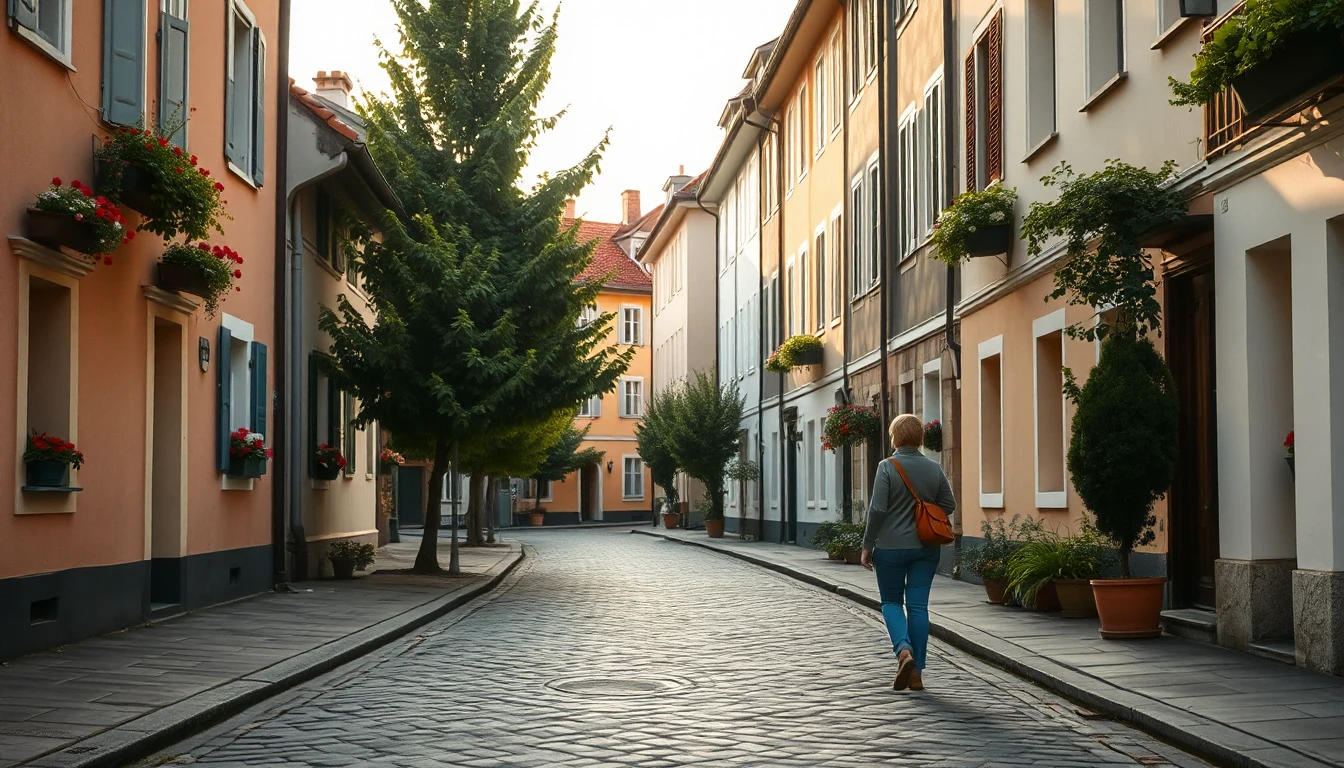
Decide which information your own image should show. Use self-generated images only with an appropriate recognisable illustration status; they are not a documented capture of a specific place. Actual location images must fit their own recording context.
Questions about personality rights, recording locations and permissible publication must be clarified separately for a real photography project. This article does not provide a general legal release for that. No external image files are accepted as publication material for this library.
An article that remains verifiable later
Save your own notes, the sources used with the retrieval date and the released scope of statements together. Variable information should receive a comprehensible check point for later reuse. A timelessly worded sentence must not hide that it is based on a single old visit.
This guide itself contains no factual claim about any particular place. It describes an editorial production process of its own. Its result is an original, limited and verifiable local report that supports people searching when they make their own decisions, instead of prescribing them a blanket ideal of living.