



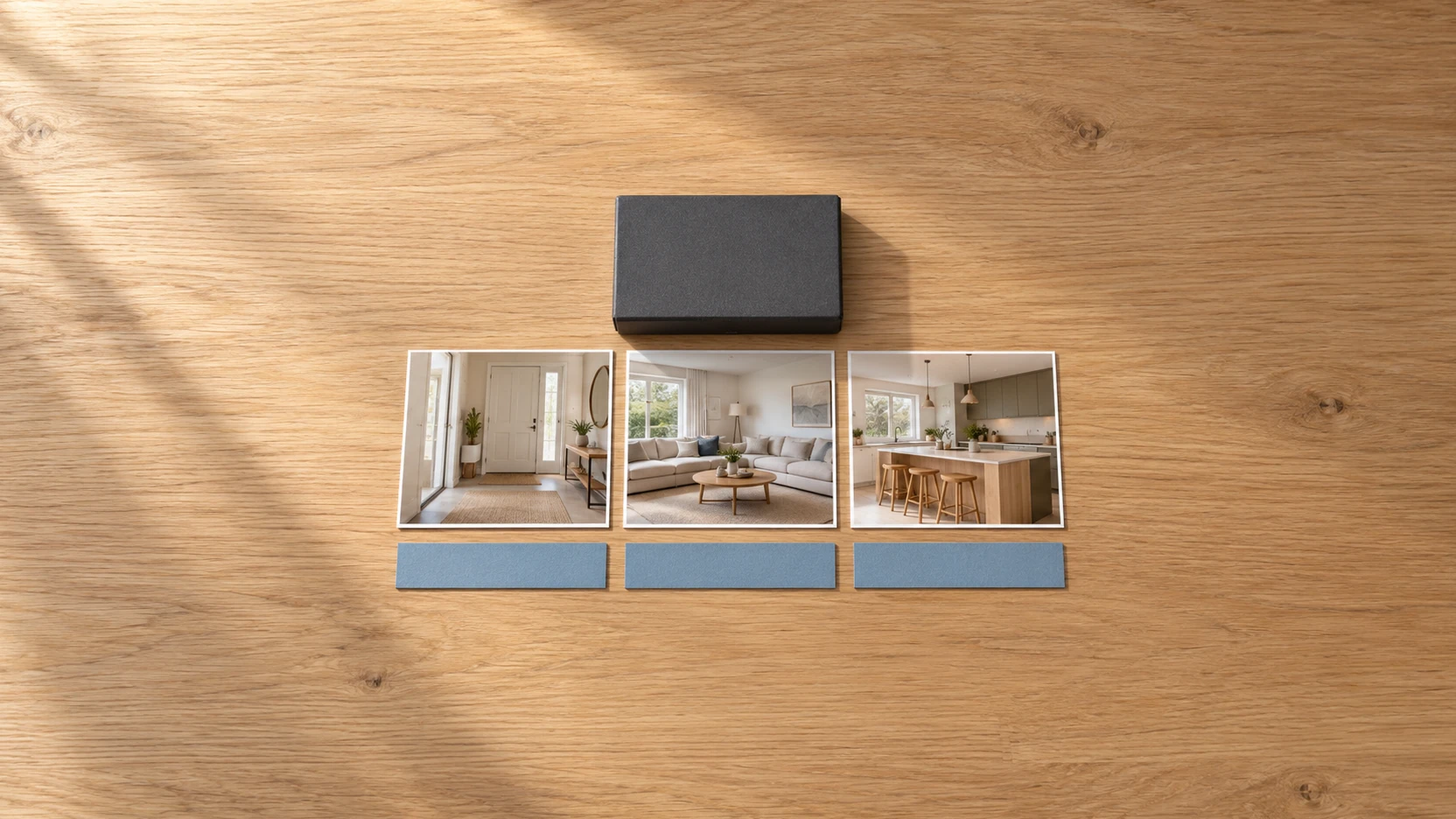
An extensive property video can answer several questions. If someone later wants to find only the explanation for a room or a document, they should not have to search through the entire film. Good chapters therefore arise from the content structure and not from arbitrarily set timestamps.
YouTube allows manually described video chapters via timestamps and titles in the description. The help page mentions a start at 00:00, at least three ascending timestamps and a minimum length of ten seconds per chapter. Custom chapters replace the automatic segmentation. Availability and possible restrictions must be considered for the respective channel and video. [KAPITEL]
A chapter map should answer questions first
When the content is finished, write down which question each section actually solves. “Documents” can be too vague as a title if it explains what an existing plan shows and what remains open. A more precise heading helps without promising more than the film sequence delivers.
For a room presentation, navigation can be organised spatially. In an informational video, factual decision steps are often more helpful. Mix the two orders only when viewers can understand the context. Three mere promotional headings do not yet create a usable content guide.
Go through each intended entry as if it were a separate visit. What information is missing if someone jumps directly there? A decisive limitation must remain understandable in the section and must not be hidden exclusively in an earlier introduction. The chapter marker text does not replace such an explanation.
The time list belongs to the final version
Measure the actual section starts only from the clearly labelled export. If audio pauses are still shortened or scenes removed beforehand, old entries may end up at the wrong point. The working file should therefore link film version, start time and factual title.
In the hypothetical example, the explanation of the usage option initially begins at minute two. After tightening the introduction it occurs earlier. The editorial team does not adopt the old list but checks the target points again. Likewise, very short sections are not artificially stretched apart solely to create more chapters.
Automatic chapters are no substitute for this editorial decision. The YouTube help explicitly clarifies that not every suitable video actually receives automatic chapters. [KAPITEL] Whether manual or automatic navigation should be used is therefore determined deliberately and checked.
From the timecode to an understandable re-entry
Check the processed preview as soon as it is available in the authorised publication workflow. Each marker should lead to the intended beginning and match the visible or spoken content. A labelled kitchen must not start only in the middle of another scene. A factual note must not appear as an unconditional promise because of the jump.
At the end, the chapter file and film version are stored together. The associated worksheet supports later changes after a new edit and, together with this article, forms a topic. Changes to the film trigger a renewed navigation check.
This method is intended for editorial teams in Austria and Germany. It guarantees neither a particular playback feature on every channel nor additional views. Its purpose is an intelligible re-entry into the content that is actually present.