



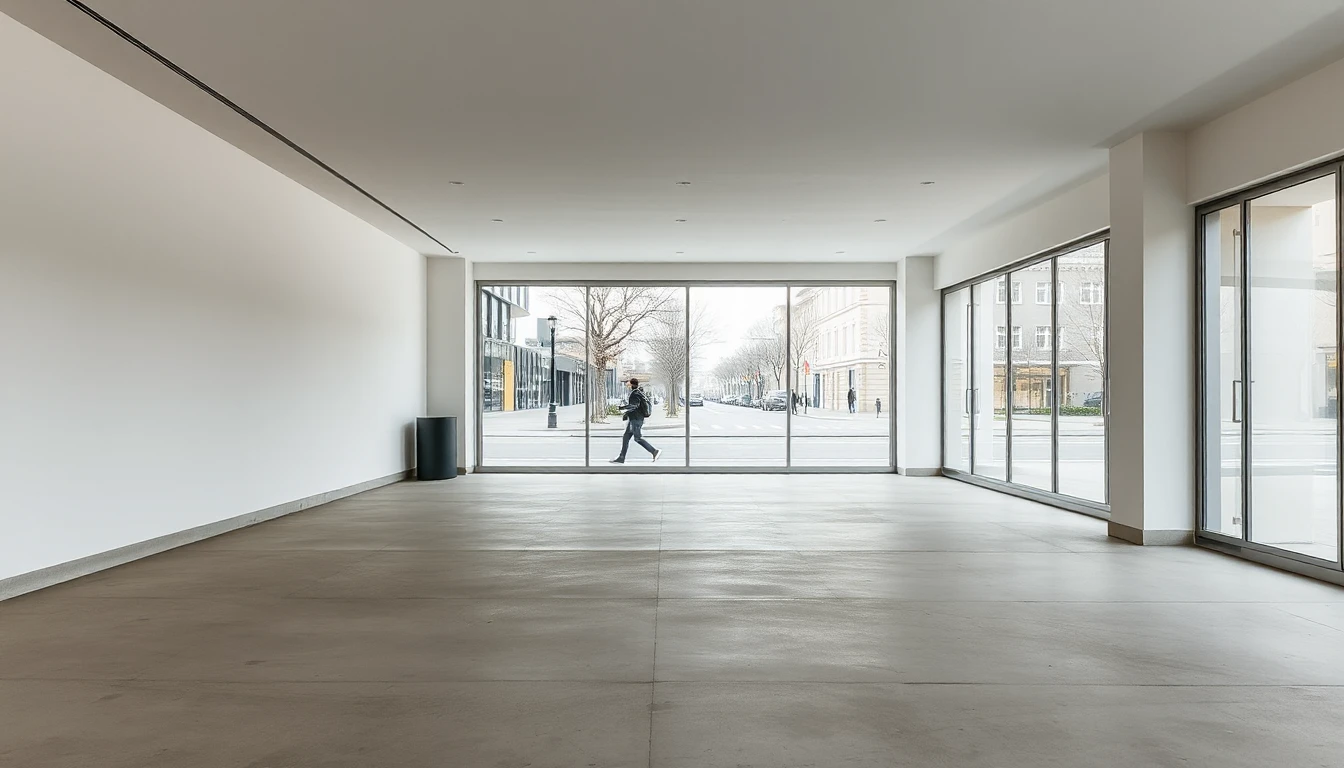
A shop premises is being offered with a high daily pedestrian frequency. The number sounds convincing. During the viewing, however, it becomes apparent that many people are walking to a stop on the other side of the road. For your own location decision the figure therefore needs its actual spatial and temporal reference.
This practical checking method applies to the selection of commercial locations in Austria and Germany. It does not use measured market data and does not state a good or bad general frequency value. A small personal observation is not a representative location study.
Ask about the origin of the figure
Please first ask for the counting location, the period, the survey method and what was actually counted. Are they individual passages, recorded movements or differently defined quantities? A daily value must not simply be adopted from its designation as a number of potential customers.
In the fictional example the stated figure belongs to a counting point at the exit of a transport node. The shop is round the corner. The editorial team of the listing can correctly name the counting point; the interested party must nevertheless consider the route to the actual entrance separately. The stated origin does not replace this location question.
Describe the intended customer route
What activity is the shop intended to offer and how would people actually reach it? Does the concept require more spontaneous short visits, scheduled appointments or the collection of bulky items? The business need is described concretely, without attributing specific purchasing intentions to passers-by based on their appearance.
Consider, in the permitted public area, the visible relationship between direction of movement, side of the road and entrance. Where a route is only presumed, it remains a hypothesis. The article does not recommend observing identifiable individuals or making your own records of personal characteristics.
Limit your own observations
If the team carries out a small comparison, it should set simple uniform counting rules and limited time windows in advance. Record the location, date, time and notable circumstances such as an event or cordoned-off routes. On this basis the statement of a single observation appointment can be better confined.
A quiet half hour is not extrapolated into a confirmed poor annual business. Likewise, an unusually busy event is not declared the normal day-to-day operation. A reliable further survey requires an appropriate commissioned study.
Connect the figure to the decision
In the example the premises remain interesting for appointment-based consulting, even though the original argument of spontaneous walk-in customers was not confirmed. Another concept would be more dependent on precisely this assumption. The location decision therefore states which information is indispensable and which question still needs to be answered.
Expected customers, turnover and viability are not calculated solely from observed passages. Even an evidenced frequency value would only be a labelled input variable. The practical benefit of this check is to understand the real access to your own offering and not to let a promotional number unnoticed become the secure basis of the business.