



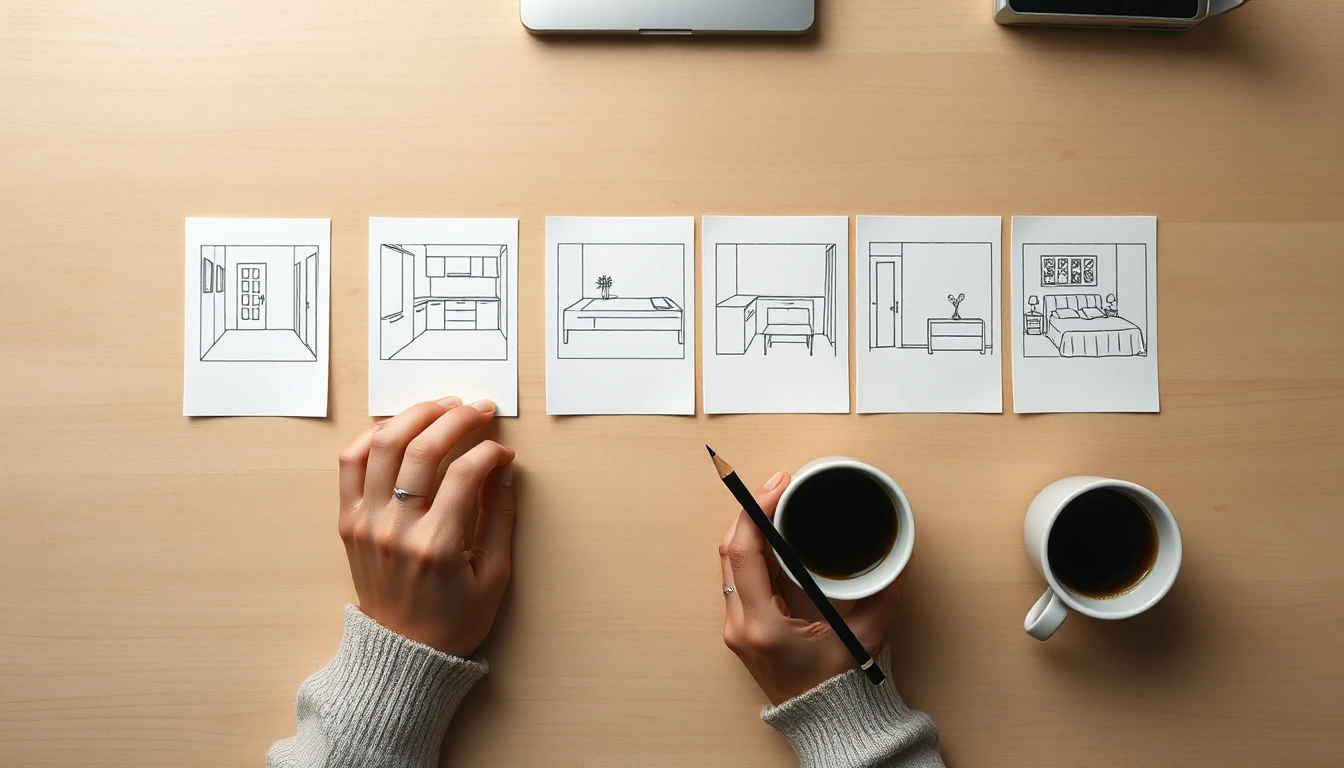
You want to create a short property video without recording a screen. For this you first need an understandable sequence of statements and visuals. A storyboard is the bridge between text, image and later motion. It shows what the clip is supposed to explain before time is invested in animations.
From the goal to the visible sequence
Formulate a single question that the video should answer. For a general explanatory clip this could be: How do I read the relationship between living space and outdoor area in the floor plan? For an actual property clip, however, the information and images used must match the specific listing. A self-generated image is not presented as a documented view of that property.
Then write the statement down in a few consecutive steps. Each scene is given a task. A nice visual that does not contribute to the explanation stays out for now. The editorial sequence promises neither a specific reach nor a generally optimal video length.
Design sound, text and motion together
For each scene create four lines: spoken statement, visible motif, overlaid text and transition. These lines are coordinated with each other, rather than produced independently one after the other. One person should have enough opportunity to recognise the information currently being explained; the actual duration will be checked on the final draft.
Motion needs a purpose. It can direct the viewer's attention to the area currently being addressed or make two states comprehensible. It should not pretend a property that is not supported by the source material. A digitally altered room must not appear unnoticed as the actual existing condition.
Play a scene through concretely
In the fictional explanatory clip a self-created schematic room sketch is used. First the living area is shown, then the transition to the terrace is marked. The spoken text explains exactly this connection. A visible label makes it clear that the depiction is an example and not a documented property listing.
The next scene only deals afterwards with its own question to be checked by searchers. This way the clip does not mix floor plan, location, costs and contact details at the same time. The sequence follows from the explained context, not from as many effects as possible.
Have the storyboard read without sound
Check once only the image and text level, then image and speech together. Is the question recognisable, do the spoken words match the visuals and do important pieces of information remain legible? Add appropriate subtitles and a description if necessary, without deriving a blanket accessibility guarantee from this.
Save the approved scene version together with the speaker text, image status and file assignment. This allows the actual production to build on a clear draft. This article does not claim any specific functions of an animation or social media programme and does not use external photos or video sequences.