



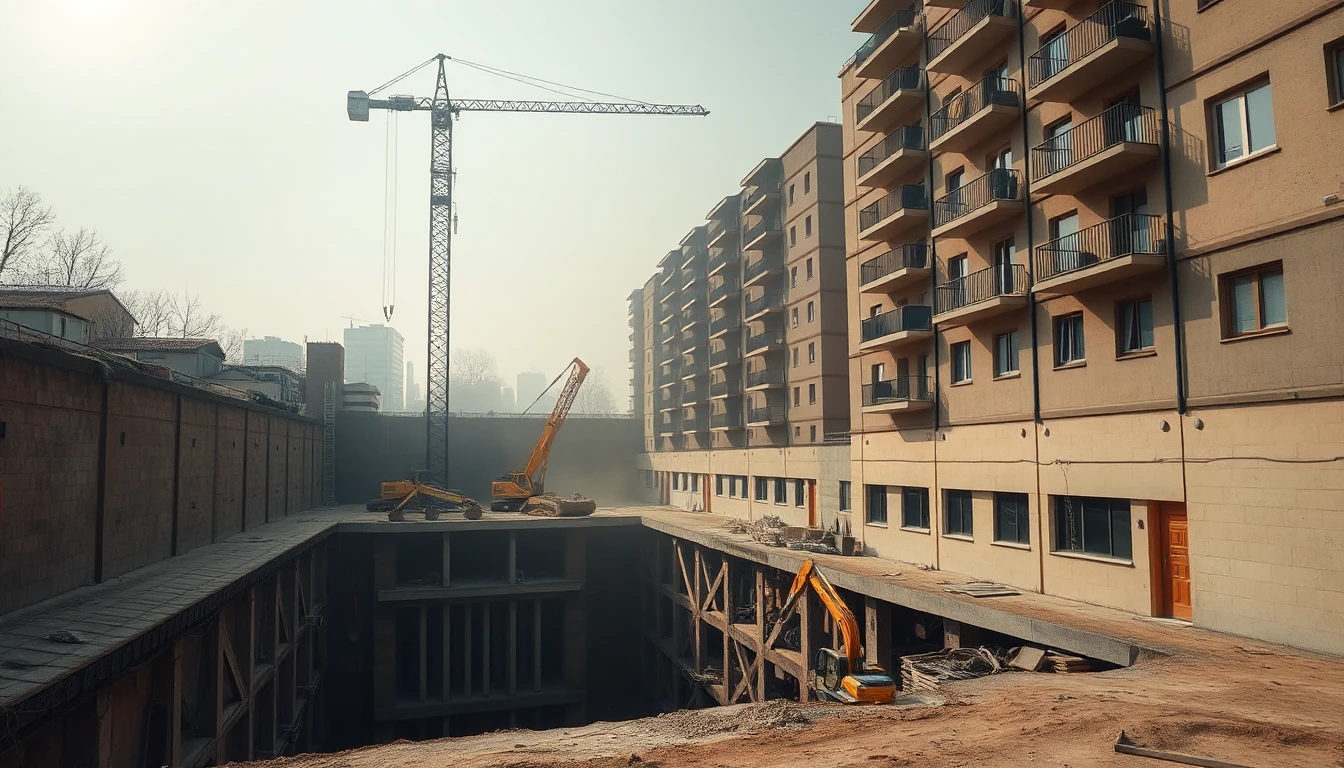
Reader question: What information and legal issues do I need for subsequent construction noise from a third party's property?
After the start of your German tenancy agreement, a new house is erected on a neighbouring third party's plot. You experience noise and dirt in your flat and want to have a possible rent reduction examined. A photo of the construction site and a percentage found on the internet do not yet answer this question.
The BGH has set out concrete requirements in VIII ZR 31/18 of 29 April 2020 precisely for such subsequent construction immissions. This article concerns that third-party construction site case. A modernisation carried out by your own landlord or a burden already contractually regulated otherwise may raise additional questions. [BGH3118]
Describe the impact in your own flat
Record which impairment is experienced in which room. What is perceptible and which ordinary use is thereby made more difficult? Note the type, approximate times of day, duration and frequency. Different construction phases can have different effects; a demolition phase must not without observation be transferred to all later months.
The BGH does not require a blanket assumption that a typical nearby construction site must automatically justify a certain reduction. What matters are the concrete effects on the affected flat. [BGH3118] A report from another flat in the building can supplement, but does not fully replace, your own facts.
Do not invent a mandatory measuring device
For recurrent burdens the judgment explains that a sufficiently accurate description of the phenomena can be sufficient. A formal noise log or a decibel measurement is not generally required for this. In a dispute the allegation and, where appropriate, the proof of the essential impairment remain necessary. [BGH3118]
As editorial assistance you can order existing observations by construction phases. Give approximate information as approximate. A smartphone display will not be retrospectively declared to be proof of an official limit. It is about an understandable factual basis, not a technically confirmed measurement in the article.
Also check the contractual framework
The judgment also addresses possible agreements on the condition. A quiet environment existing at the time the contract is concluded does not alone mean that the tenancy promised the unchanged condition for the entire term of the tenancy. [BGH3118]
Therefore produce any concrete assurances that actually exist and the complete contract. Your own expectation is separated from a demonstrable agreement. That does not remove the perceived burden, but it does influence the legal classification of a defect.
Do not skip the landlord's role
In the absence of a deviating agreement, the landlord's defence or compensation options vis-à-vis the polluter may play a role. If the landlord must also accept the effects without such options, they do not, according to the standards explained, as a rule constitute a corresponding defect. The judgment allocates the matters of allegation and proof according to areas of responsibility. [BGH3118]
The tenant therefore does not have to investigate all internal relations between the landowner and the builder themselves. They describe their own impairments concretely and let the legal examination together with the landlord's actual response be added.
Hypothetical course of events and next step
In the hypothetical case a resident describes separately the noisy demolition phase and later shorter works. She names affected rooms and approximate time windows. The landlord receives a concrete notice of defect; §536c must be observed in this context. [BGB536c]
The consultation then examines the contract, intensity, time periods and the legal possibilities in the third-party relationship. A quota from another case will not be adopted in advance. The BGH judgment likewise referred back for further factual examination. [BGH3118] Only a clarified concrete claim provides a viable basis for further treatment of payments.