



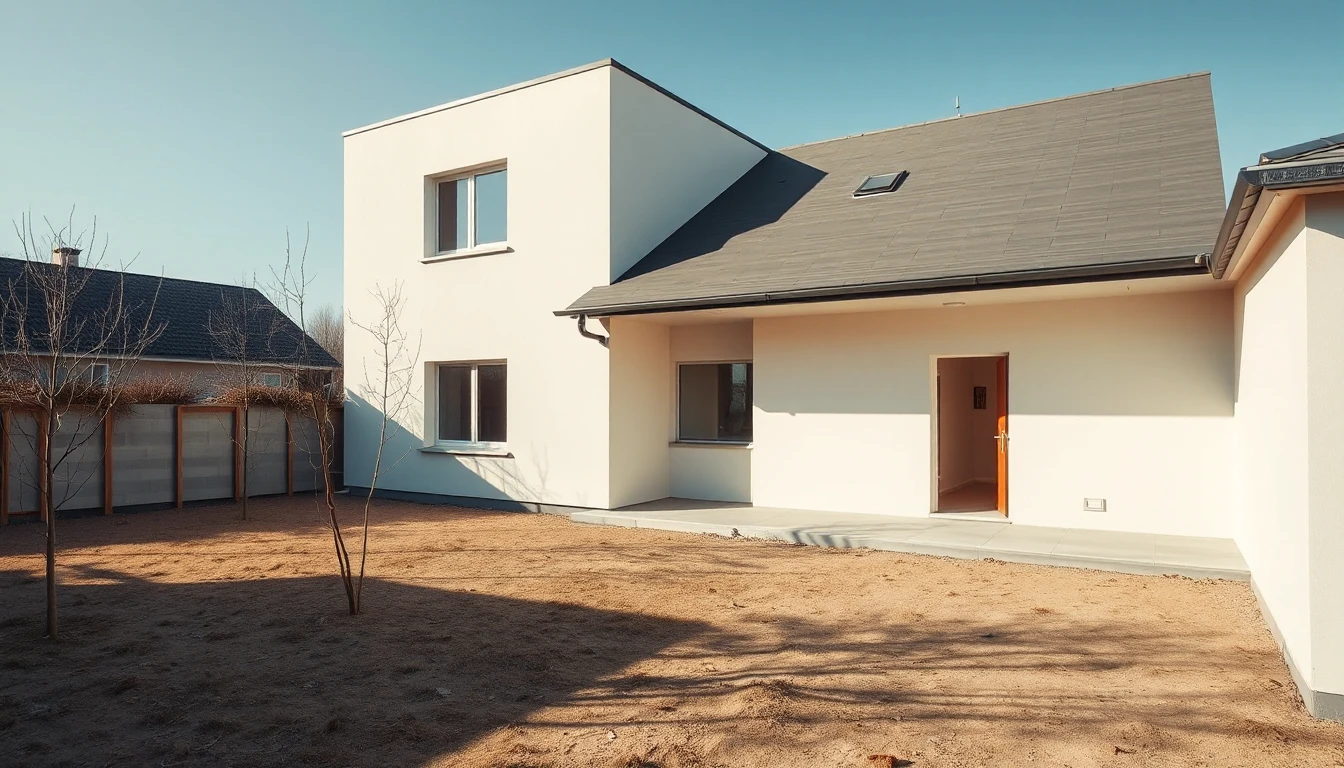
Two house offers show similar living areas and both advertise themselves as “turnkey”. Nevertheless, the scope of the works offered can be described very differently. For a comparison you therefore need a comprehensible idea of the actual condition in which you are expected to take over the house and which tasks will remain with you beforehand or afterwards.
Translate the promised result into individual services
Start at the entrance and mentally walk through the future building room by room. Which surfaces, connections and fittings are explicitly included? What is only to be prepared? And which item is visible on a visualisation but not listed in the specification of services?
Do not adopt any general definition of the word “turnkey” purportedly confirmed by this article. What matters for your preparation is the service actually offered and later agreed. Its legal interpretation should, if necessary, be part of an expert contract review.
Also record the area outside the living spaces: required access routes, connections to existing infrastructure and the condition of adjoining areas. The comparison should not be made to look more favourable by having indispensable tasks appear only on another side of the project.
Client-side works are genuine project tasks
If an offer presupposes a preliminary performance on your part, note its exact condition at the time it is required. “Foundation provided by client” is only understandable as an organisational task once planning, execution, required certificates and the interface with the house provider are described adequately.
Have the professionals involved clarify how their services build on one another. You do not need to invent technical connection details yourself. However, you should be able to see who will take responsibility for coordination and what result the next party needs.
A client-side task does not become free simply because it lies outside the offer price. Therefore keep its still-open effort visibly in the overall project. A provisional estimate and an actually obtained quote should receive different labels.
Do not confuse changes with the original package
Special windows, a different room layout or altered building services can change the discussed scope. For a serious comparison, request the same planning version. A cheap base specification next to an already individualised alternative does not yet produce a reliable price difference.
Also record which selections have already been described as binding and which decisions are still open. Decorative example images must not become promised product characteristics in your own comparison overview.
A small difference can become large in the overall picture
In the hypothetical example, Offer A includes certain floor finishes and a more closely specified staircase. Offer B appears cheaper but lists these services as still open choices. For both offers, work on the plot is also to be organised separately.
The prospective buyers create three columns: comparable included service, required client task and still-unclear scope. They do not add invented flat-rate amounts to quickly produce a winner. First they have the essential gaps explained and bring the offers to a comparable level.
The result is a readable service reconciliation with responsible parties at the interfaces. It does not replace a technical, legal or economic review. However, it shows early on whether a seemingly inexpensive house price actually describes a cheaper overall project or merely covers fewer of the required tasks.