



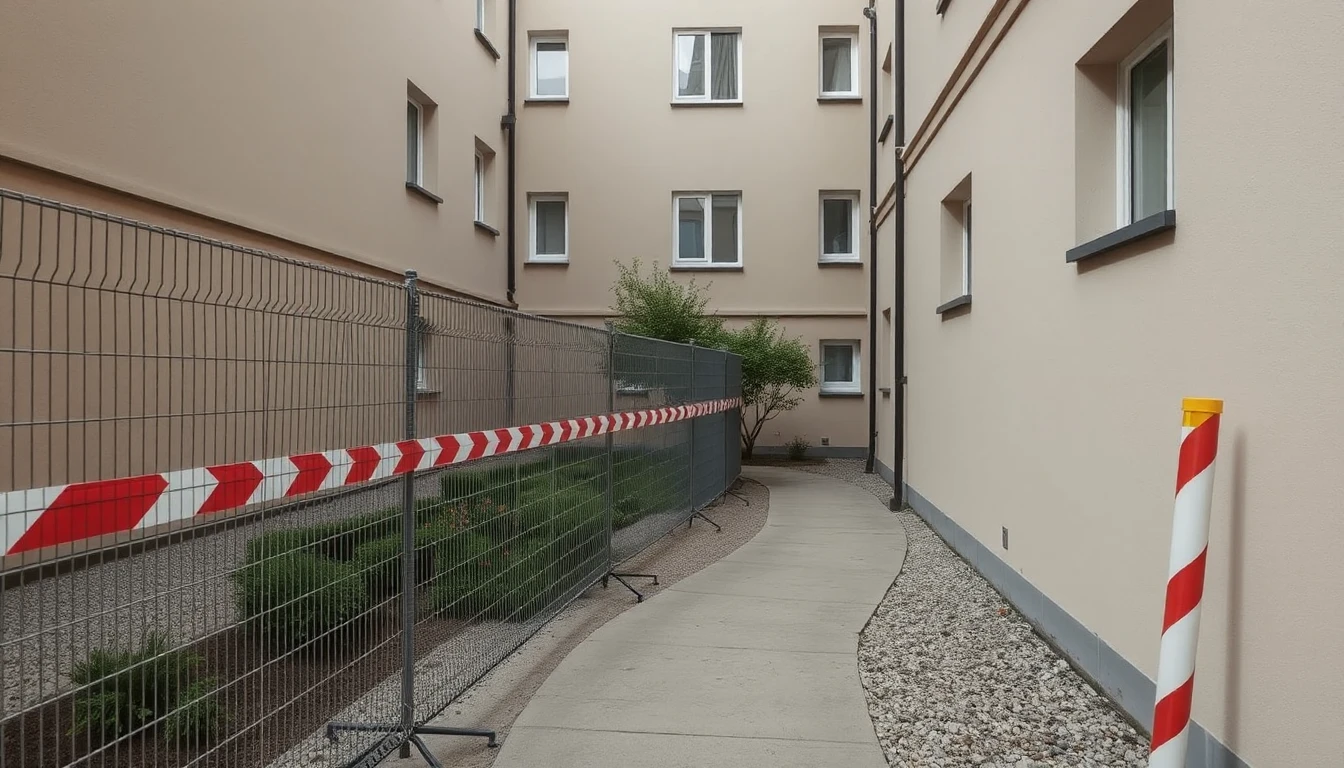
A construction site setup occupies a route that residents use daily. On the site plan the remaining alternative looks simple. In everyday life, however, other obstacles can appear: load-bearing capacities, prams or access to shared rooms. The administration should bring these actual uses into the professional preparation.
Describe routes as the complete stretch
Start at the usual point of departure and finish at the actual destination. Not only the bottleneck itself, but also doors, changes of direction and the accessibility beyond belong to the description. Photos or sketches may explain the local situation, but they do not confirm a safe or permissible route.
Let the competent technical side determine which areas are usable and which prerequisites apply. Residents should neither open provisional routes on their own initiative nor move barriers.
Collect different uses purposefully
Ask about the specific tasks that the affected route fulfils. Which deliveries, collections or recurring uses require coordination? A private justification does not have to be distributed generally in the building.
It is important to pass this on in good time to the planning or executing technical side. The administration does not promise an accessible alternative as long as its suitability has not been appropriately examined and confirmed.
Hypothetical case: The entrance remains accessible, the laundry room does not
A planned diversion leads residents to the main exit. When running through the daily routes it becomes apparent that the shared ancillary room is not accessible from there. The administration brings this specific usage point into the further planning.
The solution is technically examined. If the use must remain restricted temporarily, exactly this restriction will be communicated. The statement "Access is ensured" will not be extended indiscriminately to all uses in the building.
Measure changes to the actual procedure
When a construction site setup is changed, the route consideration is repeated. A sketch distributed once does not automatically cover later shifts. Record the confirmed status and a feedback channel for new obstacles.
This makes everyday dependencies visible early. The professional route planning and safety responsibility remain with the parties responsible for them.