



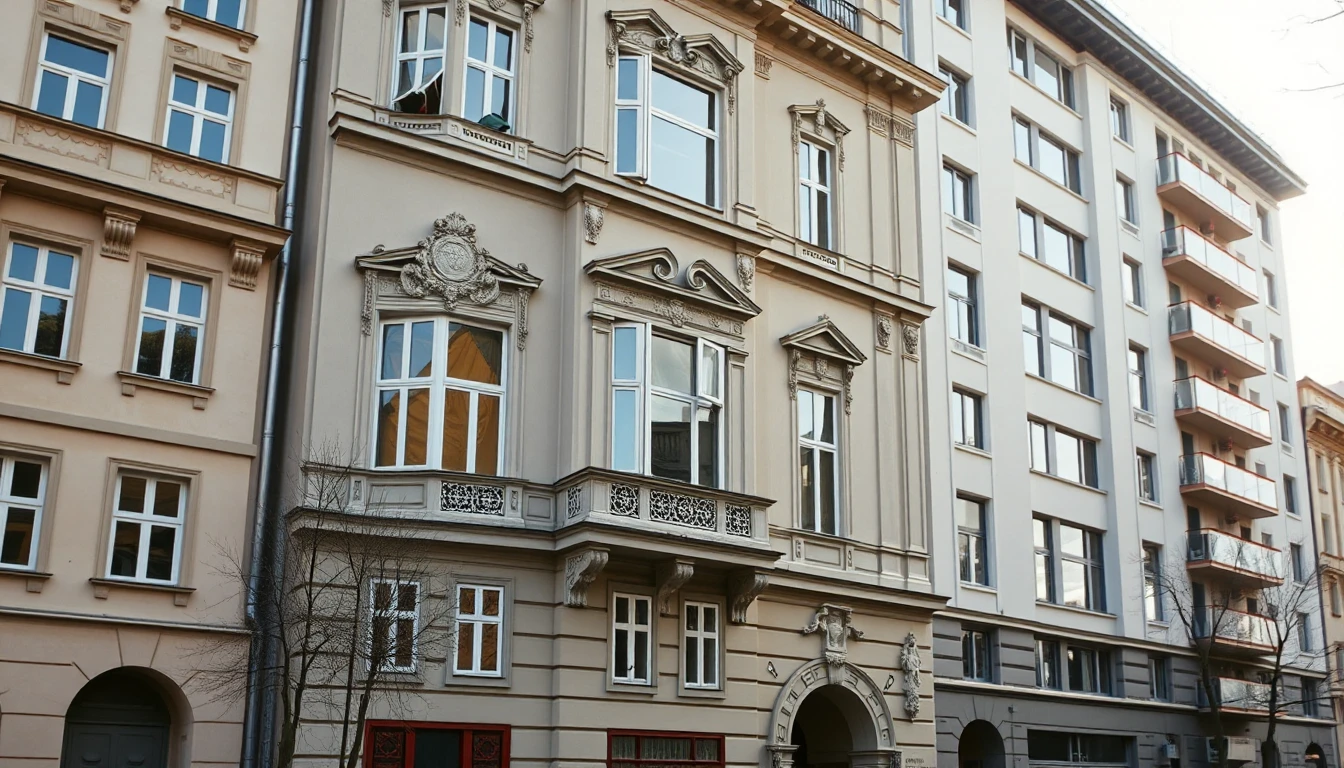
Whether your rent is capped, whether you are protected against termination, and who must settle the operating costs (Betriebskosten) depend in Austria on a preliminary question: does the Mietrechtsgesetz (MRG, Tenancy Act) apply to your tenancy agreement in full, only in part, or not at all? The answer depends mainly on the year of construction or the date of the building permit (Baubewilligung), on the number of units in the building and on the type of letting. This overview shows you how to roughly classify your flat.
Three levels: in full, in part or not at all
The MRG generally applies to the letting of flats, parts of flats and commercial premises, including ancillary areas rented with them such as a garden or parking space [S1]. This gives three levels:
- Full exemption: The MRG does not apply to the agreement at all. In that case essentially only the agreement and the general tenancy rules of the ABGB (General Civil Code) apply [S1][S6].
- Partial application: Only individual provisions of the MRG listed in the law apply, in particular on succession on death (§ 14), on the deposit (§ 16b) and on fixed terms and protection against termination (§§ 29 to 36) [S1].
- Full application: If neither an exemption nor a case of partial application exists, the MRG applies in full, with rent caps, operating cost rules and the landlord's maintenance obligations [S1][S2].
Important: first check the exemptions, then the partial application. Only if neither applies are you within the scope of full application.
When the MRG does not apply at all
The law lists the full exemptions exhaustively [S1]. The most relevant for tenants are:
- Buildings with no more than two independent flats or commercial premises, typically a detached or semi-detached single- or two-family house. Rooms that were later created by a loft conversion do not count [S1]. This rule applies to agreements concluded after 31 December 2001; for older agreements, the legal position at the time is decisive [S3].
- Service, benefit-in-kind or company flats made available to you in connection with an employment relationship [S1].
- Second homes for recreation or leisure, where you have your ordinary residence elsewhere [S1].
- Short professional second homes: flats of category A or B that you rent in writing as a second home for no more than six months because of a temporary change of workplace [S1].
- Letting within certain businesses or homes, such as accommodation businesses or homes for students, apprentices or older people, as well as socio-pedagogically supported housing run by charitable organisations [S1].
Fictitious example: a couple rents the upper floor of a house in which the landlady lives on the ground floor; later the loft was additionally converted into a small flat. Because the loft flat does not count, the house still has two units, and the MRG does not apply to an agreement from 2024.
When the MRG applies only in part
Partial application means that protection against termination and the rules on fixed terms apply, whereas rent caps and the MRG rules on operating costs and maintenance do not [S1][S6]. Mainly affected are [S1]:
- Privately financed new buildings: buildings newly constructed without public subsidies on the basis of a building permit granted after 30 June 1953.
- Let owner-occupied flats in newer houses: condominium units in buildings for which the building permit was granted after 8 May 1945.
- New attic flats: flats created by a loft conversion or an added storey on the basis of a building permit granted after 31 December 2001, including in an older building.
- Extensions: rental objects newly created by an extension for which the building permit was granted after 30 September 2006.
In each case, the decisive factor is the date of the building permit, not the day you moved in.
When the MRG applies in full
What remains are mainly three groups, provided the house has more than two units and no exemption applies [S1][S2]:
- Older rented flats in buildings approved before 1 July 1953.
- Let owner-occupied flats in older buildings for which the building permit was granted before 9 May 1945.
- Subsidised rental apartment buildings, i.e. new buildings constructed with public funds. Additional subsidy-related rent rules may apply here [S1][S4].
Fictitious example: An apartment is located in a Gründerzeit building with twenty apartments, but was constructed in the converted attic in 2010. Although the building itself is an old building, this particular apartment falls within the partial application. The neighbouring flat on the third floor of the same building, by contrast, is fully covered by the MRG.
A separate law applies to apartments of non-profit housing associations, the Wohnungsgemeinnützigkeitsgesetz (WGG); the MRG is applied there only according to its provisions [S1][S2].
What the classification means for you
- Statutory rent ceiling – Full application: yes; Partial application: no; Full exemption: no
- Eviction protection, rules on fixed-term tenancies – Full application: yes; Partial application: yes; Full exemption: no
- MRG rules on operating costs and maintenance – Full application: yes; Partial application: no; Full exemption: no
- Limitation of indexation clauses (MieWeG) – Full application: yes; Partial application: yes; Full exemption: no
Sources for the table: [S1][S4][S5][S6].
- Eviction protection: Where §§ 29 to 36 MRG apply, the landlord may only terminate for important reasons and only by court [S1][S4]. For fixed-term residential tenancy agreements concluded or renewed from 1 January 2026, the minimum duration is five years if the landlord is an entrepreneur, otherwise three years [S4].
- Rent: Only in full application are reference rents, category rents and the like provided for. In partial application and in cases of full exemption the rent is generally freely agreed; only general rules such as the prohibition of usury set limits there [S2][S7].
- Indexation: Since 1 January 2026 the Mieten-Wertsicherungsgesetz limits contractual index adjustments in head and subtenancy agreements for apartments in the full and partial application scope of the MRG [S5].
How to find out: Ask the landlord or the property management about the year of construction or the building permit and whether the building was constructed with subsidies. Also helpful are the land register extract (for example, shows whether ownership of individual flats exists) and your tenancy agreement. If anything remains unclear, a tenants' advice service or the Arbeiterkammer in your federal state can help; a binding clarification is only possible in individual cases.