



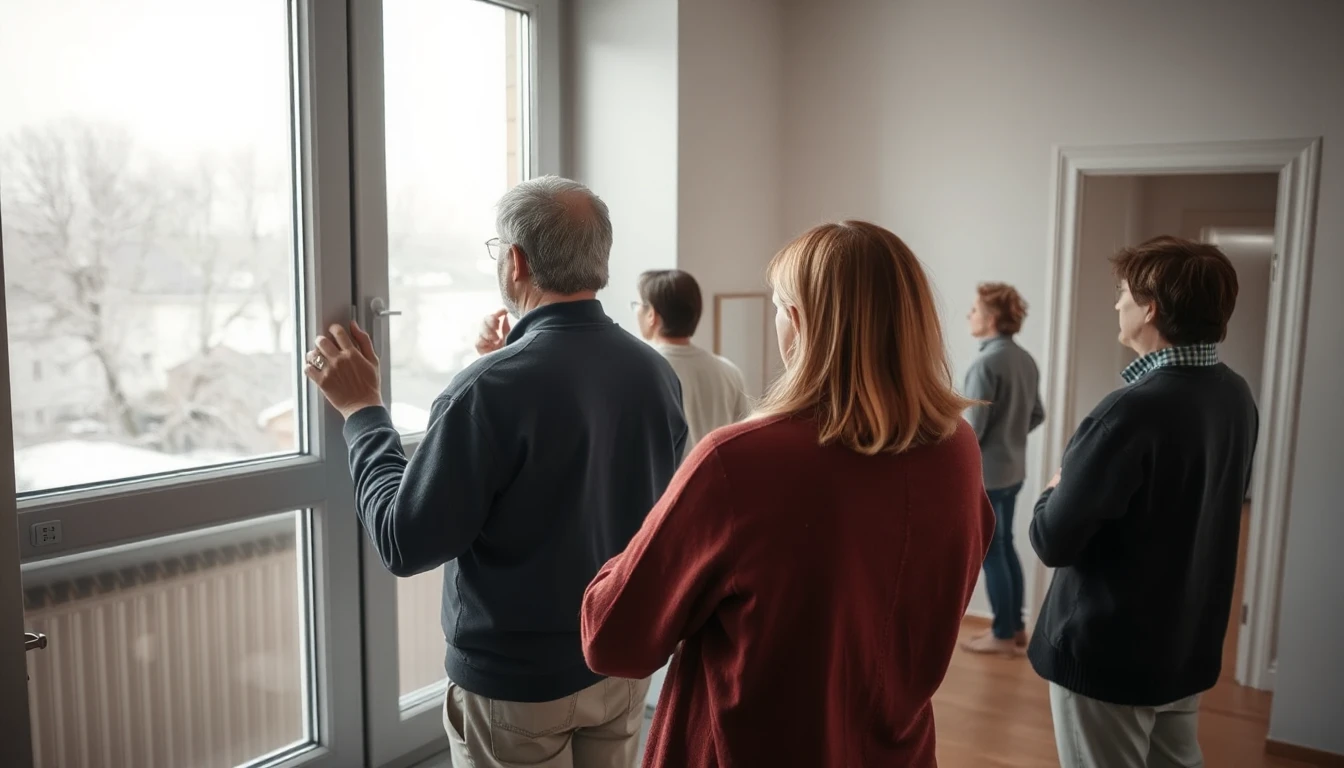
You arrive at the viewing and several other prospective tenants are already waiting outside. People are talking in the rooms at the same time, and some are already on their way out again. You do not have to ask the loudest question there or be the first to express interest. The aim of the appointment is to learn enough about the flat to be able to judge your next step. The following procedure is our own editorial recommendation for Austria and Germany.
Clarify beforehand which time window is actually meant
Read the invitation for its specific procedure. Is there a common start, an open visiting window or several registered groups? Does your attendance need to be confirmed? If this is unclear, ask briefly. Do not treat a personal tour as firmly booked if only a time period to drop by has been stated.
Then choose a few questions that would actually change your decision. They belong at the front because you may not get a long uninterrupted conversation. This does not replace a complete technical inspection. The aim is to identify the next appropriate information step, rather than filling every available minute with an unwieldy list.
Your own tour needs a through line
Start with the sequence that is important for how you will use the home: arrival, access, rooms and associated ancillary areas. Follow only the viewing route actually offered and permitted. An open door or the movement of another person is not an invitation to enter an area that has not been released.
Observe the flat first. The mood of the group is not a reliable characteristic of the property. Many attendees do not make a layout unsuitable for you more suitable. Conversely, a reserved group is not proof against the flat. Note down your own concrete impressions so that other people’s enthusiasm or haste does not replace them afterwards.
Does an answer even refer to your question?
In group conversations you may hear only part of an answer. Ask what it refers to before noting it down as a confirmed characteristic. Is it about the unit being viewed, another room or a point to be clarified later? An answer to another household’s question may be appropriate for their intended use and still leave your own question unanswered.
If a confidential matter needs to be discussed, ask for a separate channel of contact. You do not have to explain personal documents or your entire financial situation in the room in front of other prospective tenants. This piece does not evaluate a concrete duty to provide information; it merely recommends a deliberately chosen conversation situation.
Hypothetical case: The most important area was not shown at all
Lena is looking for a flat with a storage area usable for her everyday life. At the group appointment she sees the living rooms while the move-in date is being discussed. Some people leave the flat quickly and signal clear interest. Lena initially also wants to commit immediately.
However, she notices that the mentioned storage area has not yet been shown. Her decisive question is therefore not how many other interested parties are tagging along, but whether and how this area belongs to the offered flat and can actually be used. She asks for clarification and a suitable follow-up appointment. A positive decision about the flat is not derived from the pace of others.
Seek an information conclusion rather than a spontaneous competition
Before you leave, summarise for yourself what you really saw and had answered. Which decisive question is still open? Who can answer it? By when is feedback expected and by which method? Ask about the actual further procedure rather than adopting a deadline presumed from the group situation.
An expression of interest should correspond to its intended content. If you are presented with a declaration to sign or a payment, check its concrete effect separately. The article does not promise a general non-binding nature of statements at viewings and no blanket right of withdrawal.
Record your own observations immediately afterwards
Supplement your notes as soon as possible outside the appointment. Separate observed features, expressly given answers and still missing information. If time or access was insufficient, the appointment remains incomplete. That is a useful finding for the further decision.
This is how you use a group appointment as your own information step. You do not have to overtake other interested parties or reject a flat solely because of the form of the viewing. What remains decisive is whether the actually clarified offer fits your household.