



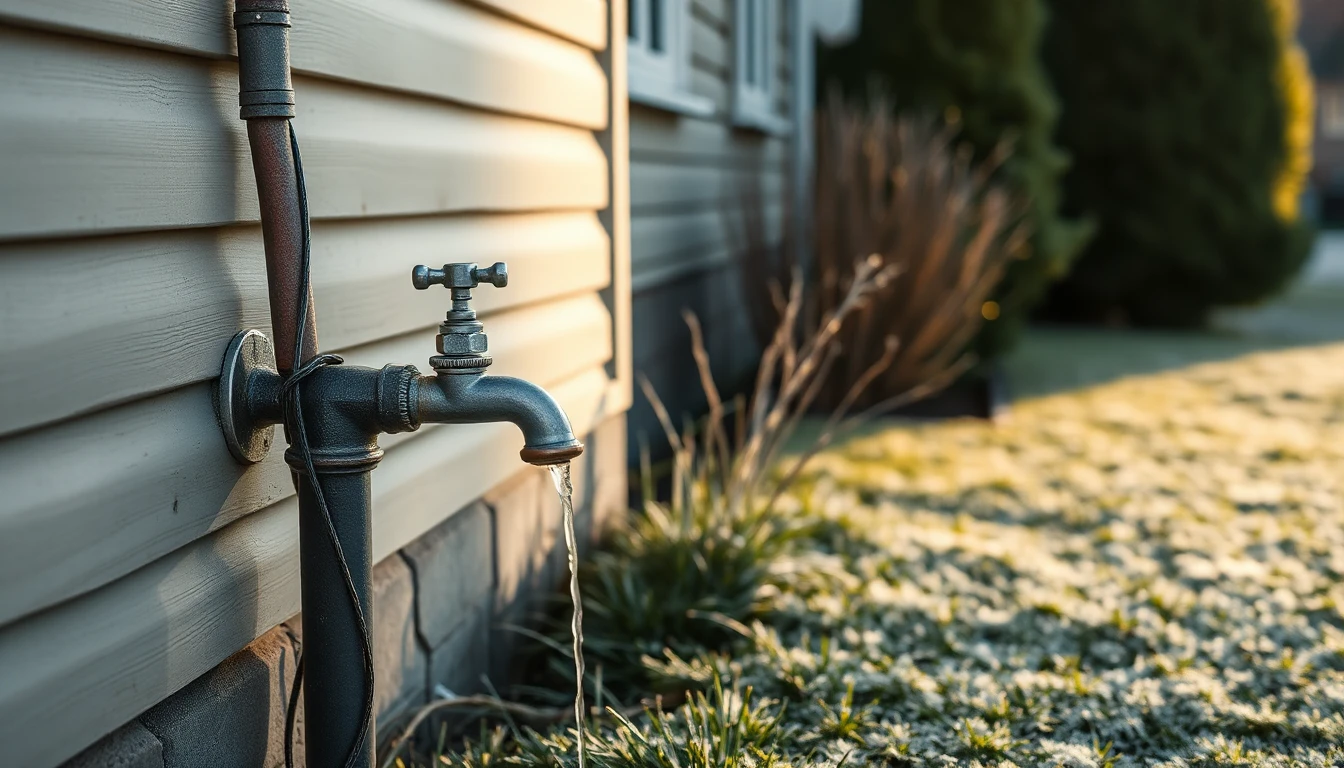
The first winter in the newly acquired house is approaching. The garden hose is still hanging on the outdoor tap, and the documentation for the built-in fitting is missing. Before you adopt instructions from another house, establish which design is actually present and what handling is intended for it. “Outdoor tap” does not yet denote any specific frost-protection function.
Take the difference between construction types seriously
The DVGW distinguishes non-frost-safe external pipes and fittings from external fittings specifically constructed to be frost-safe. For the first group it describes a seasonal need for draining and shut-off. For the explained frost-safe construction the water-filled area lies within the building; for this it prescribes a different winter procedure. [AUSSEN] This does not imply that the unknown fitting on your own house is frost-safe.
Our editorial recommendation: search for existing product and installation documentation and ask the previous maintenance provider. If the construction type remains unclear, have it identified by a suitable specialist installation company. Colour, handle design or a previously problem-free season are not reliable ways to identify a product.
A clear briefing for the actual installation
Request the instructions applicable to this version. Which components belong to the outdoor outlet, what user actions are intended and what must the specialist company take care of? Have the handling of connected hoses and accessories explained in accordance with the specific fitting, rather than deriving a complete sequence from a general internet page.
Unmarked shut-off devices must not be operated as a test and pipes must not be opened by yourself. This article does not provide instructions for draining or thawing an unknown installation. If damage is already suspected, that suspicion belongs in the specialist enquiry and should not be checked by a personal attempt.
Disclose the intended use
The DVGW also points out that special applications such as underground irrigation or a high-pressure cleaner may require a technical assessment of the safety device. [AUSSEN] Therefore state if you intend to change the use. An existing hose connection is not a general approval for any new accessory.
In the fictional example an owner has taken over an apparently frost-safe fitting. Instead of perpetuating the assumption, he has the exact design and the intended winter measures explained. A concurrently planned connection for garden irrigation is explicitly assessed as well. This makes two unresolved technical assumptions visible before the next purchase.
Record responsibility for future winters
Keep the appropriate instructions with the product identification. Agree within the household who will organise the intended seasonal tasks in good time and when professional support is required. Whoever helps later should be able to find the confirmed procedure again.
The result is not a blanket winter rule for all taps. It is a clear briefing, suited to the existing outdoor outlet, on the basis of which the household can prepare for the next season.