



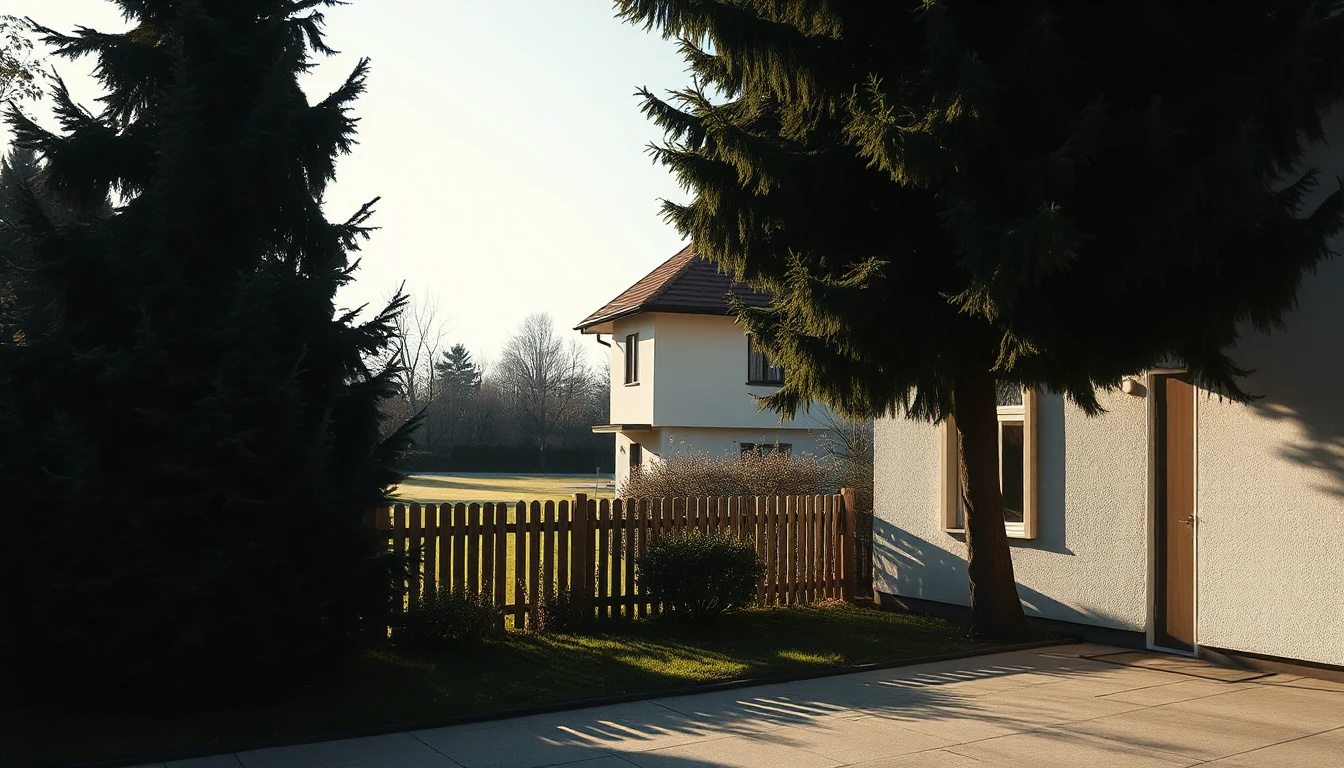
The terrace has been increasingly shaded for years because plants are growing on the neighbouring plot. You want more light again, the other party wants to keep their established planting. Such a conflict cannot be explained solely by the desired tree height. In Austrian neighbour law it depends on the concrete impairment of the use of the property.
Shade alone does not fully establish a claim
§ 364 Absatz 3 ABGB covers the removal of light or air by foreign trees and other plants. The effect must exceed the degree specified there in Absatz 2 and lead to an unreasonable impairment of the use of the property. The law also requires mutual consideration and leaves relevant protective provisions unaffected. [LICHT]
The question is therefore not simply whether a tree casts shade at all. It must be explained which use is actually affected and how the impact presents itself in the local context. A desire for a completely unobstructed view is not described as an identical right by the provision cited.
The one dark patch and the whole property
In the hypothetical case an owner photographs a heavily shaded part of a terrace in the late afternoon. The picture shows a real observation, but not yet the situation at other times of day or in the other usable areas. It is therefore contextualised with the date of recording, location and affected area.
Describe the impairment in connected everyday situations: When is which area used? What changes over the course of the year? Which observation is based on memory and which is currently documented? A single particularly unfavourable shot should not be presented as the complete course.
The documentation is preparation for discussion and expert assessment, not a self-invented shadow measurement standard. This article neither sets an admissible tree height nor a fixed number of tolerable hours of shade. A comparative photo from another location also does not decide your case.
The conversation needs a comprehensible request
Name the desired improvement first, before you demand a specific technical measure. For example, you may want to be able to use a concretely described outdoor area differently again. Whether and which professional intervention is suitable and permissible must be clarified separately.
Have a possible solution assessed on the basis of the actual planting stock. A private agreement does not replace necessary protection checks. Conversely, an existing tree protection does not by itself answer every private neighbour law question. Different levels of assessment should not be dealt with by a single blanket answer.
Overhanging branches are an additional matter
If branches protrude over the boundary or roots intrude, § 422 ABGB must be observed as a separate provision. It contains, among other things, requirements for professional, plant-friendly procedures where possible and preserves protective regulations. [ÜBERHANG] A claimed impairment of light therefore does not provide free permission to remove arbitrary parts of another person’s tree. No decision on cutting or costs is prescribed here.
Clarify the correct procedural route before suing
For lawsuits concerning the described removal of light or air Article III ZivRÄG 2004 provides for a preliminary conciliatory procedure. Mentioned are a suitable arbitration board, the legally designated court application or mediation commenced with consent; the rule contains a three-month period and proof of the failed attempt at agreement. [VERFAHREN] An informal neighbourhood conversation should therefore not be uncritically equated with all procedural prerequisites.
Obtain legal support in a deadlocked conflict. Good preparation combines concrete property use, comprehensible observations and a stated desire for improvement. It promises neither a successful suit nor a particular felling or pruning.