



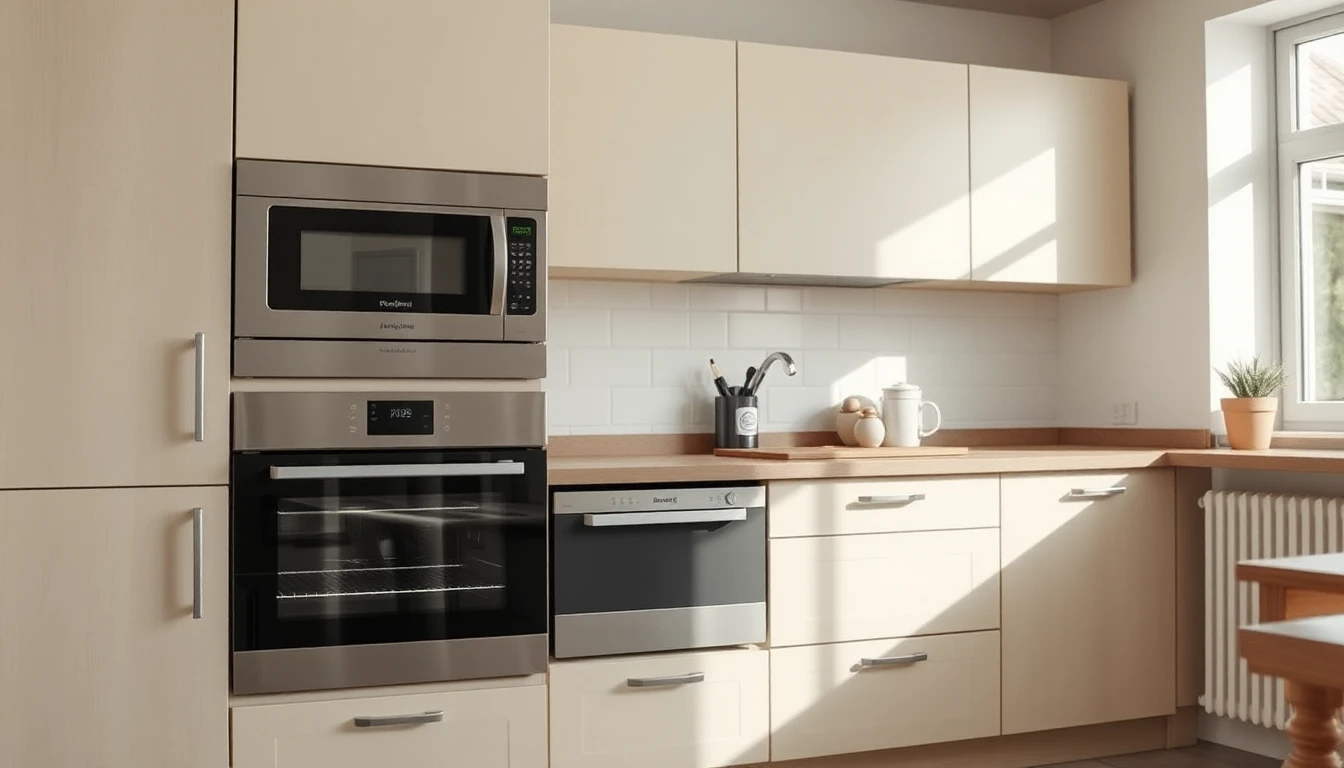
The new kitchen looks finished on the plan. Only when running through everyday life does it become apparent that the coffee machine, kettle, food processor and other appliances are all planned for the same workstation. Now you should not let the shopping list of multi-socket adapters grow. The intended use belongs in the professional connection planning.
Turn the appliance list into a use case
Write down which appliances are already present and which are to be added. Add where you want to use them and which of them are normally used at the same time. For existing appliances note the exact model designation; new desired appliances may initially appear as an open choice.
The list is not its own electrical calculation. It explains to the electrical specialist what the kitchen is expected to deliver later. Looking only at the number of visible sockets does not answer this task. Planning should be assessed on the basis of the actual installation and the intended appliances.
Do not use the multi-socket adapter as a planning substitute
In its consumer information the VDE warns against overloading multi-socket adapters and against daisy-chaining them. For certain large household appliances it refers to the separate connection to its own socket. [ELEKTRO] This advice is a safety-orientation. It is not an approval to assess an unknown kitchen installation by calculating watts yourself.
For this reason the article therefore names neither a blanket permissible appliance combination nor a general load limit of your installation. Even "so far nothing has happened" should not be entered as an inspection note in a new kitchen plan. Let the specific situation be clarified by the appropriately qualified specialist.
Coordinate furniture and connection questions together
In the fictional case a tall cabinet is to be placed where a previously easily accessible socket was located. At the same time an additional appliance is planned there. The household brings the kitchen plan and appliance list together before ordering the furniture and asks for an appropriate professional solution. This way an open connection question can still be incorporated into the planning.
Also mark in the plan the places where appliances will stand and be operated. The specialist planning should derive the appropriate technical decisions from this. The article does not specify installation zones, conductor cross-sections or protective measures and does not recommend opening sockets or distribution boards yourself.
Require a confirmed plan before ordering
Ask for clear feedback: which use was taken into account, which works are planned and which details are still missing? Give this clarified basis back to the kitchen planner. If a different appliance or a different furniture arrangement is chosen later, ask whether the connection planning needs to be reviewed again.
The result is a matching selection of appliances, furniture and professionally checked supply. Responsibility for installation and testing remains with the specialist company. This text concerns preparation in Germany; no Austrian installation standards are derived from the German VDE consumer information. Existing anomalies or damage belong immediately to the electrical specialist and not to a makeshift load test.