



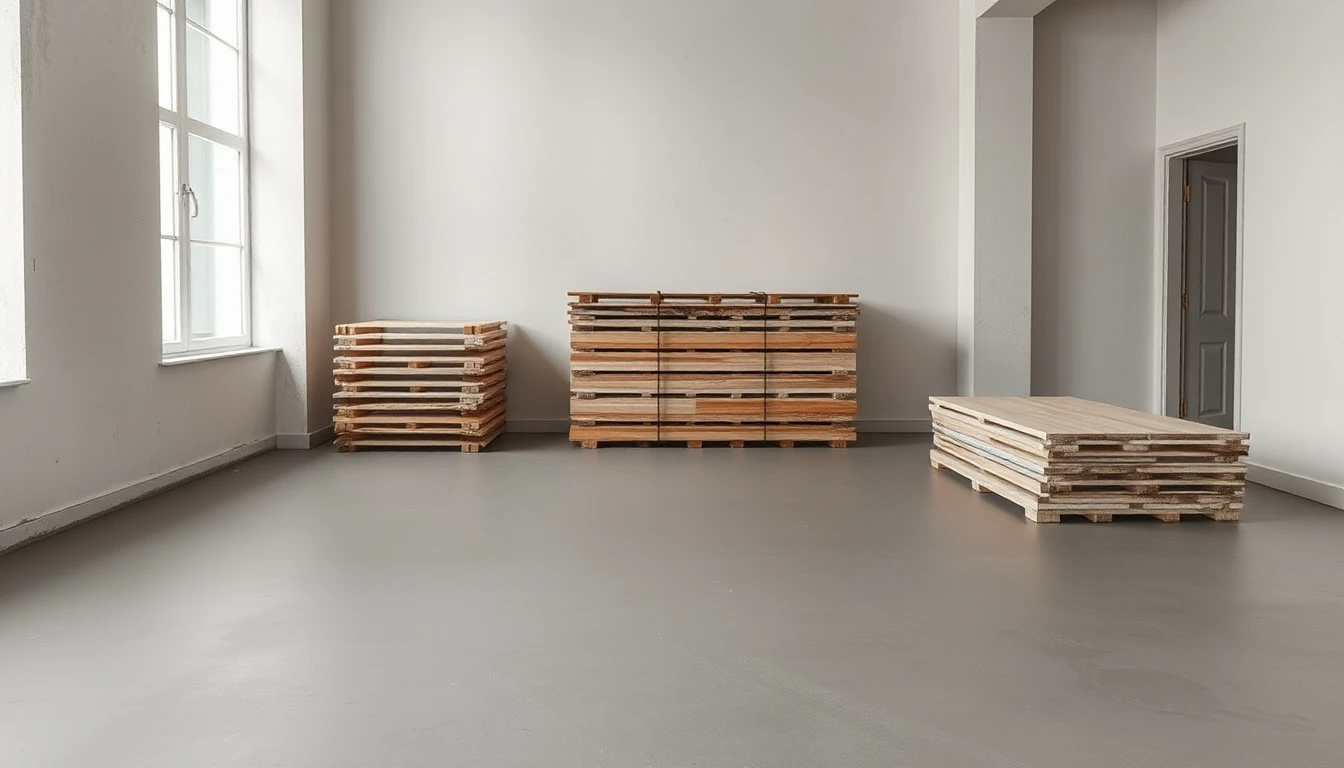
The move-in is planned, the floor covering has been delivered and the fitting appointment has been booked. But for the existing or newly installed screed there is only the statement: “It should be dry by now.” Before the schedule turns that assumption into fact, the suitability of the substrate for the intended floor must be professionally clarified.
Readiness for covering is a specific suitability question
TKB Report 11 of the Industrieverband Klebstoffe describes readiness for covering as a condition in which the substrate can permanently accommodate the intended covering. Several properties are relevant here; moisture is part of the assessment. The requirements depend, among other things, on the planned construction and the use. [REIFE] An isolated impression of “dry” therefore does not answer the whole question.
Our editorial recommendation: Ask for an explanation of which substrate is present, which construction is planned on it and how the corresponding suitability is assessed. The task is not to select a measuring method yourself or to look up someone else’s limit value. You need a professionally attributed statement for the specific project.
Put the proof before the fixed subsequent step
Clarify early when the required inspection can take place and who will carry it out under the agreed commission. Which prerequisite is currently missing? When is a reliable decision expected? Keep confirmed prerequisites separate from a merely scheduled calendar week.
If furniture assembly or moving in depend on the finished floor, these steps need a comprehensible dependency. Our recommendation is to discuss alternatives while replanning is still possible. This does not create a general right to postpone an appointment and does not say who bears additional costs; contractual questions will be examined in the specific case.
An old floor is not resolved by its age alone
The TKB report also deals with old substrates and emphasises the specific assessment for a new construction. [REIFE] Therefore describe to the flooring company known past uses and alterations. A covering that has been in place for a long time does not in itself prove that every future chosen solution will fit.
In the fictional example a family wants glued parquet laid on an existing floor construction. The appointment was set before existing documentation and the substrate condition were discussed. The company should now first clarify whether and with what preparations the intended construction is possible. The result is assigned to the specific room and the chosen variant. A blanket assurance of “old building, long dry” is not sufficient for that.
No speeding up on your own
Do not change system or drying settings and do not open the floor yourself to supposedly save the appointment. If additional measures are required, procedure, responsibility and subsequent assessment belong in the professional coordination.
Keep the received documents with date, room reference and intended construction. The laid floor should rest on a clarified basis. A properly documented inspection time is more informative for this than a rigid number of days since the screed was installed.