



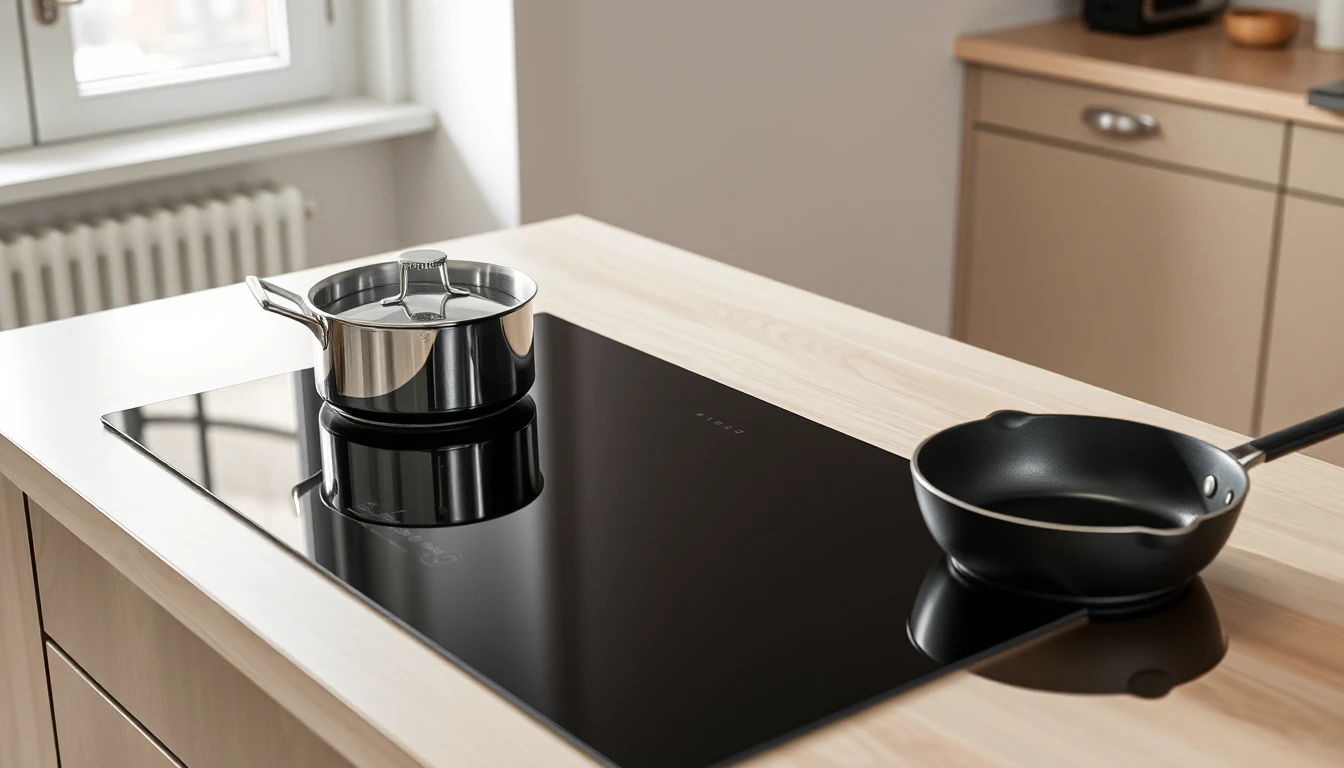
When renewing the kitchen, an induction hob is planned. A large new cookware set is offered for sale at the same time. Before you automatically include it, consider the pots, pans and cooking routines you actually use. The new hob should suit the kitchen and everyday life; the selection does not begin with the number of pieces in the accessory package.
Suitable cookware is a prerequisite in its own right
The manufacturer Bosch explains for induction that the cookware base requires suitable ferromagnetic properties. The general material designation alone is therefore not always sufficient for classification. [TOPF] This article does not recommend a brand or a specific accessory set.
Our editorial recommendation: First take stock of the pieces used frequently. These can include the large frying pan, a small pot, a roasting pan or a particular coffee maker. Look for existing product information on suitability for induction. Unknown pieces remain marked as an open question and are clarified based on manufacturer information or appropriate advice.
Run through the normal cooking process
Describe which vessels are regularly on the hob at the same time. During appliance consultation, have them explain how the actual base dimensions and shapes of your cookware match the intended cooking zones. A wide appliance front is not a sufficient answer to the use of your largest pan.
Infrequent but important dishes may also occur. If a particular roasting pan has so far been part of family life, its use should not only be clarified after installation. Ask for the exact intended model and its operating instructions, rather than silently transferring functions from similarly named appliances.
Only fill the actual gap
In the hypothetical example a couple initially want to replace a complete set. In the inventory several regularly used pots are already marked as suitable. Remaining open are a special frying pan and a small vessel. The couple clarifies these two cases and only then decides which addition makes sense. A set can still be an appropriate choice; its size alone is not a need.
Assess handling and the actual intended uses. A lid that is still available, the desired size and any care instructions that can be found can be as important for the selection as belonging to a visually uniform range. Improvised interim solutions are not planned as a general replacement for confirmed suitability.
Installation remains a separately clarified prerequisite
Before ordering the appliance, the professionally suitable installation and connection conditions must also be clarified. This article does not cover electrical design for that purpose. A suitable pan does not confirm a suitable connection and a confirmed connection possibility does not yet confirm a complete cookware inventory.
This gives you two comprehensible results for the decision: an implementation plan checked for the intended model and a limited list of actually required additions. This makes the kitchen renewal concrete in everyday use before the first pot stands on the new hob.