



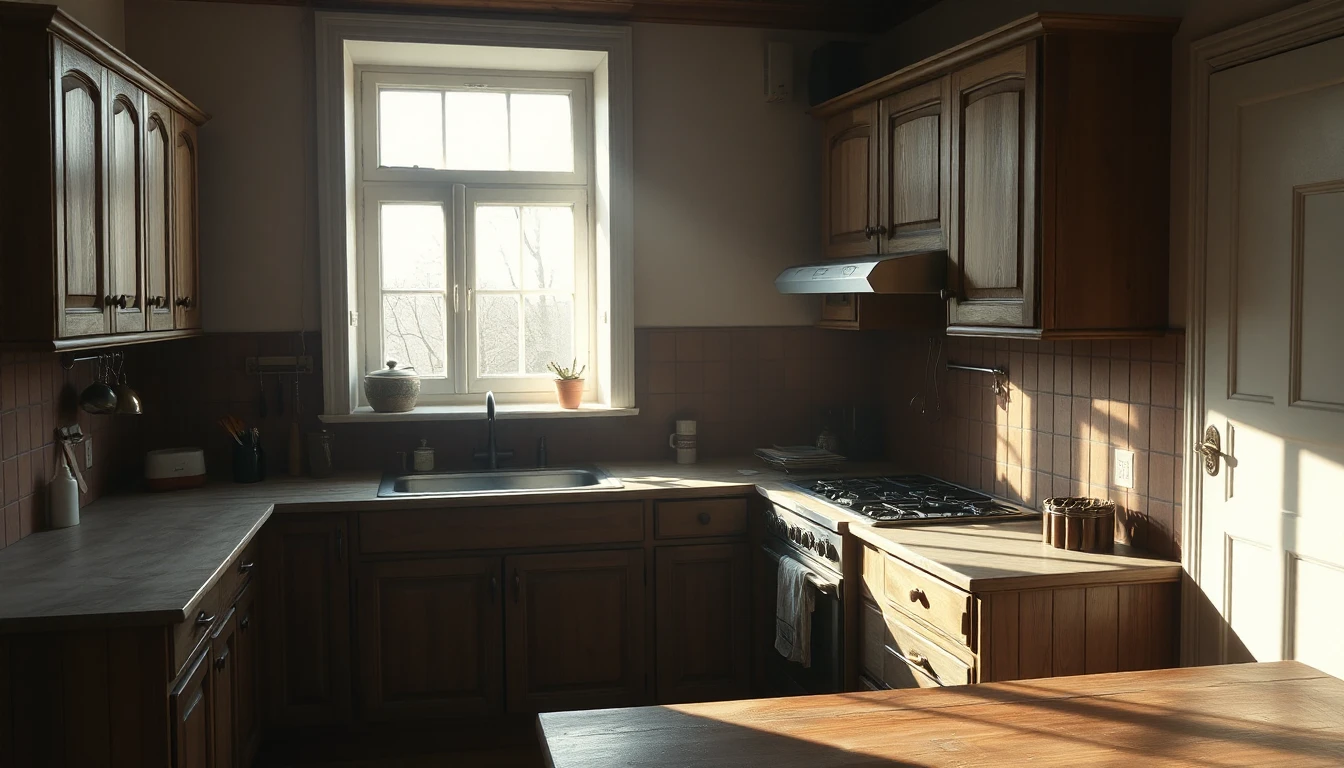
Your kitchen no longer pleases you, but you have been cooking in it for years. Now a purely visual renewal and a larger conversion are being considered. Before you compare new fronts or an entirely new kitchen, it is worth looking for the cause of the desire to change in everyday life. This article is a decision aid and does not assess any existing furniture or connections technically.
Use an ordinary meal as a starting point
Mentaly run through a normal cooking process: fetching ingredients, preparing, cooking, plating and tidying up. What actually bothers you? Is a place missing, is a frequent movement awkward, or is it primarily the visible design that you no longer like? Record concrete situations instead of already determining a solution.
First assign each observation to a question. “I don’t like the dark impression” is a different task from “we constantly get in each other’s way while cooking”. A new colour can address the first question; whether it solves the second is not thereby answered. The article does not claim any technical property of a specific surface.
Explicitly name what should stay
Note alongside the desired changes the things that work well. Perhaps crockery is exactly where you need it, or you want to continue using an existing appliance. These points also belong in the conversation with the kitchen planner. Otherwise a new solution can just happen to give up a previously well‑suited everyday feature.
In the fictional example two residents initially only want new fronts. When running through scenarios it becomes apparent that they regularly want to use a work surface differently. They therefore have clarified which of their wishes could be addressed with a limited renewal and which would only be dealt with by a different layout. No option is yet labelled automatically correct or more economical.
Compare variants that have the same goal
Ask the planner to describe realistic variants for your stated need. These can include retention with limited changes and a more extensive conversion. Have them explain in each case what of the existing installation can continue to be used, which prerequisites need checking and what work would result. The suitability of existing components is decided by the responsible specialist.
Then compare not only visible changes. For each variant ask which of the recorded everyday situations it actually changes according to professional explanation and which remain. This prevents a smaller intervention from being sold as a complete solution and a larger conversion from being preferred merely because it is new.
Record your own desire to change as a decision
The result can be a limited aesthetic renewal, a new plan or initially a professional investigation. Record the reason for the choice. Open connection, material and execution questions belong in the appropriate professional clarification before a binding order.
The procedure is editorially intended for Austria and Germany. It does not specify a service life, cost saving, exemption from approvals or a DIY conversion guide. Its aim is a suitable investment question: What should be different in everyday life after the renovation, and which demonstrably suitable variant answers exactly that wish?