



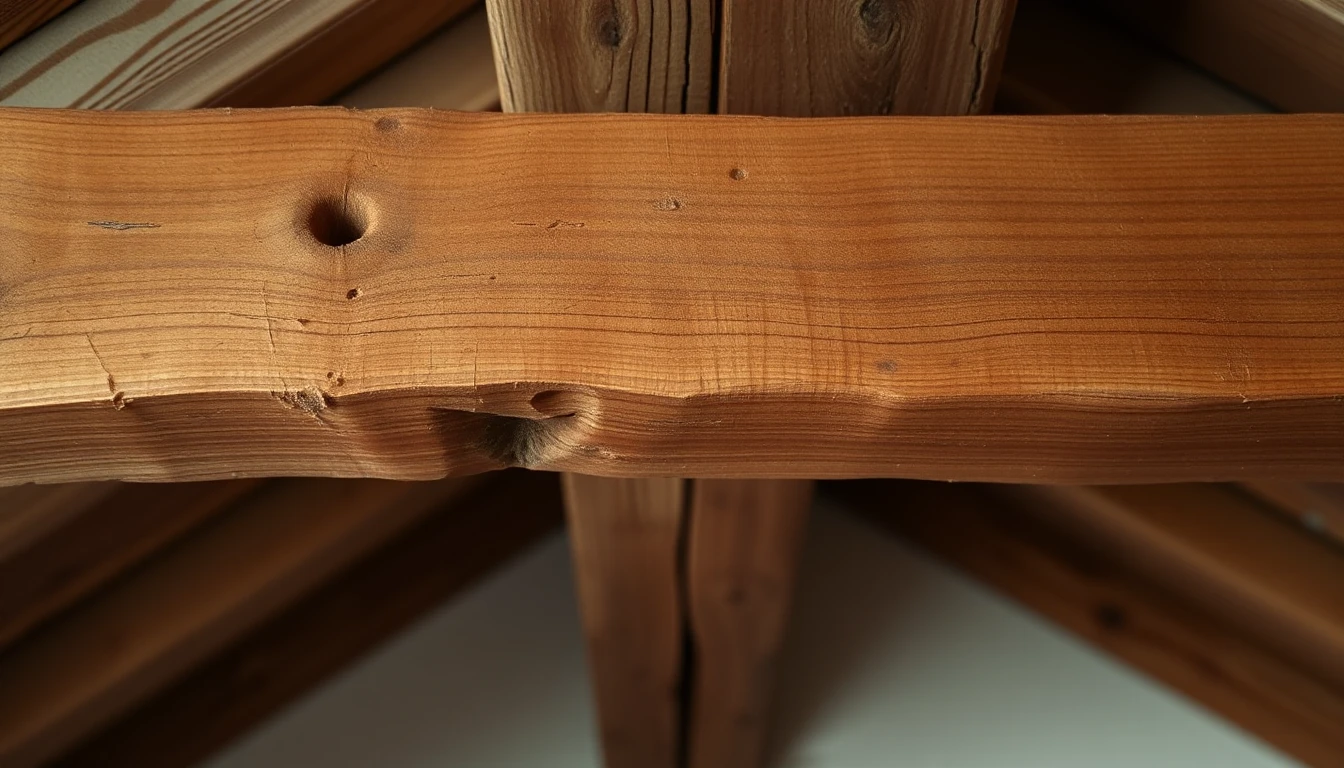
When exposing an old room, small holes become visible in a wooden beam. One party calls them old traces, another suspects an active infestation. Before the planned cladding is further agreed, this statement needs a professional basis. A photo showing holes is insufficient either to rule out a problem or to determine a treatment procedure.
A visible pattern of damage is not yet a complete finding
The Umweltbundesamt explains, using the example of the common furniture beetle (Gemeiner Nagekäfer), that an active and a past, completed infestation cannot always be distinguished visually. In case of suspicion it recommends comprehensive identification and classification by an expert; other wood pests may also be a question. For affected load-bearing timber elements a professional assessment of possible impairment to load-bearing capacity is required. [HOLZ]
These statements refer to the pest described. The article does not turn an unknown pattern of damage into a furniture beetle infestation. Precisely this open assignment is part of the investigation commission.
Describe the suspicion for the specialist appointment
Record from a safely accessible position where the irregularity is, when it was discovered and what work is planned there. A room photo for orientation and a close-up can make the enquiry more understandable. Do not photograph inaccessible areas by risky entry or climbing. This article does not recommend opening, drilling or breaking out wood.
Collect any older findings and treatment documents if they are available. Clearly indicate what you yourself saw and what was only reported orally. “The previous owners treated something years ago” is worth following up, but it describes neither a product used nor a checked current condition.
Link the investigation to a decision
In the hypothetical example the visible beam is to be concealed behind a new room lining. The owners initially commission the classification of the suspicion and explicitly ask what consequences this will have for the planned follow-up work. This keeps the investigation connected to the actual construction process.
A sensibly formulated commission asks for the classification of the affected components, the basis of the infestation assessment, possible further investigations and a statement on which additional discipline is required. The professional body should explain what it was able to assess and which areas remained inaccessible. A blanket sentence about the whole house would be of little use for a limited investigation.
Do not pre-empt a hasty treatment
Have the finding and the proposed procedure explained before ordering materials or closing a surface. This article does not prescribe dosages, heat treatments, biocide procedures or home tests. The method described on an information page is also not permission for carrying it out yourself on the building.
In the end you should have a clearly assigned professional response: which area was investigated, how the suspicion is classified and which next steps follow. For load-bearing parts the structural question explicitly belongs to the responsibility of a person qualified for that purpose. The text applies to investigation preparation in Germany and does not formulate Austrian normative requirements.