



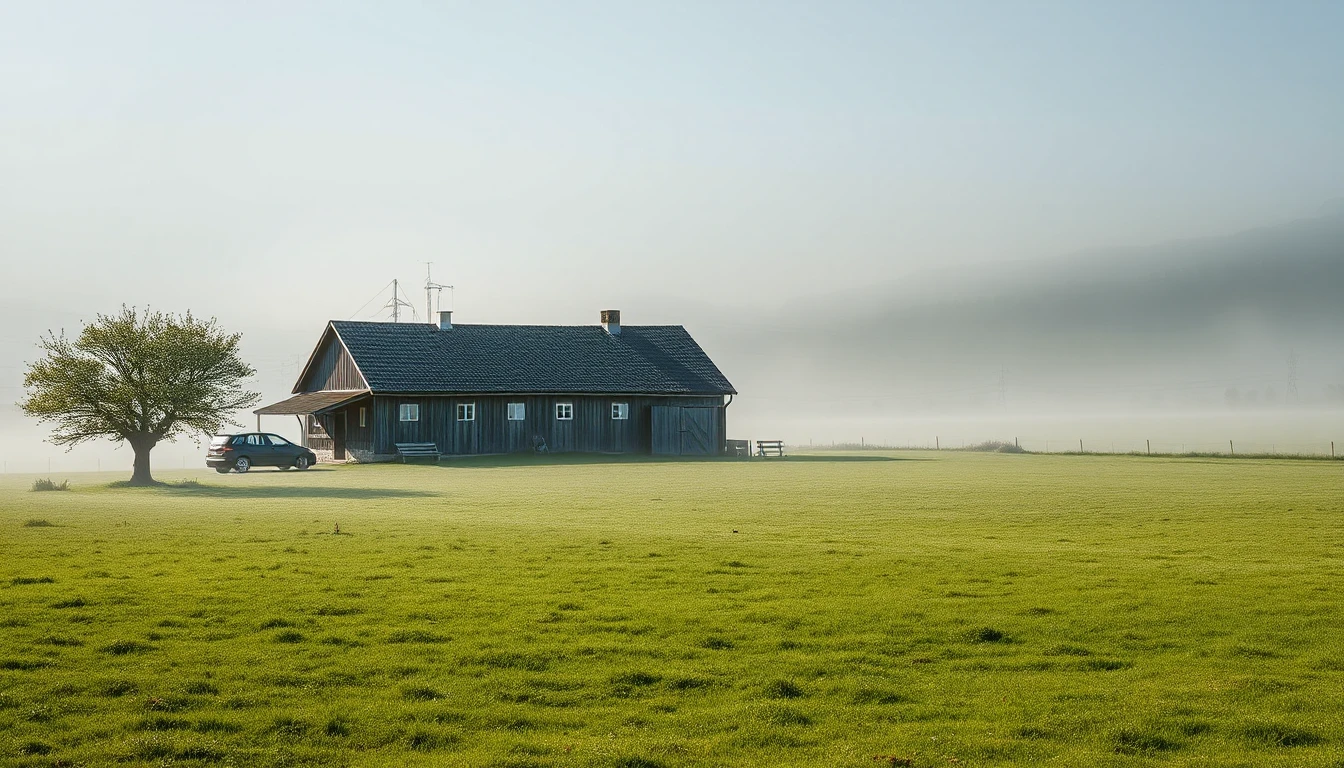
The offered plot lies in a green zone, a building is already present, and you want to live there in future. Precisely this combination should not be judged solely on the basis of photos or a reassuring-sounding description. For Lower Austria the specific zoning (Widmung), the actual existing situation and the intended use must be considered together. A visible building does not answer any of these questions completely.
Write down three different statements
First ask for the comprehensible zoning of the area in question and the existing documents relating to the building. Note separately how it has been described so far, what has actually been approved or documented and what you intend to do in future. A sales text can mix these levels without providing the decisive basis.
Describe your housing wish concretely. Is it about the use previously envisaged, a change, an extension or another organisational form? Avoid the abbreviated phrase “just tidy up a bit” if what is actually meant is a new permanent use or substantial alterations. The legal significance is not decided by your description alone.
Green land is not just any arbitrary type of use
§ 20 NÖ Raumordnungsgesetz 2014 distinguishes several types of green-land zoning. Paragraph 4 links developments requiring approval in green land in principle to the necessity for a corresponding use and contains additional requirements. There are specific rules for certain existing constellations. [GRUEN] From this it follows neither a general permission to live in every existing building nor a blanket prohibition on any construction activity.
“Preservable building in green land” is a specific zoning designation and not a favourable judgement on the condition of a house. § 20 paragraph 2 number 4 refers to main buildings approved by the building authority that do not substantially impair the appearance of the locality, and to further exclusion reasons, for example certain hazards or a missing required road access. For buildings actually zoned accordingly the special rules of paragraph 5 apply; additional local restrictions may be added. A building is therefore not turned into such a “Geb” merely by age, furnishing or its visible existence. [GRUEN]
An agriculturally used building is also not an arbitrary reserve for private housing. Agricultural and forestry green-land zoning has its own framework of use; paragraph 4 links developments requiring approval to the necessary use and, in the agricultural cases mentioned there, to sustainable management. An old stable and a zoned preservable residential building therefore begin the assessment at different points. Whether your specific housing wish is permissible emerges only from the appropriate zoning, the approved existing situation and the relevant requirements together. [GRUEN]
Track the document status up to the decisive question
Collect for the existing documents the respective subject and the applicable version. What concerns the original building, what later alterations and what merely a previous draft? An old plan without comprehensible allocation will not be declared a confirmation of current use.
Ask specifically which document is missing for your desired next step. The preliminary check is not intended to generate as many arbitrary documents as possible. It should show whether and on which exact basis your use can be further assessed. Technical conditions and access provisions also remain distinct specialist topics.
A building is present, the personal purpose still open
In the hypothetical example an interested party sees a small building with a room layout that appeals to them. They want to run their household there year-round. However, the sales description does not sufficiently explain the previous usage status.
They therefore do not accept the furnishing or earlier personal stories as proof of their plan. Before any commitment they have the actual zoning, the documentary situation and the intended use examined together. The result can be a limited possibility or a materially open prerequisite; the attractive impression does not decide it.
Link the purchase decision to the checked status
Record the answers received with date and the exact question asked. If you change your project, ask whether the previous assessment still applies to it. A positive answer for a narrower use will not be silently extended to a comprehensive promise.
This procedure is a preparation for the specialist and authority review within the Lower Austrian framework. Its benefit is that you do not only notice after purchase how far personal housing wish and actually clarified use diverge. Approval, contract design and financing remain to be assessed according to the specific case.