



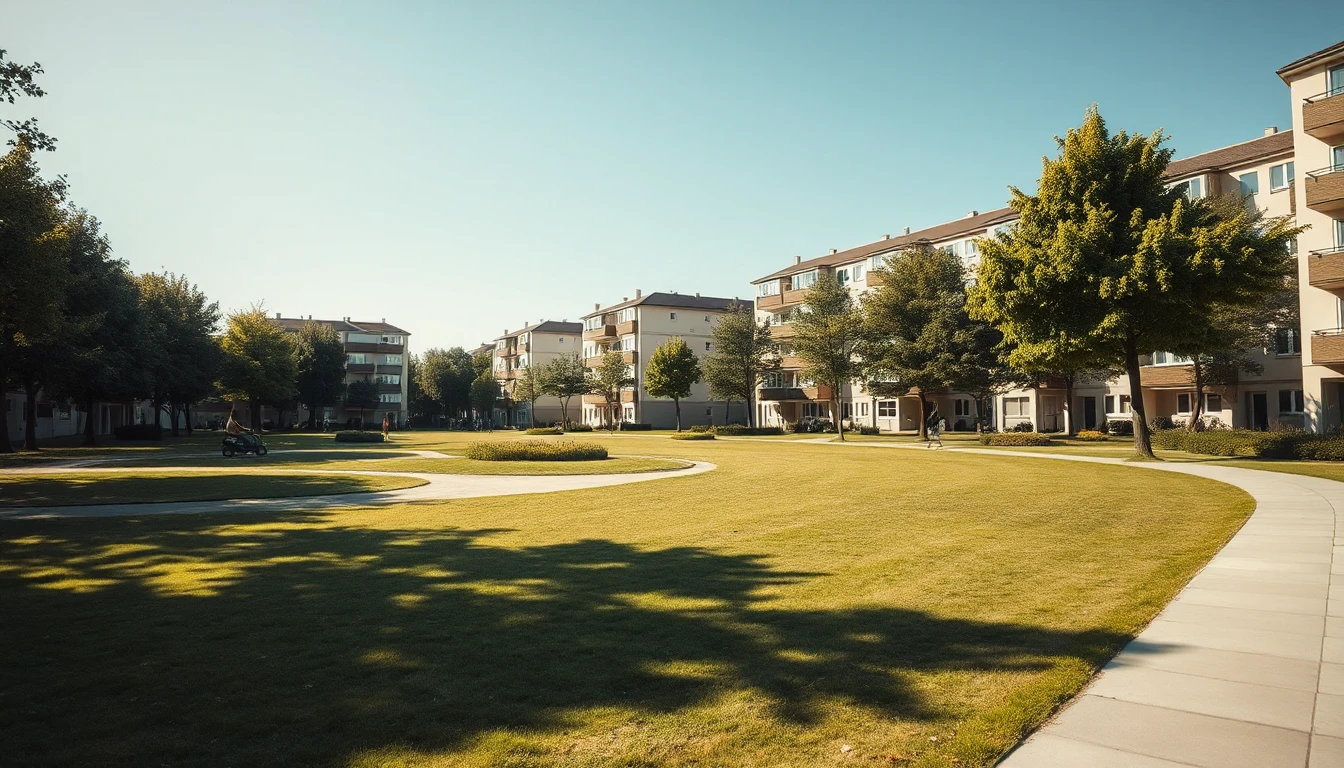
The gardening company charges for the maintenance of a park that belongs to your residential complex. It lies on your land, the tenants can use it and other people also walk there. Before the invoice is included in the operating costs, it must be clarified whether the areas are intended for public use. Ownership alone does not establish the required connection to the rented property.
Check type of cost and specific area together
§ 556 BGB contains the statutory framework and the possibility to agree on the allocation of operating costs. Number 10 of § 2 BetrKV names garden maintenance. [BGB, KATALOG] However, a suitable heading on the invoice does not replace the concrete examination of which area was maintained for what purpose.
In the judgment VIII ZR 33/15 the BGH relied on a public usage designation: if everyone is permitted to use the facility regardless of a tenancy, the corresponding maintenance costs lack the necessary connection to the tenancy. This can result from planning regulations or from an opening by the owners. [BGH]
Do not rely on open access alone
The BGH did not consider the absence of a fence alone to be conclusive proof of a public park. Where there is an opening by the owners, the overall impression for a reasonable third party is relevant. In the case decided the actual designation still had to be further determined; the BGH did not confirm an established local park status. [BGH]
Our editorial recommendation: Collect existing planning documents, actual usage rules and documented statements about the opening. Describe which concrete area each statement refers to. The statement that strangers sometimes walk through here is not necessarily the same factual basis as an actually generally permitted park use.
Make the maintenance order spatially traceable
Assign the invoiced works to the affected areas. A consolidated invoice can cover several areas whose legal usage status is different. If the scope is not recognisable, ask the performing party for a factual breakdown of the actual service.
Do not invent a retrospective division of work merely so that the full amount can be accommodated in the rental account. The legal classification of the areas is made on the basis of the facts available. Only afterwards is the appropriate billing scope clarified.
Hypothetical case: park strip and courtyard are on one invoice
A landlord receives a joint maintenance invoice for an external green strip and the courtyard. For the green strip she finds documents showing public use; the situation for the courtyard is described differently. She does not automatically treat the entire complex as a single clarified garden.
She compiles the documents and the actually performed maintenance works for legal review. The company explains which services belong to which area. The landlord then documents which costs can be included in the billing on which examined basis. The example does not decide the designation nor a specific cost share.
Record the decision before the normal allocation
The work result specifies the area, actual use, examined classification and assigned maintenance service. A distribution key to be applied thereafter remains a separate question. The possible double charging of the same work as both caretaker and garden service must also be examined separately.
This turns the blanket argument the park belongs to us into a verifiable billing basis. The article does not create a park designation, a new access restriction or a blanket permission to pass on all external maintenance costs.