



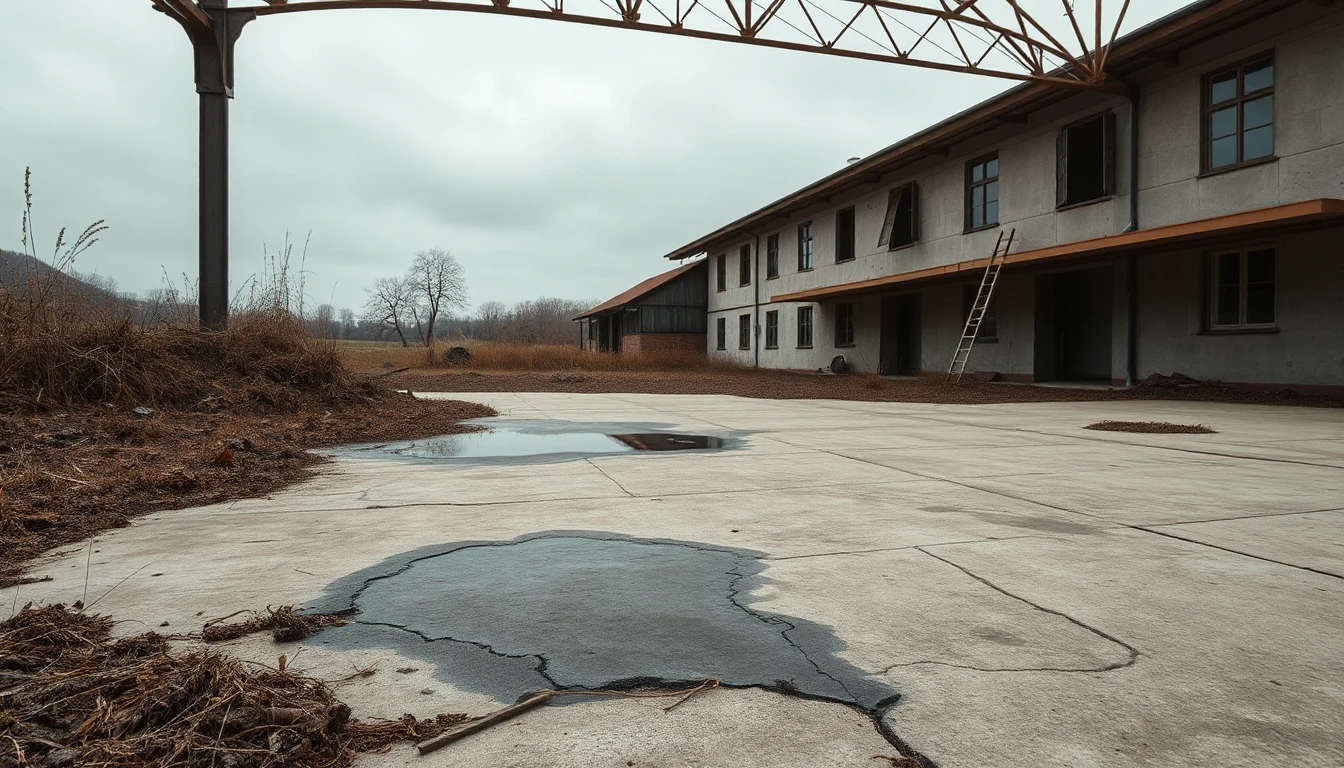
Only a small hall remains on the plot being offered. Work used to take place there; today a residential building is to be built. A tidy appearance says little about which uses took place and what consequences they could have for your project. You do not have to carry out a soil survey yourself. A sensible approach is an orderly preliminary review that separates known information from unsubstantiated guesses and involves the right experts in good time.
Treat the past as a separate line of inquiry
Our editorial recommendation: first ask about the known usage history. Which businesses operated on which sub-area? Which facilities or storage areas are documented? Are there previous investigations or official statements? Record time periods and sources. A recollection from a neighbour can be a clue, but it should not become the established site history without verification.
The Umweltbundesamt refers to the register of contaminated sites (Altlasten- beziehungsweise Verdachtsflächenkataster) as an important information source. The responsible authorities can provide information on prior use; if there is a justified initial suspicion, a historical investigation by specialists may be appropriate. [Q1] A quick look at an advertisement does not replace this line of inquiry.
Obtain the correct information for the correct plot
Clarify with the locally responsible authority how to request information and which proofs are required for your legitimate interest. Use the unambiguous property designation. If a former business used several areas, it must be clear which part an information request refers to. Which documents are available in your federal state or district is determined locally.
Also note the actual content of the response. Information about register entries is not automatically an investigation of the current soil condition. Therefore do not use wording that goes beyond what the source provides. “According to information, no corresponding entry” and “soil technically examined” describe different circumstances.
Investigations need an appropriate question
With concrete indications of contamination it is not enough to order just any convenient sample. Have a competent person assess which question should be investigated for the plot and the planned use. This includes the appropriate scope of investigation and the consideration of existing older findings. A result for a delimited area should not be tacitly transferred to the entire site.
The Umweltbundesamt advises a thorough due diligence when industrial or commercial prior uses and indications of contaminated sites are known. It also mentions the importance of contractual protection and realistic remediation costs. [Q2] Therefore this article does not provide a blanket all-clear, no per-square-metre cost estimate and no model clause for release from liability.
Example: The former storage area was not investigated
A buyer receives an investigation report for the area next to an old workshop hall. A storage area is additionally marked on a historical plan. Before he uses the report as evidence for the entire building plot, he has clarified which area and which question were actually investigated. The open storage area is documented as a separate issue.
This approach does not claim that contamination must be present there. It prevents a missing investigation from becoming a seemingly confirmed lack of concern. A further decision can only be made once the responsible specialist party has sufficiently assessed the state of knowledge for the specific project.
Link costs and contract only after the state of knowledge is established
Separate in your overview confirmed expenses, professionally estimated expenditures and remaining cost risks. A possible additional expense does not belong in the financing as an invented small figure. Nor should an unverified hint turn into a dramatic cost claim. Request a comprehensible professional assessment of the respective assumptions.
The legal consequences belong in an individual review before a binding declaration. These include in particular the formulation of statements of condition, the significance of existing documents and the allocation of concrete risks. § 4 Absatz 2 und 3 BBodSchG names, among other things, duties of the property owner for hazard prevention and remediation. [Q3] A private allocation of costs must therefore be examined separately from possible public-law claims. Which regulation and responsibility apply in your case should be clarified by specialists.
The next sensible step
Place usage history, official information and existing investigations side by side. Mark their spatial and temporal scope. The resulting list of questions helps the soil expert and the contract advisor. It does not replace an investigation or a legal review. Its value lies in allowing you to base the purchase decision on an explicitly known state of knowledge.