



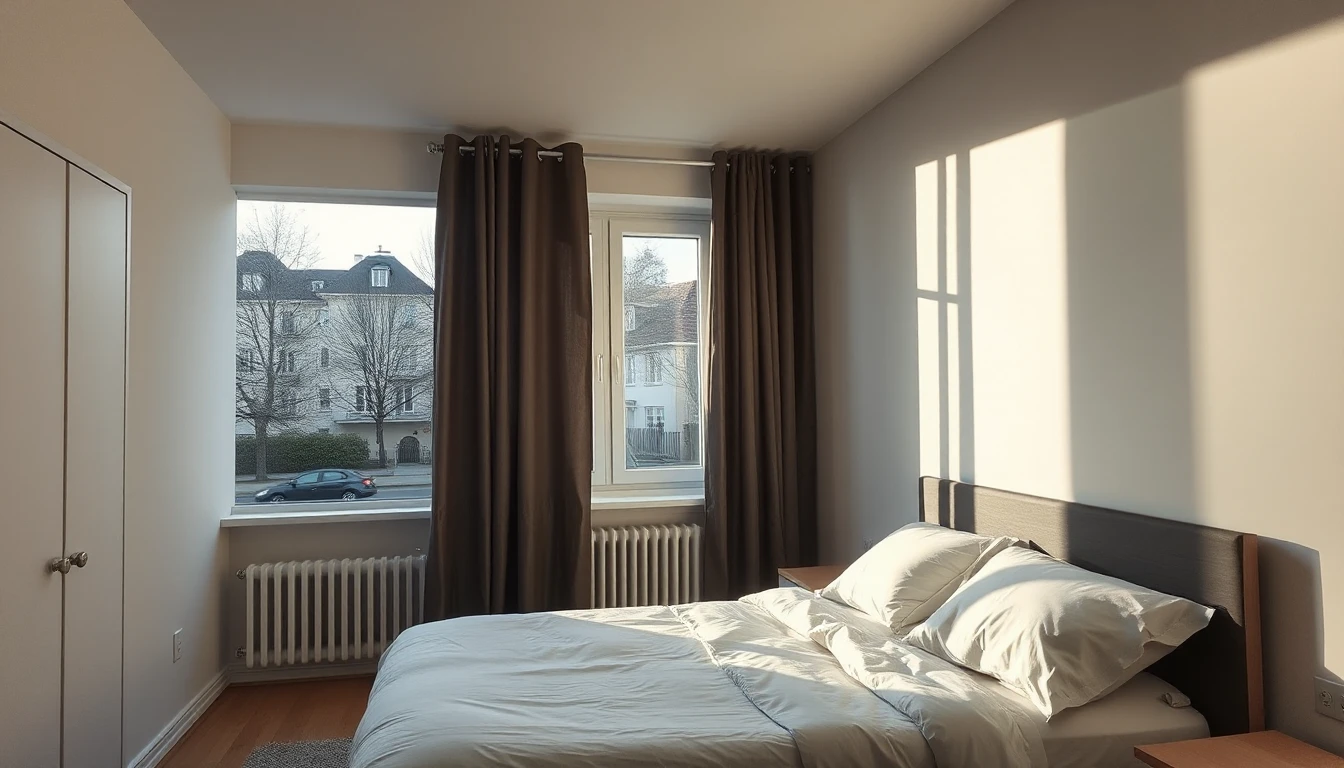
If your work week regularly starts at night or finishes in the morning, a viewing in the early evening tells you little about your later everyday life at home. A nice view does not help answer how you will get home after a night shift, how you can eat, and where you will find a suitable retreat. This article offers practical decision aids for flat hunting in Austria and Germany. It does not contain occupational health rules or any promise of undisturbed rest.
Turn your duty roster into a housing profile
First describe several actually possible daily routines. Do not use full employer documents for this, but a private overview with your usual arrival, rest and departure phases. Add irregular changes insofar as you already know them. A fixed early shift and a changing rhythm place different demands on the same flat.
Our recommendation is to derive a concrete housing question from each routine. If you come home in the morning: where do you put things down and can you eat without disturbing another sleeping person? If you want to rest during the day: which room is suitable for that? If you leave late: how do you get to your means of transport? This creates a search profile with verifiable properties instead of the blanket demand for absolute quiet.
View the location at your own times
Walk the route between the stop or parking space and the entrance at a time relevant to you if possible. Check this using a safe, personal approach; you must not expose yourself to an unpleasant situation for a flat test. Note what you actually observed and what remains open because of a different weekday.
For public transport, the specific suitable journey matters, not just the distance to the stop. Read the current timetable for your required time and consider the return journey. This article does not promise a particular frequency. A route that works today is not a permanent transport guarantee.
Consider the daytime use of the surroundings. A business closed at your first viewing may be active during your rest period. Ask about visible uses in the building and next door. Distinguish information given by the advertiser from your own observation; both can be helpful, but neither answers every later situation.
Read the floor plan in terms of actions
Mark a possible retreat, entrance, kitchen and bathroom. Draw in the routes other household members will need during your rest period. Through rooms, a kitchenette in the only retreat room or a heavily used corridor can be more decisive for you than the total area.
Check on site the available options for darkening and ask about the condition actually handed over. Fittings visible in a photo are not to be simply assumed. For desired alterations you should first clarify feasibility, required consent and costs; this article does not provide installation or soundproofing instructions.
Do not infer guaranteed sound insulation from a short listening test. Rather note the open question: what was perceptible in the room, under which conditions, and what expert examination would be necessary if it is of high importance? A friendly remark such as you always sleep well here is not a technical measurement nor a personal health prognosis.
Consider a shared household
If other people move in, you decide together which routines are possible. For the flat search it is important whether there are spatial alternatives at all. Later agreements about laundry or breakfast cannot conjure up a missing retreat.
Discuss wishes without assigning blame. One person needs rest during the day, the other must be able to use the flat normally at the same time. Record which restrictions you voluntarily consider realistic and where you need a different room solution. A private agreement does not create an exception to applicable rules or the rights of other people.
Compare two listings using the same week
A fictitious household compares two flats. The first is closer to work but has the kitchen and living area immediately in front of the only sleeping room. The second requires a longer walk but offers a retreat that can be reached separately. The household runs the same possible early and night week through for both offers.
They then decide themselves which disadvantage is more tolerable. No blanket winner is claimed. What matters is that route, retreat and shared everyday life were considered under the same assumptions. Open observations are recorded as such and, if of high importance, are specifically checked before committing. That makes the housing decision more robust, without promising a perfect or medically appropriate flat.