



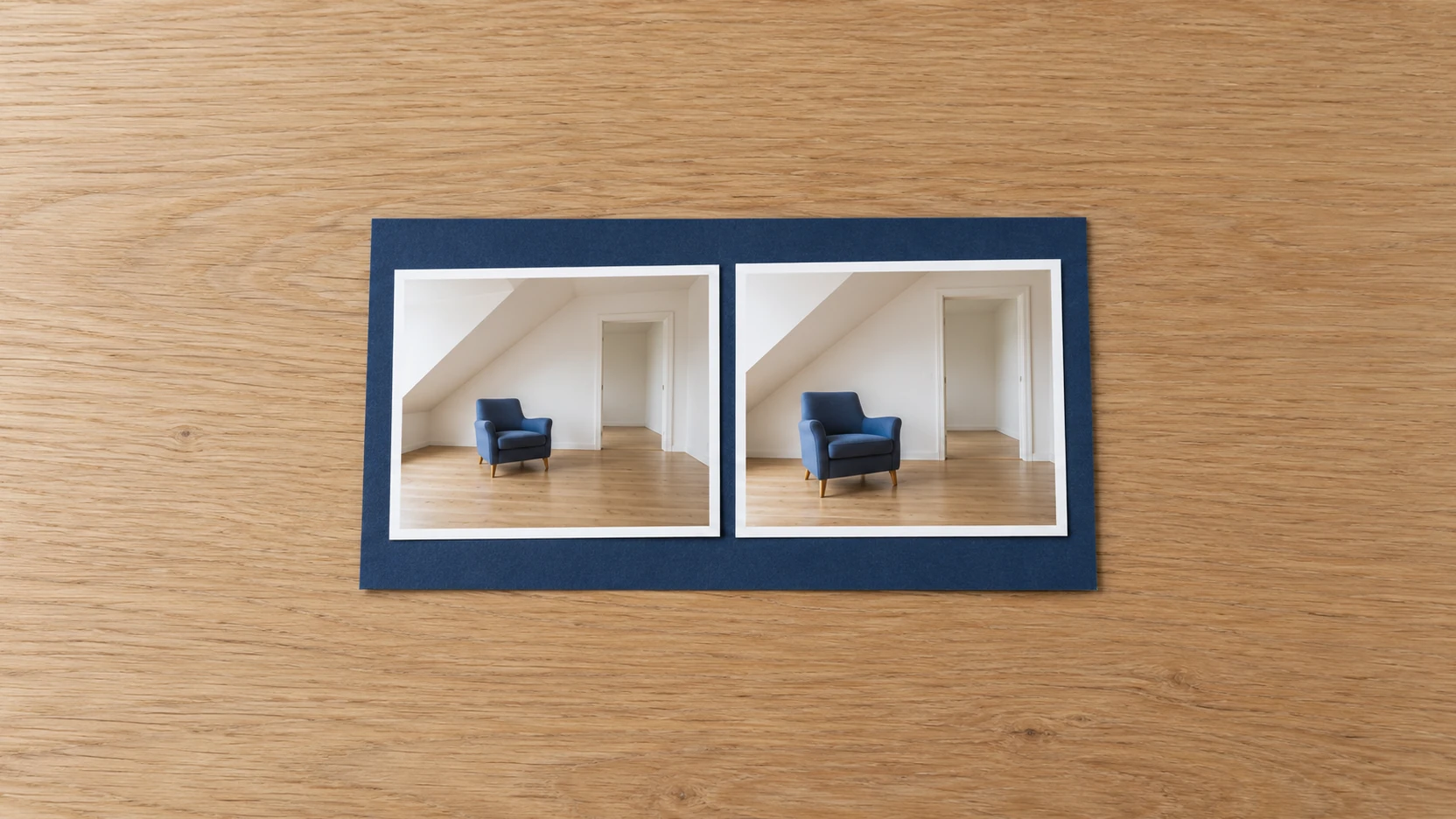
A property series can consist of genuine photographs and still create a false impression of the property. A narrow portrait crop can make the sloping roof disappear. The sequence of images can link rooms that are not adjacent. A transition effect can obscure precisely the visible passage. Someone familiar with the property unconsciously fills in the missing connections. Prospective viewers cannot.
An honest spatial narrative therefore has a limited remit: it explains the selected rooms and their known relationship without turning attractive images into a full walkthrough or into proof of dimensions. The following steps are editorial recommendations. They do not replace a floor plan, a viewing or a technical inspection.
Start with the reader’s question rather than the prettiest shot
Before selecting images, write down what this series is intended to show. Is it about the connected living area, a particular access route or selected fittings and finishes? The more precise this question, the easier it is to decide which image is missing and which merely repeats information.
In the fictional example of an attic flat, the connection between the living area and the small outdoor area should be clear. A nicely furnished storage room exists but does not explain that connection. The series therefore begins with an overview of the living area. The adjacent room follows later under its own subject.
Assign an informational statement to each planned motif. Two images with the same statement can sensibly show different views; but they do not automatically close a different information gap. If the main view is missing, new original material is planned or the scope of the series is explicitly reduced.
Record a confirmed spatial relationship
Sketch internally the known route between the areas shown. Mark what is clarified by appropriate documentation or by your own confirmed photographs and what remains open. A door in two different photos does not have to be the same door. The sequence in the edit is not proof of an actual passage.
With multiple flats or floorplan variants, give each a clear identifier. Price, area, plan and special fittings must visibly belong to the respective variant. A shared data strip fits only if its details truly apply to all denoted variants. Otherwise the series can inadvertently combine the largest, cheapest and best equipped unit into a fictitious overall offer.
A complete walkthrough is not mandatory. If only partial views are available, the package may be presented as a selection of glimpses. The title must reflect this scope.
Check crops for lost factual information
For each format variant compare the original and the crop. Which crucial feature lies at the edge? That can be a roof slope, an entrance step or the transition to another area. If that very feature disappears, the observation “The room still looks nice” is not sufficient.
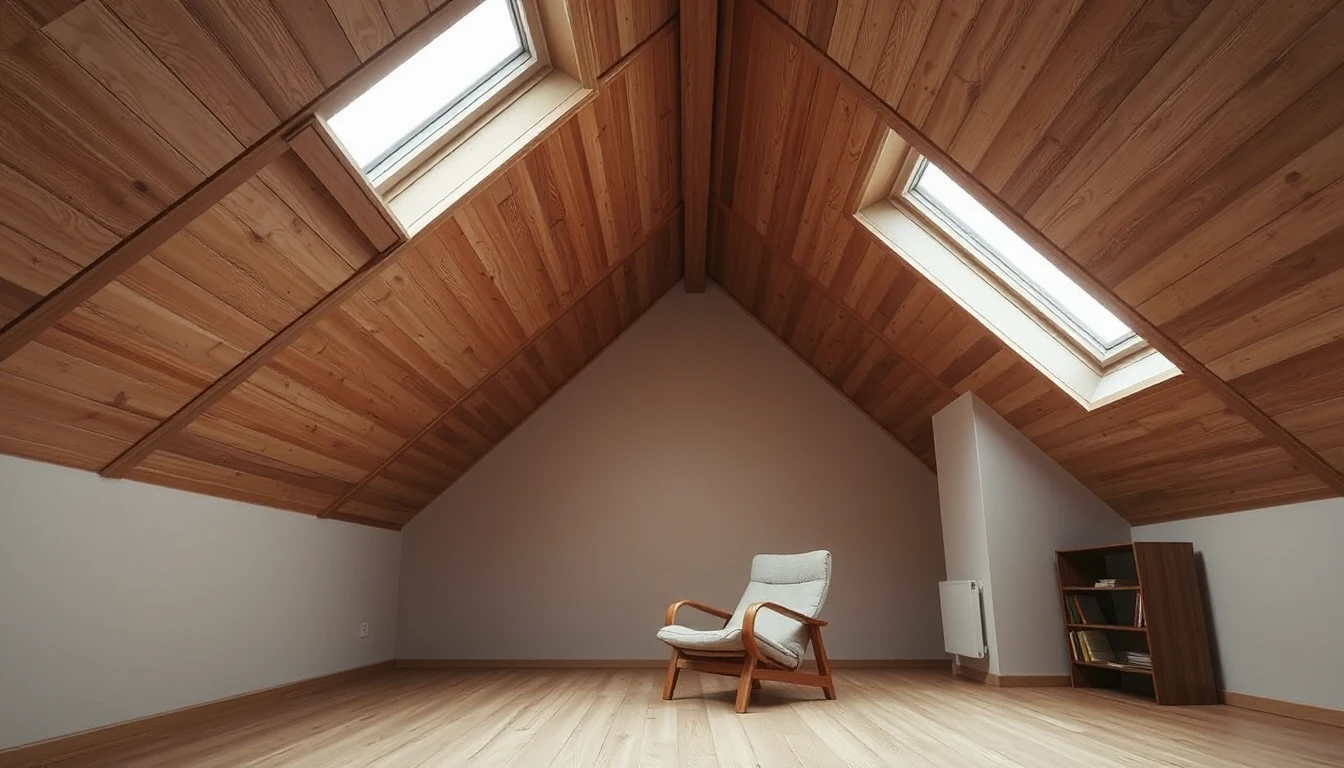
In the sample case the portrait crop leaves only a window and a bed. The editorial team chooses a different shot and gives the title its own area so that the transition to the roof slope remains visible. Where the format does not sensibly allow the necessary view, the wide image is retained with a calm composition. Missing parts of the room are not supplemented as supposed actual extensions.
An explanatory sentence can clarify the scope of the images. It does not replace necessary measurements or a professionally verified area calculation.
Make transitions subordinate to the flow of information
A motion effect belongs after the question of when a new piece of information becomes recognisable. If the image reveals a door connection only at the end of a movement, the decisive point must not disappear beneath a large transition.
Create a working version without effects. First check whether the sequence of rooms is understandable from the overview alone, with simple labels if necessary, and clear changes. A restrained dissolve can then be added. A universal number of seconds helps less than actually viewing the specific scene.
Have a person not involved with the property describe the shown relationship. If they can only repeat the order of pretty images, the connection may be missing. The result of this test is a comprehensibility finding, not proof of physical accessibility.
Explain perspective and change separately
For before-and-after motifs it must be clarified what was actually changed and whether the views are comparable. A different camera position can create a new impression. It does not prove an enlargement of the room.
In the example used, a floor covering was renewed. The earlier overview comes from the door, the later one from a corner. The editorial team names these different viewpoints and additionally shows the confirmed new covering in detail. It does not speak of “more space after renovation” if there is no corresponding basis for this.
If a reliable initial finding is missing, a result film remains possible: it describes confirmed works and visible views. A photo of new surfaces, however, does not prove a complete technical refurbishment. Stronger labels are not used in order to obtain a shorter headline.
Do not turn location images into proof of routes
A visible station on the horizon explains a view. It does not confirm a short actually usable route to it. If accessibility is to be addressed, the editorial team needs its own appropriate basis with a starting point, destination and the mode of travel considered. Walking minutes are not invented from a straight line.
Likewise, an open window in the film remains a limited recording situation. Music or missing original sound are not proof of quiet. Even an audible short piece of original sound would not be a general acoustic test. The wording of the contribution must match what was actually examined.
Accept the room history with the finished package
View the export in the intended presentation and additionally check the accompanying texts. Do room name, variant, visible fittings and declared scope correspond? Are unknown areas treated as unknown? Do wide angles, changes of perspective or the arrangement of the images create an additional unconfirmed claim?
A helpful final report names the specific file checked, the intended scope of information, missing views and how open points are handled. The series is then not a substitute for reality, but a traceable selection from it. Rights to the media and binding property details must still be clarified separately; a passed design inspection does not settle these questions.