



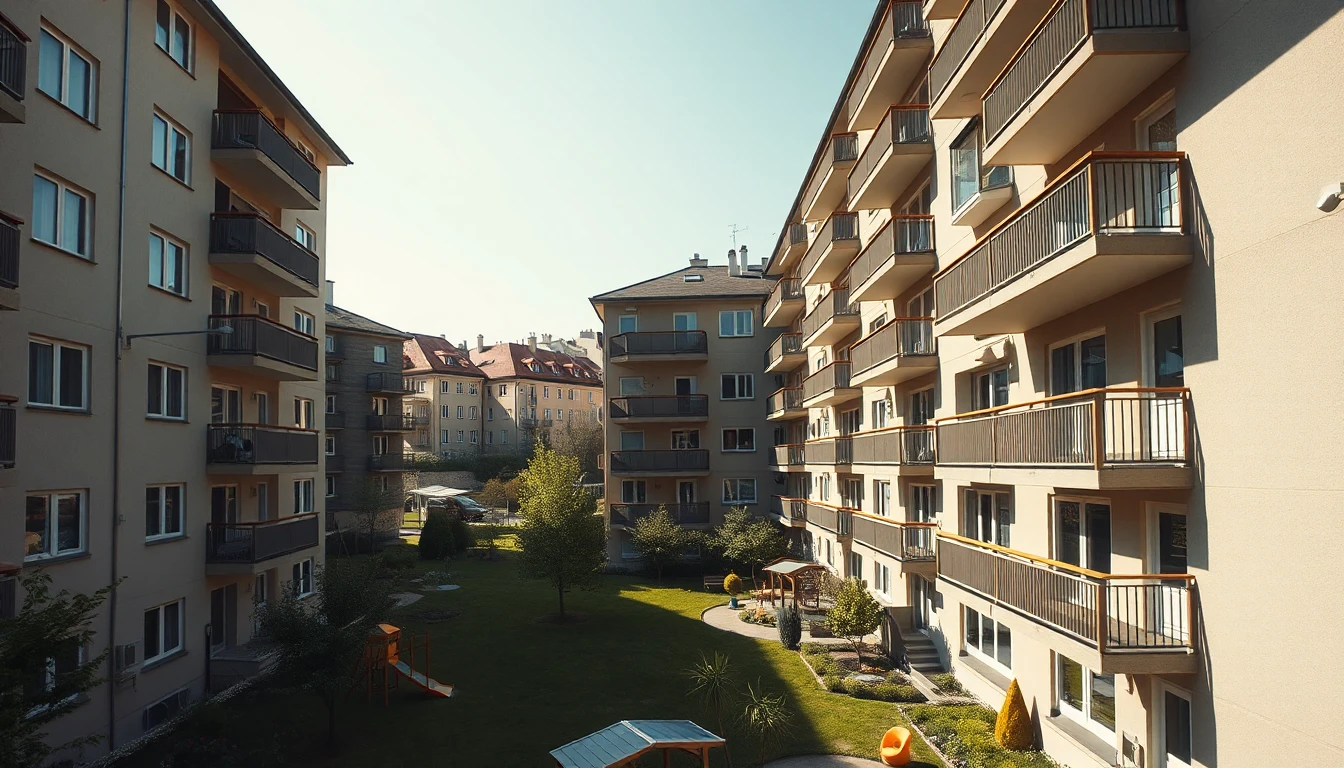
With a cooperative flat you rent from a non-profit building association. The Wohnungsgemeinnützigkeitsgesetz (WGG) applies to them; it sets different rules for the level of rent than the Mietrechtsgesetz. In addition, many subsidised flats carry a statutory entitlement to purchase the flat at a later date. Here you will find the most important points, from the financing contribution to the speculation period.
Cost coverage: what the building association may charge
A non-profit building association must agree a charge that covers its expenditures for the building. It must not be higher, but also not lower than what is necessary for that purpose, with appropriate administration costs and reserves also taken into account [S1]. The basis is the total production costs: construction costs, land and development costs and other costs such as financing and construction management [S1].
On first occupation the final rent is often not yet fixed. It is only determined after the final accounting of the construction project, which frequently becomes available some years after moving in [S15].
An exception applies for buildings whose subsidised loans were paid off early with a favourable treatment. There the charge may be based on the size, location, fittings and condition of the flat, i.e. on an appropriate amount instead of on the costs. For time-limited contracts this maximum amount must be reduced by 25 per cent [S1].
What makes up your monthly charge
The charge may in particular include [S2]:
- a depreciation for wear and tear or, where different, the repayment (tilgung) of the loans,
- the interest on borrowed funds and subsidised loans as well as a limited return on the building association’s equity,
- in the case of a building lease (Baurecht) the ongoing ground rent (Bauzins),
- the maintenance and improvement contribution,
- an amount for administrative costs,
- operating costs, costs of communal installations and ongoing public levies,
- reserves up to a legally limited amount and value added tax.
If these fundamentals change, for example the interest rate of a loan, your charge changes as well, without a specific clause in the contract being required. The building association must inform you of the reasons in writing with the next statement of charges (Vorschreibung) [S2].
The maintenance and improvement contribution is capped per square metre. The upper limit rises with the age of the building and is regularly adjusted for inflation [S3]. If the loans are fully repaid, the capital-related components fall to a legally limited, likewise value-secured amount per square metre [S2]. The building association must make the current values comprehensible to you in the statement of charges.
The new value‑adjustment brake of the Mieten-Wertsicherungsgesetz generally does not apply to cooperative flats. Exceptions are cases in which the charge is measured by the appropriate amount described above [S12].
If you have doubts about the amount of your charge, you can have it reviewed by the district court (Bezirksgericht) [S16]. In municipalities with a conciliation office, for example in Vienna, the procedure begins there; in the other federal provinces it usually starts directly at the district court [S17][S18].
Financing contribution: what you get back when you move out
Many building associations require a contribution to the land and construction costs when moving in. When your contract ends, you receive this amount back, reduced by a depreciation of 1 per cent per year. Calculation is from the building’s occupancy permit (Benützungsbewilligung) or from the earlier initial occupation [S4]. Payment must be made within eight weeks after vacating, insofar as no justified claims of the landlord are deducted [S4].
Fictitious example: A tenant paid a financing contribution of 30.000 euro on moving in. When they move out the building has been occupied for twelve years. Twelve per cent, i.e. 3.600 euro, is deducted; 26.400 euro is paid out.
Purchase option: when you are entitled to transfer into ownership
Since the WGG amendment 2019, a statutory purchase entitlement applies for newer contracts, according to Arbeiterkammer Wien for contracts from 1 August 2019, under these conditions [S6][S13]:
- The apartment was built with public subsidies, and the subsidy was still in place when you concluded the contract.
- The usable floor area is greater than 40 square metres.
- In addition to the consideration you paid a one-off amount that exceeds a statutory threshold per square metre. The base value in the law is 50 Euro and is adjusted annually to the consumer price index on 1 April [S6].
- More than five, but at most 30 years have passed since the first occupation of the building [S5][S6].
- The Bauvereinigung is the owner of the land and not merely the building lessee (Bauberechtigte) [S5].
- You are an Austrian citizen or are equalised under the WGG. The purchase claim must be referred to in the rental agreement [S9].
For older contracts transitional rules with different time limits apply [S13]. Regardless, the Bauvereinigung may also voluntarily offer an apartment for sale [S6].
How the purchase proceeds: application, fixed price, deadlines
You submit the application to the Bauvereinigung, no earlier than after five and no later than after 20 years of contract duration. One application is possible per time window [S8]:
- 6th to 10th year: one
- 11th to 15th year: one
- 16th to 20th year: one
The Bauvereinigung must offer you a fixed price in writing within three months. A longer period of up to six months can be agreed [S8]. If the offer is not made, the court will set the price on your application if the Bauvereinigung does not make an offer within a further month after judicial request [S8].
You have six months to accept. By accepting you also assume the proportional obligations, above all outstanding loans [S8][S5]. If you consider the fixed price excessive, you can raise objections within six months of the offer. If the court finds manifest unfairness, it will reset the price on the basis of the market value (Verkehrswert) [S7]. Your acceptance period then ends no earlier than three months after the final decision [S8].
Important for your planning: ongoing rent payments are not credited towards the purchase price [S13]. However, your depreciated financing contribution and the assumed loans are credited, which reduces the cash amount to be paid [S15].
Hypothetical example: A tenant signed a subsidised contract with a purchase claim in 2020. Her first application window begins with the sixth contract year. If she lets it lapse, she still has the windows from the eleventh and from the sixteenth year, as long as the building is not older than 30 years.
After the purchase: speculation period and rent limit
Anyone who acquires by virtue of the purchase claim is bound for 15 years. The Bauvereinigung obtains a pre-emptive right in the land register. If you sell within 15 years of the purchase contract, you must pay it the difference between the announced market value and your purchase price [S10]. No additional payment is due if you transfer to a spouse, registered partner, relatives in the direct line including stepchildren, siblings or to a life partner with at least three years of shared household [S10].
If you let a purchased subsidised apartment, the full scope of application of the Mietrechtsgesetz applies for 15 years from the first purchase contract. The main rent must not exceed the guideline value of your federal state, and if fixed-term it must be reduced by 25 percent [S11]. These rules apply to applications and offers after the 2019 amendment; for older cases divergent provisions exist [S14].
Before a purchase it is worth obtaining advice, for example from the Arbeiterkammer or a tenants' organisation.