



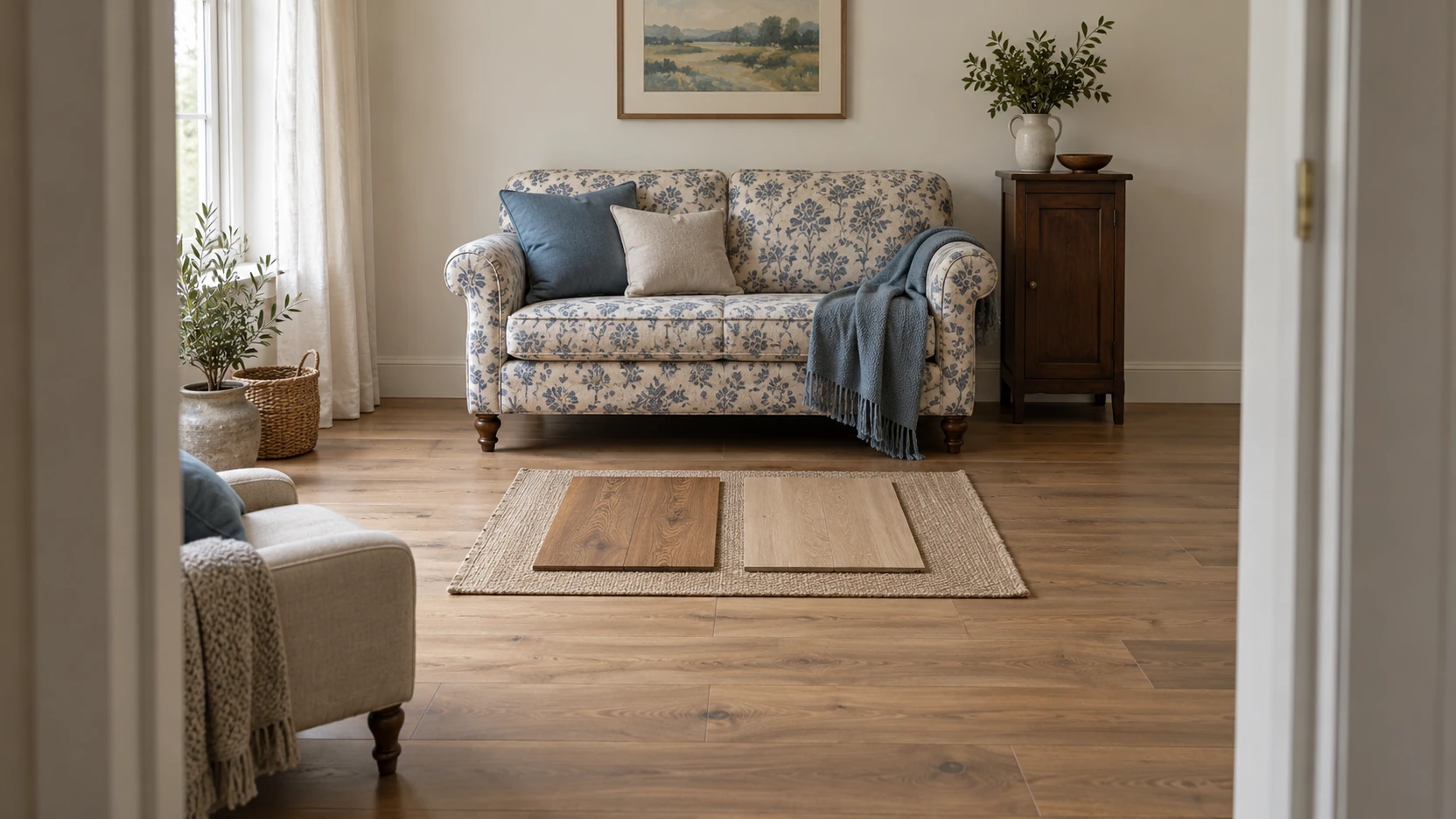
The small strip of flooring pleases you in the shop. At home there is already a dark cupboard, a light table and a seating group that are to remain. Now the question is bigger than the choice of a wood effect: which surface suits the room you actually live in? The following selection guide is purely editorial. It does not assess material health, slip resistance, load-bearing capacity or technical suitability.
First describe the room, then reduce the samples
Describe the future everyday life in a few sentences. Will this space mainly be used for eating, working, playing or frequently rearranging? Which furniture will remain and which connections should remain accessible? Which colour already takes up a large area? This note makes your own decision easier to understand without inventing material properties.
Then choose only the samples you seriously consider. If every new view produces another favourite, a clear exclusion question helps: which pattern would you choose even with the existing furniture? A larger selection is no progress if you can no longer recognise your own criteria in it.
Compare samples in the places where you will see the floor
Lay out borrowed samples with permission and according to the supplier’s instructions in several intended locations. Look at them from the door and beside the furniture that will remain. This is a comparison of personal impression, not a material test. Do not use improvised load, scratch, water or cleaning tests for this purpose.
In a hypothetical case a couple initially likes the strongest decor. Next to the patterned sofa it seems restless to both of them. A more restrained pattern, which was inconspicuous in the shop, fits the desired furnishings better. This is not proof of a generally better surface. It answers their specific design question.
Make different wishes visible
Record your judgements separately at first: like, dislike or undecided. Write a reason for each. “Too dark next to the cupboard” is more helpful than “I don’t like it”. Then discuss which property is most important to you in everyday life. A pattern that wins on a single photo does not have to be your joint choice.
Be honest in the description. “We perceive the pattern as calmer” should not become an unsubstantiated claim such as “this floor is easier to care for”. Questions about cleaning, suitability for specific rooms or installation belong with the exact product name to the supplier and the executing company.
Return the selection unambiguously
Photograph the model designation separately from the impression of the room and record which pattern you have chosen. Ask for confirmation of the exact variant before ordering. If a technical suitability question is still open, name it as a condition of your choice and have it clarified before the binding decision.
The finished selection document can be very short: room, product variant, desired impression, open specialist question and confirmed decision. It prevents “the light pattern” later meaning several different products. An approval of the floor for the specific subfloor or subsequent use does not replace this document.