



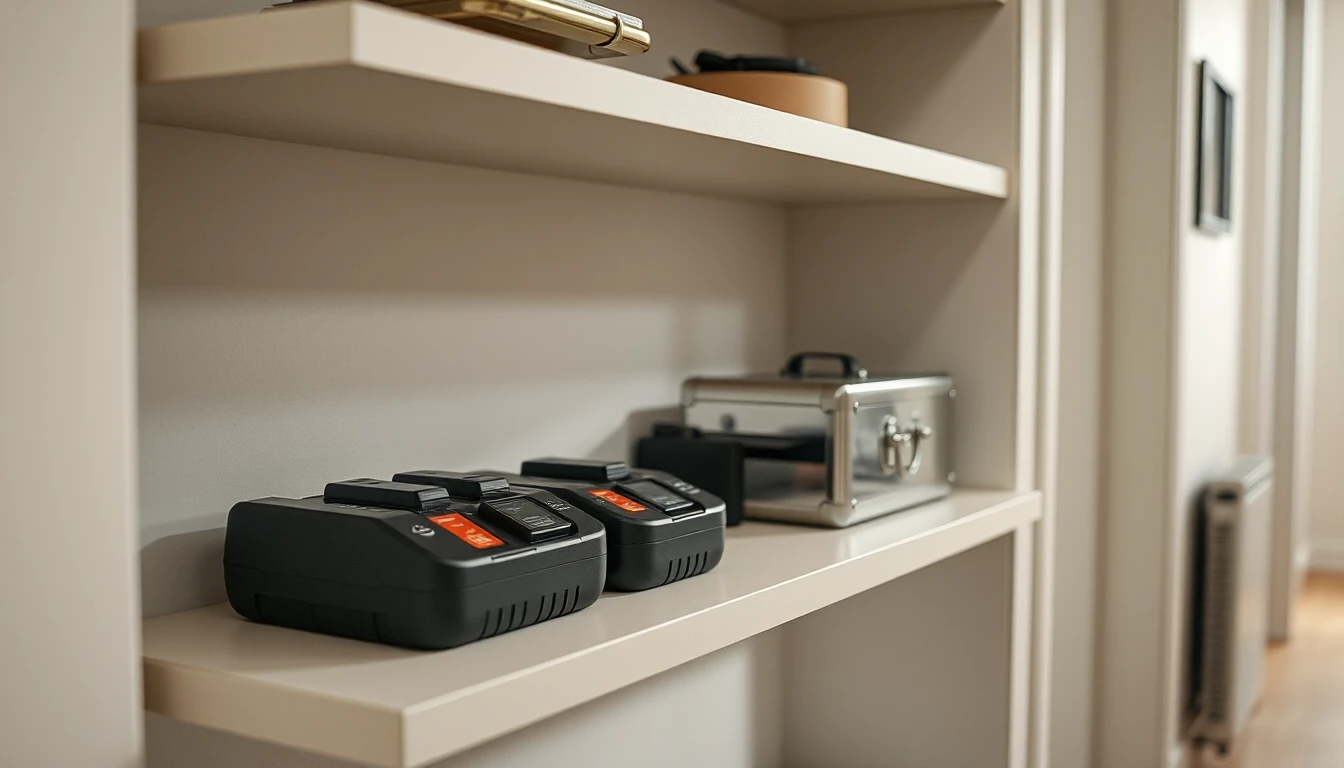
After renovation, cordless drills and garden equipment lie in the storage room. That is where charging is to take place; alternatively the garden shed seems practical. However, a fixed charging place is more than a free socket. It must fit the manufacturer instructions and a routine in which you can consciously supervise charging.
First assign the existing batteries
This article concerns lithium-ion tool batteries in the private household. Check the product documentation to see which batteries and chargers belong together. Matching shapes or compatible plugs are not a sufficient basis for a DIY pairing.
The VDE recommends using only the intended chargers and charging cables, keeping a distance from combustible materials, and charging near a smoke or fire detector. It advises staying nearby while charging and not charging during sleep. Damp rooms, outdoors and places with extreme temperatures are named as unsuitable for storage and charging. [AKKU]
Choose the place according to real everyday life
Our editorial recommendation: first assess the possible locations and only then buy a new shelf or charging station. In the storage room paper, packaging and textiles may be exactly where the charger is supposed to stand. In the garden shed the ambient conditions may contradict the intended use. A neat organisational spot does not answer these questions.
Also consider when you would normally charge. If the only free period is at night, a neatly mounted charger does not solve the organisational problem. Plan a different routine that you can actually stick to. Have any planned additional socket or fixed installation assessed and carried out professionally.
Agree a small responsibility
In a shared household it should be clear who started a charging process and who is responsible for it. This is an editorial everyday recommendation, not a technical safety feature. Do not rely on another person to automatically notice an unfamiliar charging process later.
An imaginary example: After gardening the battery has so far been connected in the evening somewhere between boxes. In future the household creates a suitable space kept clear of stored goods and sets a time window in which the responsible person will be nearby. Device documentation remains findable. The change is in the whole routine, not just a new cable holder.
Noticeably faulty batteries should be removed from routine
The VDE warns against further use of damaged or deformed lithium-containing batteries. [AKKU] Such an anomaly is not to be tried with another charger or bypassed by your own repair. Clarify the safe further handling through professional manufacturer or disposal advice; this text does not describe any handling for that.
In the event of a fire keep your distance and call the fire brigade; point out the lithium-ion battery. [AKKU] For everyday life the most important planning question remains: Is the selected place suitable together with your actual charging behaviour? Only when both fit together is the new order practically viable.