



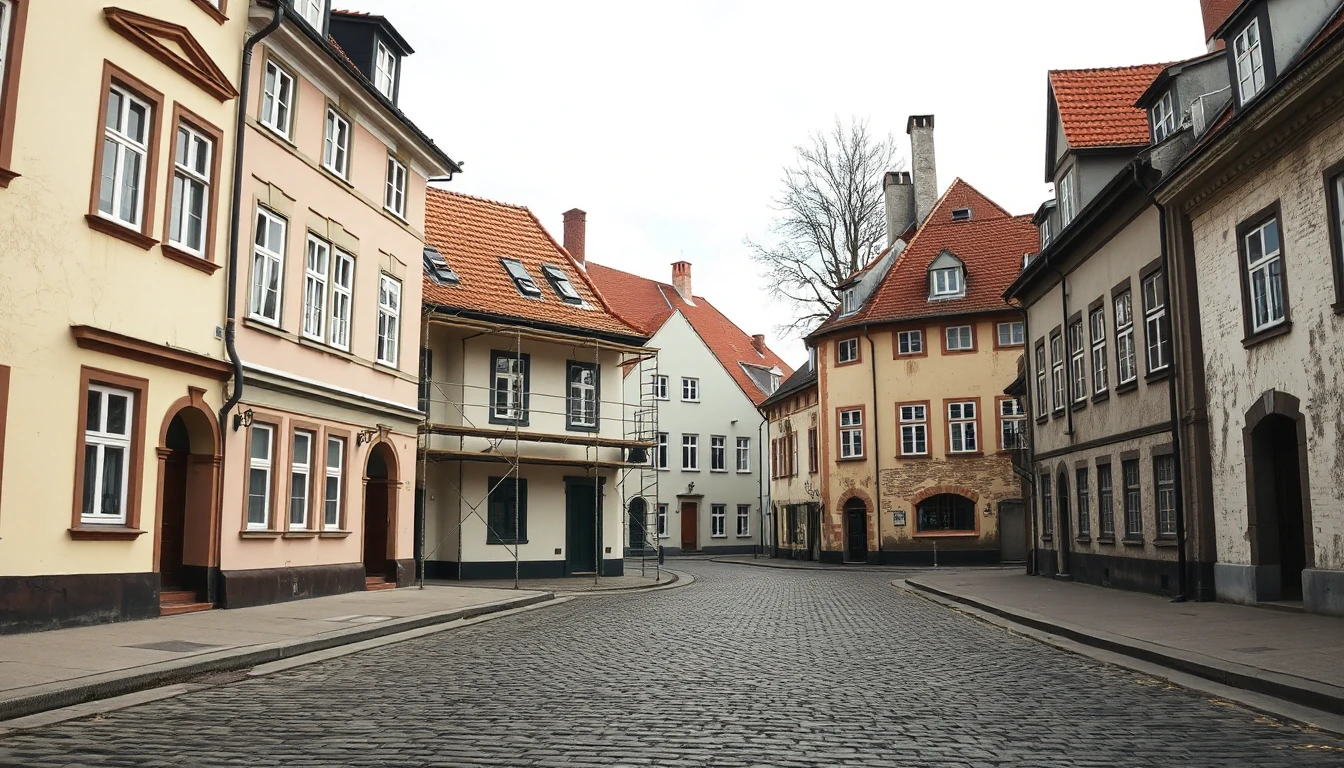
A redevelopment area (Sanierungsgebiet) appears in the purchase documents. At first that sounds like new windows or a well-kept façade. A formally declared redevelopment area, however, is an urban planning procedural framework of the municipality. It can also be important for a purchase, even if you do not intend to alter the building at first.
The area statute provides the starting point
Pursuant to § 142 BauGB the municipality formally determines a redevelopment area by statute. The spatial delineation is part of this. In the simplified redevelopment procedure certain provisions and also the approval obligations of § 144 can be wholly or partially excluded. [SATZUNG] Therefore the designation “Sanierungsgebiet” alone is not yet a complete answer for your specific purchase process.
Obtain the actually applicable statute with the area map and any amendments. Identify the offered plot in it, instead of merely comparing the street. A street can lie on an area boundary; neighbouring plots are then not a reliable substitute for the exact allocation.
Also note where the information comes from. An older exposé, a current land register note and the applicable municipal statute serve different purposes. A discrepancy should be clarified in a traceable way before it is treated as an insignificant typographical error.
Why the municipality can be involved even without your alteration
§ 144 paragraph 2 names, within the corresponding framework, among other things disposals of land and contracts to undertake obligations as legal transactions requiring approval. The provision also contains exceptions; the municipality can generally grant approvals for certain cases. [GENEHMIGUNG] The personal plan “buy first, maybe renovate later” therefore does not resolve this purchase-related issue.
Provide the notarising notary's office with the available information at an early stage. The practical question is which approval or evidence route is required for this exact acquisition under the current statute and how it belongs in the transaction process. A general statement you obtained as a precaution is not automatically the document that the specific transaction requires.
Write purchase, later use and construction project separately
For preparation three lines are helpful: the intended acquisition, an initially unchanged use and a possibly later project. Describe the third line sufficiently specifically. A new extension is something different to ongoing maintenance. That gives the responsible authority a comprehensible question and it need not infer your project from “we will make the house look nice”.
The approval regulation is not a technical condition assessment of the house. An orderly urban redevelopment procedure does not mean that the roof, pipes or moisture have been inspected. Conversely, a good building surveyor's report does not determine the redevelopment law procedural route.
How the note becomes a reliable task list
In the fictitious example a couple wants to acquire an older town house. They have already estimated costs for the bathroom and heating, but only filed away the note about the redevelopment area. In preparation it becomes apparent: the valid area delimitation and the specific approval route have not yet been assigned.
The couple supplements the purchase file with statute, map and contact person. The notary's office clarifies the processing required for the acquisition; the couple formulates their later alteration wishes as a separate matter. The purchase timetable only becomes reliable with the actually required steps.
This article does not make any statement about a particular municipal area, about compensatory payments, funding or tax concessions. Such topics require their own basis. Its aim is narrower: a known redevelopment area should not be treated as a mere renovation buzzword while a procedural question relevant to the acquisition remains open.