



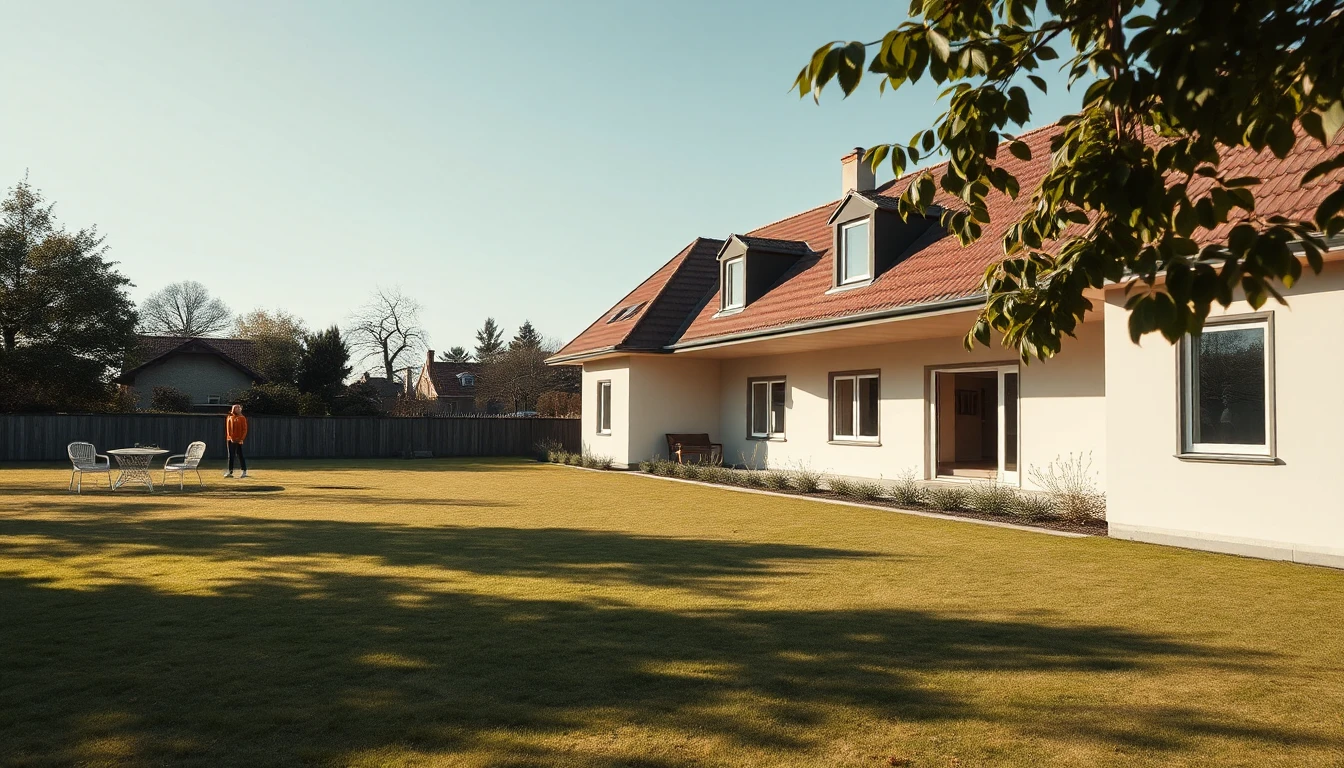
The parents promise a free plot of land, the adult child wants to finance a house there. Everyone agrees on the shared goal. Nevertheless, the phrase “You can build here” can reflect very different expectations about ownership. Before construction orders are placed on Austrian land, this question should be explicitly clarified and handled professionally. Paying invoices yourself is no substitute for an appropriate legal framework.
Three promises that sound similar
“You may use the land”, “the house should belong to you” and “the part of the plot will be transferred to you” are three different notions. They should first be put into understandable sentences. Who is to be the future owner of which thing? For how long should the use be possible? What happens if the project cannot be continued as planned?
These questions are not intended to replace a finished contract template. They help to commission a genuinely suitable arrangement. This includes the responsible parties and the legal implementation; familial agreement alone does not answer these steps. No blanket solution is promised here either for the whole plot or for a single house extension.
Carrying out the construction does not make the ownership question easier
§ 418 ABGB governs certain cases of building with one’s own materials on another’s land. It contains different consequences depending on knowledge, intent and good faith and does not simply provide “whoever pays becomes the owner”. The statutory text also covers questions of reimbursement and a specially regulated case of knowing non-objection vis-à-vis good-faith construction. No reliable strategy can be derived from this for creating completed ownership relations by beginning construction. [BAUFÜHRUNG]
In addition there is the precedence of a relevant agreement. The OGH explains in 7 Ob 210/20p that where there is an agreement about the construction, the subsidiary provisions of § 418 do not replace it. In the factual case it concerned, among other things, a deliberately jointly erected boundary wall and the agreed entitlement to it. The court thus did not decide a family house case invented here. But it shows why the interpretation of the real agreement is essential. [VEREINBARUNG]
The family discussion becomes an instruction to draft
Note the existing plot status and the intended building area, without treating an unverified sketch as a new property boundary. Add who will bear construction costs, assume loan obligations and exercise later use. Different contributions should be named, but not autonomously converted into alleged ownership shares.
Also raise the life scenarios no one likes to discuss first: sale, separation, death of a party, unfinished construction or additional financing needs. These scenarios do not automatically determine a particular legal solution. However, they reveal what expectations the professional arrangement should actually cover. Financing and planning-law questions are connected to this, but are not settled en masse by an agreement on ownership.
The right time is before the irreversible expenditure
Hypothetically, a couple wants to build on a parent’s plot. One partner understands the promise as a later transfer of the land; the other only expects lifelong free use. When put in writing the difference becomes apparent before construction contracts are signed. Both take this open question into the joint consultation and then align the planned financing with the arrangement actually prepared.
A good interim result is therefore not a sentence like “We trust each other”, but a professionally checked, implementable basis that all parties understand in the same way. This article does not confirm an acquisition of ownership nor a claim to transfer. It is intended to prevent a large construction project being built on expectations that only prove incompatible after the first invoices.