



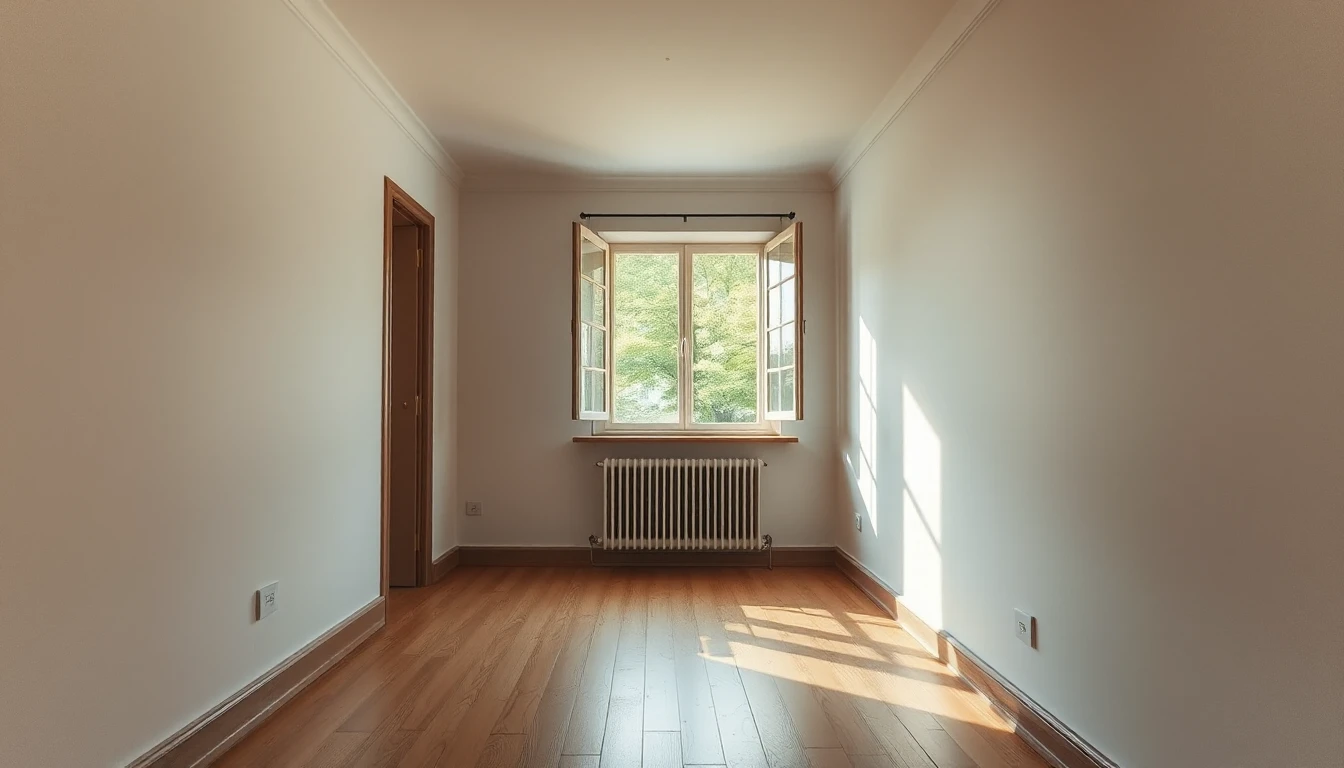
When you enter the offered flat you notice an unusual smell. The explanation given is that it comes only from the new flooring. That may be true. For your choice of flat, however, what matters at first is what is actually known and what still needs to be clarified. Your nose does not replace source investigation or a health assessment.
Do not take the absence of smell as an all-clear
The German Umweltbundesamt describes various possible sources of odour indoors. It also points out that many emissions are not noticed by the nose and that some smells cannot simply be aired out. [UBA] The practical conclusion for your selection is limited: your own impression of smell alone does not provide a reliable indication that the flat is harmless to health.
This general classification can also help with a search decision in Austria. German or Austrian legal claims, measurement limits and concrete health consequences are not derived from it. The article does not assess a real flat and is not an emergency guide. If you suspect an immediate danger, the locally appropriate emergency route is required first; a normal flat viewing should then not be continued as an attempt.
Write down observation and offered explanation separately
Our editorial recommendation: Describe the location and circumstances in your own words. Was the impression immediate at the entrance, in a particular room or only after a longer period of presence? Were windows already open on arrival? What was actually said at the time of the appointment?
“An unusual smell was noticeable in the rear room; a new floor was named as the cause” keeps both apart. The wording does not assert a proven construction defect nor a confirmed harmless cause. Avoid assigning blame to residents or neighbours if you have no proof. Do not photograph or document private contents that have nothing to do with your factual question.
The next investigation needs a concrete question
Ask for the information about the alleged cause: what work or changes were carried out, when were they performed and what attributable documentation exists? If a previous finding is mentioned, ask about its subject matter, room reference and timing. A report on another unit may leave your question open.
Which professional investigation is sensible should be determined by the concrete suspicion. The UBA describes in a research overview published in September 2026 an odour wheel as a support involving experts, among other things for source identification and a suitable measurement strategy. [FORSCHUNG] This is explicitly not presented there as a self-diagnosis procedure for a viewing; the extensive research report was not fully reviewed for this article.
A second appointment is an observation, not an acquittal
A coordinated further appointment can show you whether you perceive the smell again under the conditions then present. It still does not explain the cause and does not replace a required specialist examination. Therefore do not create an intentionally aggravated exposure situation and do not alter someone else’s installation or fitting on your own initiative.
The aim is clarification sufficient for your decision. This also includes whether a planned measure has actually been carried out and who assesses its result professionally. “Something will still be done” is a different level of information than a comprehensibly described completed process.
Fictive case: An unknown prerequisite remains unknown
Selma likes the flat; she would, however, like to work regularly in the conspicuous room. An offered explanation about the renovation cannot initially be linked to concrete documents. Selma continues to note down her furnishing ideas but does not yet treat the room as a cleared permanent workplace.
She requests appropriate proof or a professional clarification of the decisive question. If no sufficient answer is provided before a requested commitment, she explicitly takes this uncertainty into account. The case is not decided by the most sympathetic explanatory attempt. Selma must be able to assess whether the prerequisite essential for her choice of residence is sufficiently clarified or whether she will not pursue the offer further for the time being.