



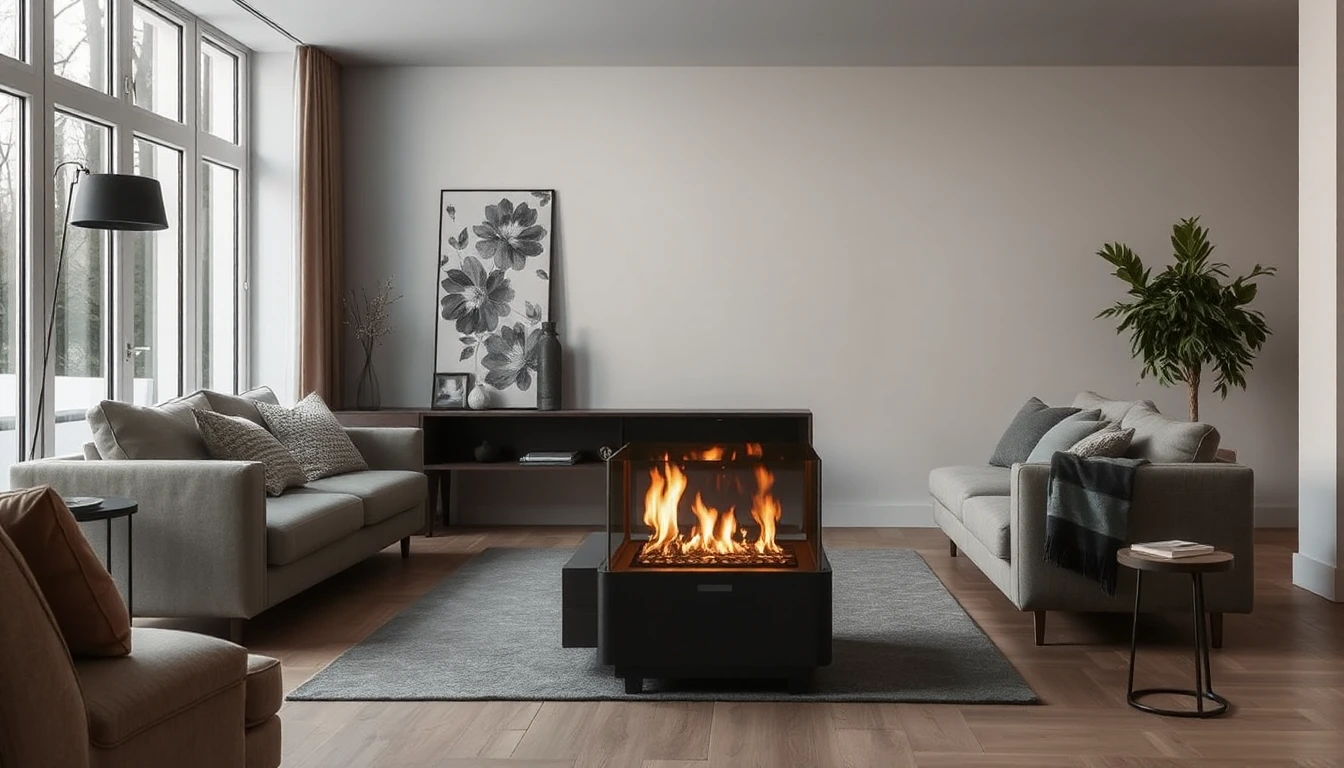
The newly furnished living room still lacks the desired fire image. An ethanol fireplace is being offered as a space‑saving solution because no traditional chimney is planned. That does not yet decide the matter. First clarify whether you actually want real flames in the room and what reliable information is available for the specific product.
Chimney‑free is not a statement about pollutant‑free air
Fraunhofer IKTS describes in its project “Clean EtOH‑fire” the burden from combustion products of conventional ethanol fireplaces and names, among others, carbon monoxide, benzene and formaldehyde. The source also reports dangers when refilling while hot. [ETHANOL] The underlying project period was 2018 to 2020. The page is not a complete market comparison of all devices offered in 2026.
Our editorial recommendation: therefore do not accept the statement “without extraction” alone as proof of suitability for your living room. Ask for the specific conditions of use, the proven emission properties and the limits of the offered system. A picture with a calm flame does not answer these questions.
Name the housing wish clearly
Is it about an optical atmosphere or should the device take on a heating task? Record this expectation explicitly in the consultation. The research page contains development goals for a lower‑emission system; it does not substantiate a general heating, climate‑neutrality or operational safety guarantee for your purchase offer.
Ask for the complete product documentation before ordering. If it contains prerequisites for the room, installation or supervision, these must be made clear for the intended use. General statements in advertising do not replace this allocation. An existing CO alarm is also not a blanket proof of suitability for the fireplace.
Consider supervision as part of the purchase decision
Discuss who will supervise the device as intended and whether this task suits the household. The article does not provide a fuel, ignition, extinguishing, refilling or ventilation manual. Unclear operating conditions are a reason to ask questions before buying, not an invitation to conduct your own experiments with fuel.
If only the flame image is desired, you can also include a design without actual combustion in the selection. This is an editorial alternative, not a technical approval of any substitute product.
Fictitious case: The advertising word is not enough to order
A couple mainly wants the fireplace for cosy evenings. When asked about room air and supervision they initially receive only the reference to “bio‑ethanol”. They request concrete device documentation and decide not to buy until clarification. The addition “bio” is not in itself declared proof of the absence of combustion products.
The decisive outcome is a consciously chosen living concept with understood prerequisites. This article does not confirm health safety or safe use in the specific room.