



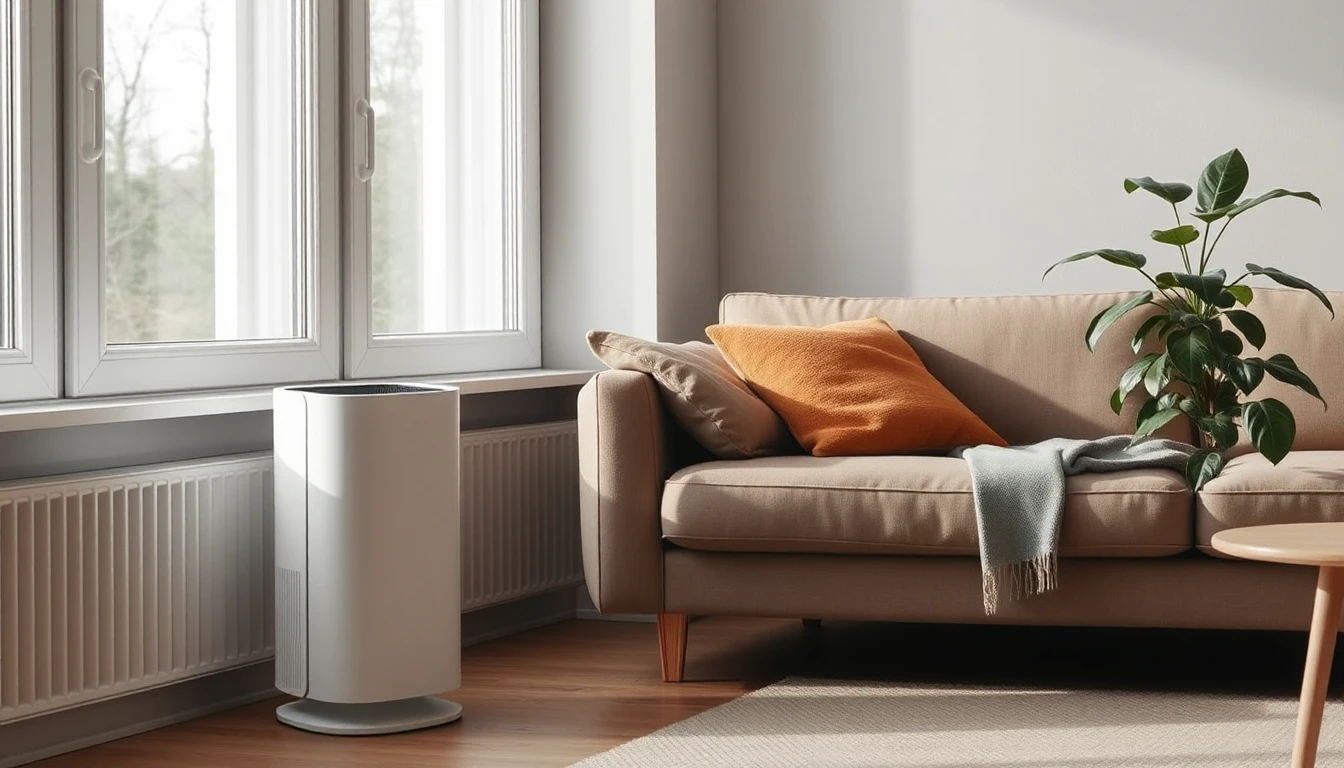
You are considering purchasing a portable air purifier for a frequently used living room. Advertising promises better air, but in your household that can mean different things: fewer particles, less odour or less need to ventilate. Before comparing models, the desired task therefore needs to be specified more precisely.
Name the problem instead of ordering “poor air”
Describe why you are thinking about a device. Is it an observed dust situation, an individual requirement discussed with a doctor, or a noticeable smell after work was carried out? These examples do not automatically call for the same solution. The text does not provide a diagnosis and does not recommend any device for the treatment of a disease.
The Umweltbundesamt emphasises in its general consumer information from 2014 that the causes of air pollution should be clarified; temporary air cleaning cannot replace this clarification of causes. The information also addresses different effects on particles and gaseous substances. [RAUMLUFT] Because of its age it is used here only as a basis for distinguishing task and cause, not as a current market overview.
Do not remove ventilation from the brief
In a school-related information note from 2021 the UBA explains that mobile air purifiers do not replace the need for ventilation in that context: carbon dioxide and the moisture produced by respiration are not removed by them. The effect also depends on technical data and actual operation in the room. [LUEFTUNG]
No school air flow rate, no claim of infection protection and no device recommendation for a living room are derived here from that source. The editorial conclusion is narrower: treat the outdoor air supply and the specifically desired filtration task as separate questions. A wish to have to ventilate less often is by itself not a substantiated proof of performance of a device on offer.
Assess the planned operation as well
In the hypothetical case a device is to stand in the living room while people read and talk there in the evening. The selected model is initially considered only according to a maximum performance specification. The family then asks for the details of the actually intended operating setting, about noise, consumption and required filter changes. This ties the enquiry to the planned everyday use.
Have the statements about the exact model and the intended use explained to you. Ask what the proof of effectiveness is based on and which conditions apply. The article does not name required filter classes or a generally valid sizing. Such specifications require an appropriate technical basis.
Allow a decision when the cause is still open
If the original anomaly is unexplained, a sensible result can initially be an investigation and not a purchase. A device should not appear in your documentation as proof that the cause has been remedied or that the room has been declared safe for health. In cases of complaints, a suitable medical assessment is required separately.
This decision aid for Austria and Germany uses German specialist information with visible date and scope limits. It does not transfer any school standard or national building regulation to private living spaces. The aim is an honest question of performance: which part of the problem should a device demonstrably address, and what must be clarified in addition?