



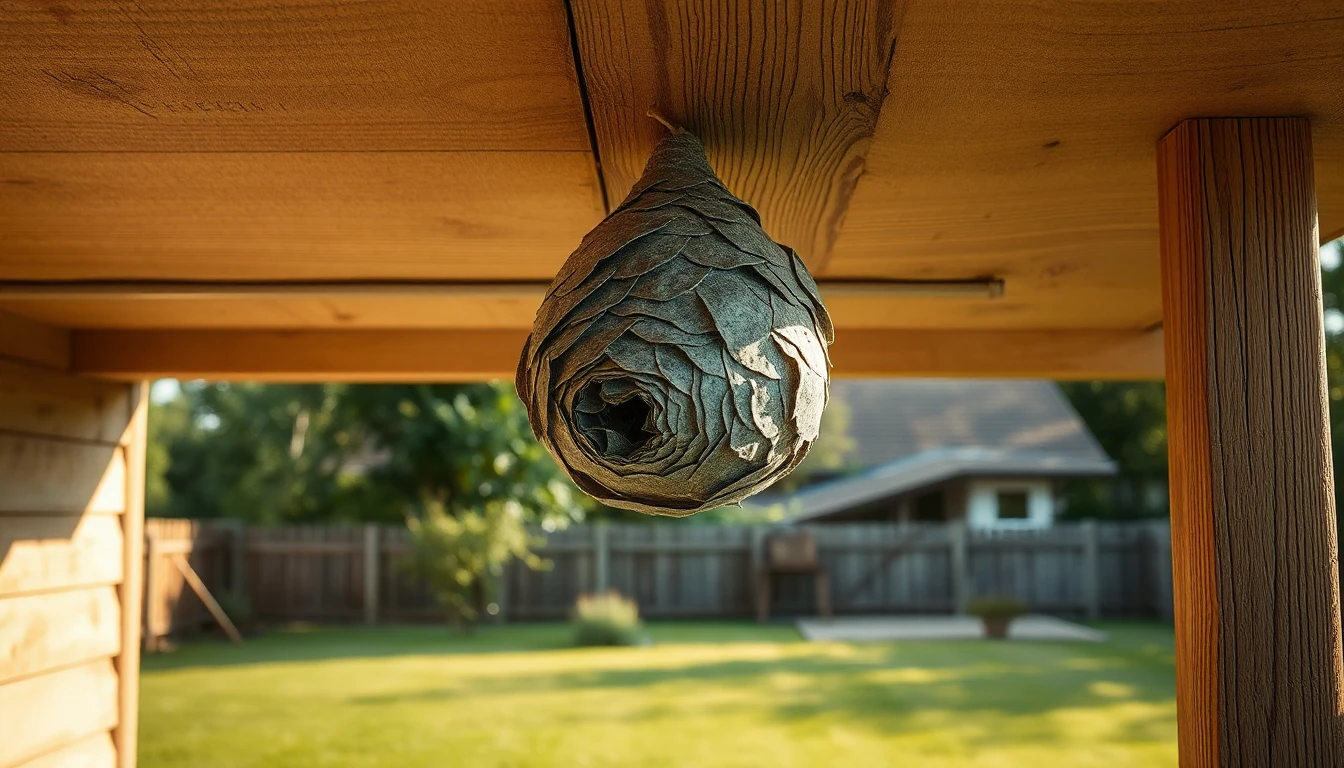
A tenant reports an alleged hornet nest next to the entrance of your rented apartment building in Berlin. They want it removed quickly. For the landlord this now starts a technical and species-protection (artenschutzrechtliche) assessment. A report of a disturbing nest will not be converted into a routine eradication order without investigation.
Do not adopt the species from the first message text
The European hornet, Vespa crabro, is specially protected. It must be distinguished from the Asian hornet. The Umweltbundesamt explains this distinction and the protection status. [UBA] For your case this means: record the designation from the report initially only as a suspicion until the appropriate specialist body has classified it.
Describe the exact location and the observed impairment. Is the nest by the only house access, on a rarely used outbuilding or next to an ordinary recreational area? Our editorial recommendation is an objective description of the location with photos that are already safely available. No one should handle the nest to get better close-up pictures.
Clarify protection and human use together
§ 44 Absatz 1 BNatSchG contains prohibitions for specially protected species against catching, injuring or killing and against damaging or destroying their breeding and resting places. [SCHUTZ] The European hornet does not fall outside this framework simply because its nest is on a private building. [UBA]
Please use the current Berlin information channel to obtain suitable professional advice. The Berlin specialist information refers to advice and the Hymenoptera service. [BERLIN] Convey which area is used how and what has already been attempted or changed. Do not assert safety for a particular household; an individual health question needs its own appropriate care pathway.
Do not confuse a removal request with a permit
The Umweltbundesamt recommends the responsible nature conservation authority as the first contact in cases where removal is required for safety reasons, and trained personnel for possible relocation or eradication. [UBA] Let specialists assess species, actual conflict and alternatives. A temporary different usage may need to be considered, but it must suit the specific building and its accessibility.
§ 67 Absatz 2 provides, under its conditions, for an exemption from the prohibitions of § 44; it may contain ancillary provisions. [BEFREIUNG] The Berlin information sheet explains the required exemption before any destruction. [INFO] The text does not replace a decision by the competent authority. A service provider that can be made available quickly does not receive official approval merely by being hired.
Fictitious case: Two instructions at the same entrance
An owner learns that the building caretaker already wanted to contact a general removal service. At the same time a resident is awaiting a clear statement about normal use of the entrance. The owner brings the open tasks together: technical species and conflict assessment, a suitable current interim solution and, if necessary, the required official decision. The service provider does not receive a blanket order for immediate destruction.
For the building it is recorded comprehensibly which usage route was agreed professionally and to whom new observations should be sent. An agreed interim solution is not described as a finally resolved nest case.
Implement the confirmed result
If a measure is authorised, its exact scope, conditions and the executing specialist are considered together. Likewise the professional assessment may conclude that the nest remains and the conflict is resolved differently. The conclusion documents the solution actually confirmed.
This article does not provide instructions on catching, opening, sealing or chemically treating a nest. Tenancy law questions about costs or rent reduction must be examined separately; original forms and flat-rate fee information are not included.