



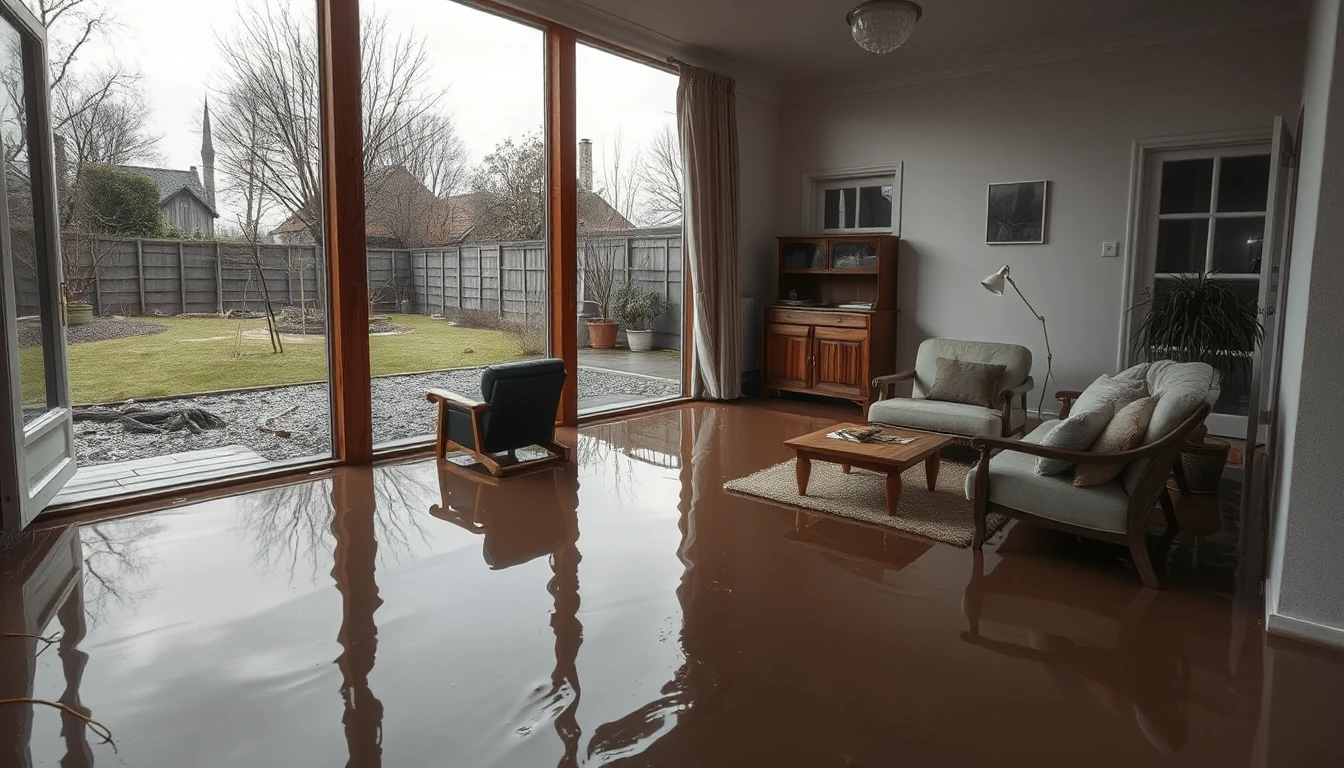
After a hypothetical major flood, a rented flat may initially be unusable. Later, reports arrive about individual rooms becoming usable again. The leasing side wants to know how the rent must be treated during this period. An unchanged charge for the entire period would be no more a comprehensible assessment than an arbitrarily chosen flat-rate percentage.
This concerns the rent after an extraordinary event. The security situation, technical restoration, any alternative accommodation and insurance benefits require their own responsible assessments. A spreadsheet for the rent does not answer these other questions.
Link the event and the effect to this specific rented property
§ 1104 ABGB names, among other things, major floods as extraordinary contingencies. If the rented object can therefore not be used at all, no rent is payable under the provision. [A1104] Whether the specific occurrence and the usability situation meet these requirements must be assessed on the facts of the case.
Our editorial recommendation begins with two separate descriptions. The first concerns the event and its temporal course. The second concerns the specific flat and its agreed use. General news about damage in the region do not replace the second description. Conversely, a single photo of a dry room should not be accepted without scrutiny as evidence of full usability.
The landlord collects existing reports, professional findings and verifiable information from the tenant. For the actual restrictions she records the respective basis. She does not require a risky inspection solely for her rent records.
Treat changed usability situations as new periods
§ 1105 provides for a proportionate rent reduction where limited use remains despite such a contingency. [A1105] The special tenancy (Pacht) rule in the same paragraph does not transfer to the residential case.
In the hypothetical course, therefore, total loss of use and a later asserted partial usability are not mixed. For each period the question belongs as to what was actually possible and from when. The mere message "works are still ongoing" answers this no more than the message "first room finished".
The landlord does not create a square-metre quota that is to apply independently of the specific usability situation. She has the established restrictions legally assessed and the corresponding amount determined in a comprehensible way. An open question remains visible until clarified.
Include the contract in the assessment
Existing agreements on the assumption of risks are submitted in full; § 1106 deals with such assumptions. [A1106] This note does not confirm just any risk clause. Their interpretation and admissibility remain part of the concrete assessment.
§ 1104 also contains a statement on restoration. This contribution does not derive a blanket exemption from all maintenance obligations. Whether and which other provisions are relevant within the respective contractual framework must be clarified separately.
Make the legally clarified treatment traceable in the account
After the assessment the period, the assumed usability situation and the rent derived therefrom are documented together. The leasing side explains which earlier charges are affected and which question is still open.
A later change to the flat is supplemented with its actual date. In this way a verifiable sequence emerges instead of a permanently carried-forward first impression. The account should reflect the clarified situation; its previous standard booking does not decide which rent is legally owed.