



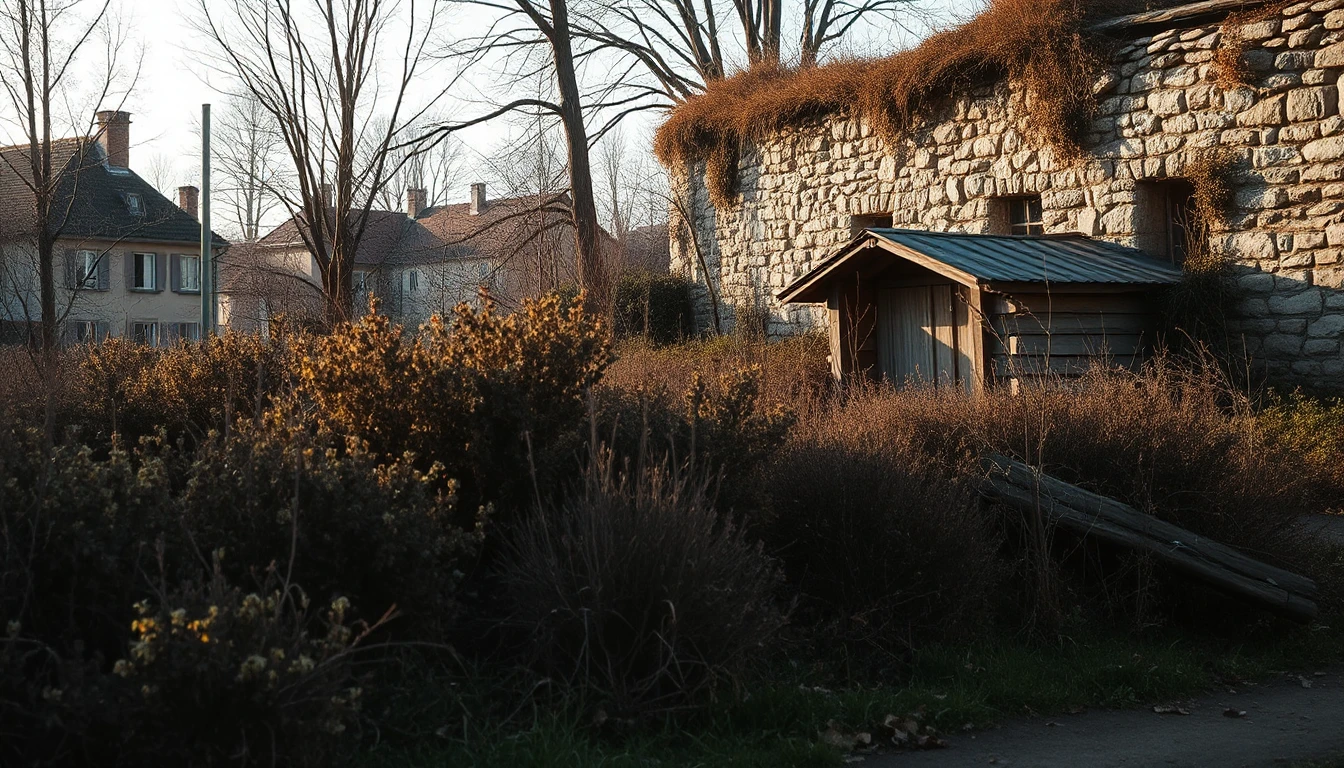
An unused area has appeared abandoned for years. Someone reports that the former owner has relinquished it. You want to take over the plot and assume that, if there is no owner, your own declaration or the actual use would suffice. For land, this assumption is not an adequate basis for acquisition.
Separate abandoned appearance from legal abandonment of ownership
§928 Abs. 1 BGB describes the abandonment of ownership by a declaration of renunciation to the land registry office and entry of the renunciation. [HERRENLOS] An empty building, neglected maintenance or the lack of knowledge of a contact person do not prove this legal act.
Our editorial recommendation: Have the current register status and the alleged event professionally examined first. Do not accept a neighbourly story as proof of ownership. Even a longer period without visible use is not the same as the abandonment described in the statute.
Assign the statutory right of appropriation correctly
According to §928 Abs. 2, the right of appropriation to the abandoned property belongs to the treasury (Fiskus) of the state in which the property is located. The state acquires ownership under the provision by entry as owner. [HERRENLOS]
The article does not derive from this any corresponding free right of appropriation for you as a private interested party. Nor does it promise a concrete takeover or resale by the state. The actual situation and which authority is responsible must be clarified for the area in question.
Clarify a possible acquisition route before using it yourself
If you are interested in the plot, ask about the legally appropriate route to acquisition and the documents required for it. Contacting the authorities does not in itself create a claim to transfer or a confirmed purchase price.
Do not start clearance, construction work or private use solely because you suspect the land is ownerless. The required authorisation must be clarified separately. This article does not grant permission to enter, take possession of or appropriate the land and does not formulate an application that would give you ownership.
Fictitious case: The unmown neighbouring area is to become a garden
A homeowner wants to use an adjacent area. An acquaintance thinks it no longer belongs to anyone. The homeowner is already planning fencing and garden design without knowing the register status or route of acquisition.
He first has it examined whether an actual abandonment of ownership exists and how a possible acquisition could be dealt with. Until then the area remains outside his confirmed garden plans. The example assumes neither ownerlessness nor a particular owner. It illustrates the gap between visible condition and legal acquisition position.
Even an acquisition possibility does not replace an inspection of the property
If a concrete transfer offer should arise, the property needs the usual examination of rights, condition and intended use. The term “herrenlos” confirms neither free buildability nor freedom from costs or encumbrances.
Your decision therefore begins with two separate results: who can speak about a route of acquisition on what basis and what would still need to be checked about the property itself? Only when both are clear can an apparently abandoned area become a concretely assessable acquisition offer.